 Putative uncharacterized protein FLJ45999Q6ZRX8 Putative uncharacterized protein FLJ45999Q6ZRX8 | A soluble nuclear assembly factor that organizes early steps of tRNA maturation in human cells. | Dark |
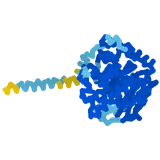 Alpha-1,3-galactosyltransferase 2A3GALT2 · U3KPV4 Alpha-1,3-galactosyltransferase 2A3GALT2 · U3KPV4 | A Golgi-resident, single-pass type II membrane glycosyltransferase that uses a luminal catalytic domain to transfer galactose from UDP-galactose in a manganese-dependent reaction onto glycosphingolipid acceptors. | Dark |
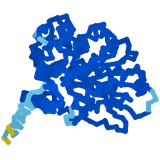 Arylacetamide deacetylase-like 2AADACL2 · Q6P093 Arylacetamide deacetylase-like 2AADACL2 · Q6P093 | A human ER-associated serine hydrolase that adopts an α/β-hydrolase scaffold and a lipase-like GDXG catalytic core to hydrolyze acyl-ester and related substrates. | Dark |
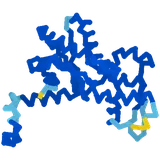 Actin-like protein 10ACTL10 · Q5JWF8 Actin-like protein 10ACTL10 · Q5JWF8 | A cytoplasmic actin-fold protein that uses an ATPase-like nucleotide-binding core to regulate cytoskeletal dynamics. | Dark |
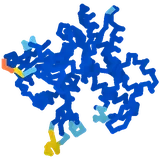 Actin-related protein T3ACTRT3 · Q9BYD9 Actin-related protein T3ACTRT3 · Q9BYD9 | A cytoplasmic, cytoskeleton-associated actin-related scaffold that uses an ATP-tunable actin fold to organize multiprotein assemblies controlling vesicle traffic. | Dark |
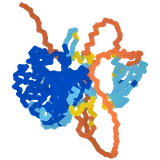 Adenosine deaminase domain-containing protein 2ADAD2 · Q8NCV1 Adenosine deaminase domain-containing protein 2ADAD2 · Q8NCV1 | A nuclear RNA-processing enzyme that couples a double-stranded RNA-binding module to a catalytic deaminase/editase core to modulate adenosine-containing nucleic acids. | Dark |
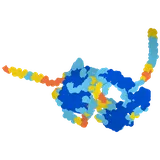 Disintegrin and metalloproteinase domain-containing protein 20ADAM20 · O43506 Disintegrin and metalloproteinase domain-containing protein 20ADAM20 · O43506 | A membrane-associated zinc-dependent protease that is displayed as a type I single-pass protein at the cell surface. | Dark |
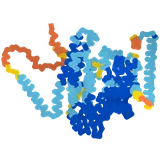 Uncharacterized aarF domain-containing protein kinase 5ADCK5 · Q3MIX3 Uncharacterized aarF domain-containing protein kinase 5ADCK5 · Q3MIX3 | A mitochondrion-localized assembly factor that uses an atypical kinase-like scaffold to organize protein complexes controlling mitochondrial dynamics. | Dark |
 Adhesion G-protein coupled receptor F2ADGRF2 · Q8IZF7 Adhesion G-protein coupled receptor F2ADGRF2 · Q8IZF7 | A membrane-embedded adhesion-type G protein-coupled receptor that undergoes autoproteolytic priming and then transduces extracellular adhesion cues into intracellular G protein signaling. | Dark |
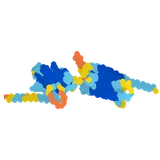 Adhesion G-protein coupled receptor G5ADGRG5 · Q8IZF4 Adhesion G-protein coupled receptor G5ADGRG5 · Q8IZF4 | A human class B orphan G protein-coupled receptor that resides at the cell surface as a multi-pass membrane protein. | Dark |
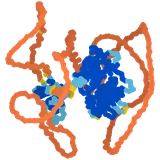 Arf-GAP with GTPase, ANK repeat and PH domain-containing protein 4AGAP4 · Q96P64 Arf-GAP with GTPase, ANK repeat and PH domain-containing protein 4AGAP4 · Q96P64 | A cytosolic trafficking regulator that couples membrane targeting to ARF small GTPase control. | Dark |
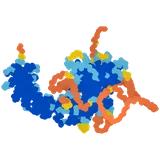 Cytosolic carboxypeptidase 4AGBL1 · Q96MI9 Cytosolic carboxypeptidase 4AGBL1 · Q96MI9 | A soluble human metalloexopeptidase that trims glutamate residues from the C-termini of modified proteins. | Dark |
 Putative uncharacterized protein encoded by AGPAT4-IT1AGPAT4-IT1 · Q9H0P7 Putative uncharacterized protein encoded by AGPAT4-IT1AGPAT4-IT1 · Q9H0P7 | A human nuclear scaffold that concentrates in the nucleoplasm and associates with the nuclear envelope, where it organizes protein assemblies that regulate gene programs underlying bone formation and remodeling. | Dark |
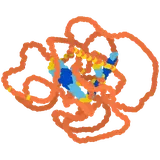 Protein AKNAD1AKNAD1 · Q5T1N1 Protein AKNAD1AKNAD1 · Q5T1N1 | A human cytoskeletal organizer that assembles multivalent complexes to control microtubule nucleation and spindle formation. | Dark |
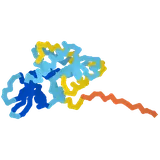 Putative glycosyltransferase ALG1L2ALG1L2 · C9J202 Putative glycosyltransferase ALG1L2ALG1L2 · C9J202 | A single-pass endoplasmic reticulum membrane enzyme that projects a soluble catalytic domain into the cytosol to initiate assembly of the lipid-linked oligosaccharide used for asparagine-linked protein glycosylation. | Dark |
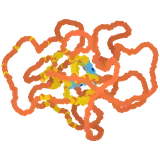 APC membrane recruitment protein 3AMER3 · Q8N944 APC membrane recruitment protein 3AMER3 · Q8N944 | A cytosolic adaptor that transiently associates with membranes to assemble signaling complexes that restrain beta-catenin activity. | Dark |
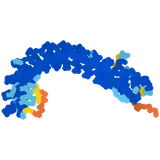 Ankyrin repeat and death domain-containing protein 1AANKDD1A · Q495B1 Ankyrin repeat and death domain-containing protein 1AANKDD1A · Q495B1 | A soluble human signaling adaptor that uses an extensive ankyrin-repeat scaffold to bind multiple partners and a C-terminal death-domain module to assemble higher-order signaling complexes. | Dark |
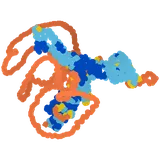 Ankyrin repeat and IBR domain-containing protein 1ANKIB1 · Q9P2G1 Ankyrin repeat and IBR domain-containing protein 1ANKIB1 · Q9P2G1 | A soluble human E3 ubiquitin ligase that assembles substrates through ankyrin-repeat scaffolding and catalyzes ubiquitin transfer via a RING–IBR–Rcat core. | Dark |
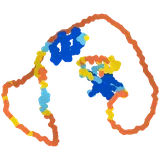 Ankyrin repeat domain-containing protein 40ANKRD40 · Q6AI12 Ankyrin repeat domain-containing protein 40ANKRD40 · Q6AI12 | A human nucleocytoplasmic scaffold that uses ankyrin repeats and a C‑terminal ubiquitin‑like module to assemble transcriptional regulatory complexes. | Dark |
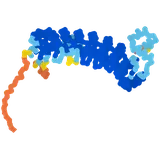 Ankyrin repeat domain-containing protein 61ANKRD61 · A6NGH8 Ankyrin repeat domain-containing protein 61ANKRD61 · A6NGH8 | A soluble nuclear adaptor that uses a tandem ankyrin-repeat scaffold to capture protein substrates and a SOCS-box-like module to recruit Elongin–Cullin ubiquitin ligase cores. | Dark |
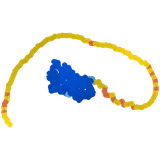 Acidic leucine-rich nuclear phosphoprotein 32 family member CANP32C · O43423 Acidic leucine-rich nuclear phosphoprotein 32 family member CANP32C · O43423 | A phospho-regulated leucine-rich repeat scaffold that operates in the nucleus and perinuclear rim to coordinate chromatin assembly and RNA handling. | Dark |
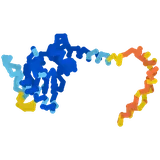 AP-3 complex subunit sigma-2AP3S2 · P59780 AP-3 complex subunit sigma-2AP3S2 · P59780 | A cytoplasmic adaptor-chain subunit of a vesicle-coat complex that organizes intracellular membrane trafficking. | Dark |
 Putative C->U-editing enzyme APOBEC-4APOBEC4 · Q8WW27 Putative C->U-editing enzyme APOBEC-4APOBEC4 · Q8WW27 | A soluble human RNA–RNP assembly factor that uses a deaminase-derived scaffold to organize RNA-editing and surveillance complexes. | Dark |
 Apolipoprotein L4APOL4 · Q9BPW4 Apolipoprotein L4APOL4 · Q9BPW4 | A human apolipoprotein-L–family lipid-handling scaffold that binds lipids and assembles multiprotein complexes to modulate inflammatory signaling. | Dark |
 Aquaporin-12BAQP12B · A6NM10 Aquaporin-12BAQP12B · A6NM10 | An intracellular aquaporin-like tetrameric assembly that resides predominantly in the cytosol and uses a channel-derived scaffold to organize protein complexes rather than mediating bulk water flow. | Dark |
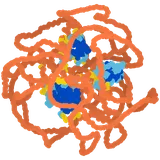 Rho GTPase-activating protein 23ARHGAP23 · Q9P227 Rho GTPase-activating protein 23ARHGAP23 · Q9P227 | A cytoplasmic regulator that assembles at membrane-proximal signaling hubs via PDZ- and PH-mediated targeting and then switches off local Rho-family signaling through a catalytic inactivation module. | Dark |
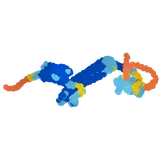 Rho guanine nucleotide exchange factor 37ARHGEF37 · A1IGU5 Rho guanine nucleotide exchange factor 37ARHGEF37 · A1IGU5 | A cytoplasmic, membrane-proximal guanine nucleotide exchange factor that activates Rho-family small GTPases through an N-terminal catalytic module and is spatially programmed by a membrane-curvature–sensing core and tandem SH3 adaptor-binding domains. | Dark |
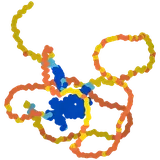 AT-rich interactive domain-containing protein 3CARID3C · A6NKF2 AT-rich interactive domain-containing protein 3CARID3C · A6NKF2 | A human transcriptional regulator that uses an AT-rich DNA-binding core to anchor on regulatory elements and a C-terminal assembly module to recruit cofactors, thereby enhancing RNA polymerase II–dependent gene activation. | Dark |
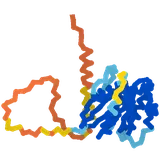 ADP-ribosylation factor-like protein 10ARL10 · Q8N8L6 ADP-ribosylation factor-like protein 10ARL10 · Q8N8L6 | A small regulatory GTPase that cycles between GTP- and GDP-bound states to control effector binding and signaling assemblies. | Dark |
 Armadillo repeat-containing protein 12ARMC12 · Q5T9G4 Armadillo repeat-containing protein 12ARMC12 · Q5T9G4 | A nuclear armadillo-repeat scaffold that promotes cell growth by assembling and stabilizing nuclear regulatory complexes. | Dark |
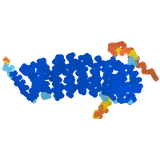 Armadillo-like helical domain containing protein 1ARMH1 · Q6PIY5 Armadillo-like helical domain containing protein 1ARMH1 · Q6PIY5 | A human cytoplasmic scaffold that uses an armadillo-like helical array to mediate multivalent protein binding and promote proteasome assembly. | Dark |
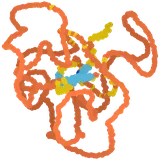 Armadillo-like helical domain-containing protein 4ARMH4 · Q86TY3 Armadillo-like helical domain-containing protein 4ARMH4 · Q86TY3 | A cytoplasmic armadillo-like helical scaffold that concentrates in punctae associated with secretory and endocytic pathways, coordinating membrane trafficking and macromolecular assembly central to photoreceptor maturation and retinal layer organization. | Dark |
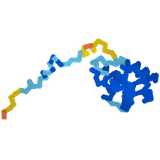 Actin-related protein 2/3 complex subunit 5-like proteinARPC5L · Q9BPX5 Actin-related protein 2/3 complex subunit 5-like proteinARPC5L · Q9BPX5 | A soluble cytoplasmic subunit of the actin-branching machine that stabilizes and positions the Arp2/3 assembly to initiate new actin branches when activated by nucleation-promoting factors. | Dark |
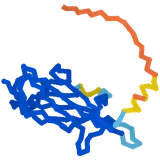 Putative inactive neutral ceramidase BASAH2B · P0C7U1 Putative inactive neutral ceramidase BASAH2B · P0C7U1 | A soluble human enzyme that hydrolyzes ceramide at neutral to alkaline pH to generate sphingosine and free fatty acids, thereby tuning sphingolipid signaling pathways that govern apoptosis and differentiation. | Dark |
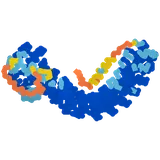 Ankyrin repeat and SOCS box protein 15ASB15 · Q8WXK1 Ankyrin repeat and SOCS box protein 15ASB15 · Q8WXK1 | A cytosolic ankyrin-repeat scaffold that captures specific protein substrates and recruits an Elongin–Cullin–RING ubiquitination module via its SOCS box. | Dark |
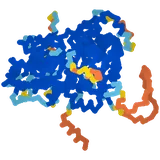 Asparagine synthetase domain-containing protein 1ASNSD1 · Q9NWL6 Asparagine synthetase domain-containing protein 1ASNSD1 · Q9NWL6 | A cytosolic, two-module enzyme that synthesizes asparagine by coupling an N-terminal glutamine-hydrolyzing unit to a C-terminal ATP-dependent ligase site. | Dark |
 V-type proton ATPase subunit S1-like proteinATP6AP1L · Q52LC2 V-type proton ATPase subunit S1-like proteinATP6AP1L · Q52LC2 | A type I single-pass membrane accessory subunit of the V-type proton pump that resides in the endoplasmic reticulum and traffics through the Golgi apparatus. | Dark |
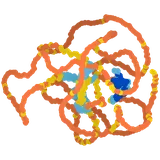 Ataxin-7-like protein 2ATXN7L2 · Q5T6C5 Ataxin-7-like protein 2ATXN7L2 · Q5T6C5 | A nuclear scaffold that organizes transcription-coupled chromatin-modifying assemblies to regulate RNA polymerase II–dependent gene expression. | Dark |
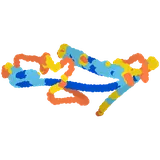 Axonemal dynein light chain domain-containing protein 1AXDND1 · Q5T1B0 Axonemal dynein light chain domain-containing protein 1AXDND1 · Q5T1B0 | A large axonemal dynein-associated scaffold that organizes and stabilizes outer dynein arm assemblies essential for motile cilia and flagella. | Dark |
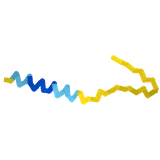 B melanoma antigen 1BAGE · Q13072 B melanoma antigen 1BAGE · Q13072 | A small human stress-responsive adaptor that suppresses cytoskeletal breakdown and promotes cell survival by assembling protein complexes that tune heat and oxidative stress defenses. | Dark |
 Basal body-orientation factor 1BBOF1 · Q8ND07 Basal body-orientation factor 1BBOF1 · Q8ND07 | A soluble, cytoskeleton-associated assembly factor that concentrates at the basal body to promote formation of motile cilia. | Dark |
 BICD family-like cargo adapter 1BICDL1 · Q6ZP65 BICD family-like cargo adapter 1BICDL1 · Q6ZP65 | A cytoplasmic dynein-adaptor scaffold that assembles and stabilizes motor–cargo transport complexes to drive minus-end-directed trafficking of late endosomes and lysosomes toward the centrosomal region. | Dark |
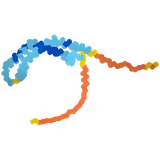 Biorientation of chromosomes in cell division protein 1-like 2BOD1L2 · Q8IYS8 Biorientation of chromosomes in cell division protein 1-like 2BOD1L2 · Q8IYS8 | A non-enzymatic outer-kinetochore scaffold that assembles and stabilizes microtubule–attachment machinery to ensure accurate chromosome biorientation and centromeric cohesion during mitosis. | Dark |
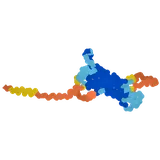 BPI fold-containing family A member 3BPIFA3 · Q9BQP9 BPI fold-containing family A member 3BPIFA3 · Q9BQP9 | A secreted human glycoprotein that uses a BPI/LBP-type fold to bind endotoxin-like bacterial lipids in the extracellular space, assembling transient complexes that neutralize and chaperone amphipathic microbial ligands. | Dark |
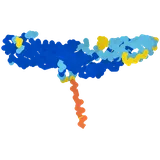 BPI fold-containing family B member 6BPIFB6 · Q8NFQ5 BPI fold-containing family B member 6BPIFB6 · Q8NFQ5 | A secreted human lipid-binding glycoprotein that uses a bilobal BPI/LBP fold to capture and transfer phospholipids and sterols in extracellular fluids and vesicles. | Dark |
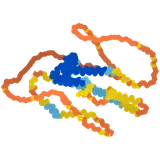 BSD domain-containing protein 1BSDC1 · Q9NW68 BSD domain-containing protein 1BSDC1 · Q9NW68 | A cytosolic adaptor that uses a central BSD module to assemble inhibitory complexes controlling growth and cytoskeletal dynamics. | Dark |
 B box and SPRY domain-containing proteinBSPRY · Q5W0U4 B box and SPRY domain-containing proteinBSPRY · Q5W0U4 | A soluble human scaffold that uses a C-terminal SPRY/B30.2 recognition platform and an N-terminal oligomerization module to assemble signaling complexes that potentiate NF-kappaB pathway activity and downstream transcription. | Dark |
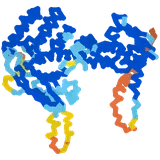 BTB/POZ domain-containing protein 17BTBD17 · A6NE02 BTB/POZ domain-containing protein 17BTBD17 · A6NE02 | A cytoplasmic scaffold that homodimerizes through a BTB/POZ core and recruits partners via adjacent interaction modules to organize secretion- and vesicle-related pathways. | Dark |
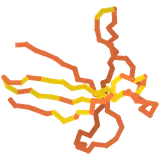 Putative uncharacterized protein BVES-AS1BVES-AS1 · Q5T3Y7 Putative uncharacterized protein BVES-AS1BVES-AS1 · Q5T3Y7 | A soluble mitochondrial adaptor that uses multivalent protein binding to assemble and stabilize macromolecular complexes governing mitochondrial architecture and function. | Dark |
 Uncharacterized protein C10orf142C10orf142 · B7Z368 Uncharacterized protein C10orf142C10orf142 · B7Z368 | A small human membrane-associated protein that likely acts as a membrane-tethered adaptor, using protein–protein interactions to assemble and modulate signaling complexes that govern programmed cell death. | Dark |
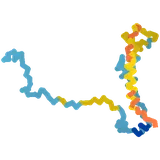 UPF0686 protein C11orf1C11orf1 · Q9H5F2 UPF0686 protein C11orf1C11orf1 · Q9H5F2 | A human adaptor/scaffold protein that concentrates in the nucleoplasm and enhances transcriptional output by stabilizing multiprotein assemblies. | Dark |
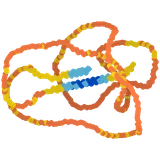 Uncharacterized protein C11orf24C11orf24 · Q96F05 Uncharacterized protein C11orf24C11orf24 · Q96F05 | A soluble human adaptor that enhances transcriptional activation and coordinates gene expression with membrane trafficking. | Dark |
 Uncharacterized protein C12orf73C12orf73 · Q69YU5 Uncharacterized protein C12orf73C12orf73 · Q69YU5 | A small single-pass assembly factor embedded in the mitochondrial inner membrane that uses selective protein binding to stabilize and organize intermediates for the assembly of complexes III and IV of the respiratory chain. | Dark |
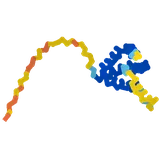 Uncharacterized protein C14orf119C14orf119 · Q9NWQ9 Uncharacterized protein C14orf119C14orf119 · Q9NWQ9 | A soluble human adaptor that organizes receptor-proximal signaling assemblies to tune G protein-coupled receptor pathways and drive cytoskeleton-dependent behaviors. | Dark |
 Uncharacterized protein C15orf39C15orf39 · Q6ZRI6 Uncharacterized protein C15orf39C15orf39 · Q6ZRI6 | A large soluble human scaffold that binds PRMT2-centered methyltransferase assemblies and tunes transcription indirectly. | Dark |
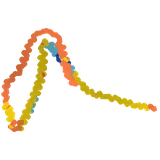 Putative uncharacterized protein C15orf54C15orf54 · Q8N8G6 Putative uncharacterized protein C15orf54C15orf54 · Q8N8G6 | A soluble human adaptor that concentrates in nuclear bodies and uses multivalent protein binding to restrain kinase output. | Dark |
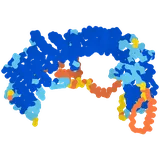 UPF0505 protein C16orf62C16orf62 · Q7Z3J2 UPF0505 protein C16orf62C16orf62 · Q7Z3J2 | A soluble endosomal sorting scaffold that organizes cargo selection and carrier formation within the endomembrane system. | Dark |
 UPF0450 protein C17orf58C17orf58 · Q2M2W7 UPF0450 protein C17orf58C17orf58 · Q2M2W7 | A human extracellular modulator that uses a netrin-like OB-fold to bind partners with high affinity and anchor within collagen-rich matrices. | Dark |
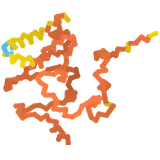 Uncharacterized protein C19orf71C19orf71 · A6NCJ1 Uncharacterized protein C19orf71C19orf71 · A6NCJ1 | A soluble assembly scaffold that supports mitochondrial function by organizing and stabilizing the biogenesis of respiratory complex I. | Dark |
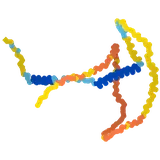 Uncharacterized protein C19orf85C19orf85 · A0A1B0GUS0 Uncharacterized protein C19orf85C19orf85 · A0A1B0GUS0 | A human cytoplasmic adaptor that concentrates at the spindle and uses multivalent protein binding to assemble signaling and transcriptional complexes. | Dark |
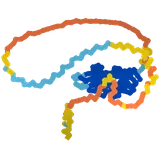 Complement C1q-like protein 2C1QL2 · Q7Z5L3 Complement C1q-like protein 2C1QL2 · Q7Z5L3 | A secreted extracellular organizer that assembles into multimeric complexes to scaffold synapse formation and maturation. | Dark |
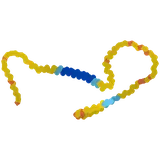 Transmembrane protein C1orf162C1orf162 · Q8NEQ5 Transmembrane protein C1orf162C1orf162 · Q8NEQ5 | A conserved human multi-pass membrane protein that resides predominantly in the endoplasmic reticulum, where it acts as a membrane-embedded scaffold to organize intracellular signaling assemblies. | Dark |
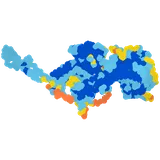 Uncharacterized protein C20orf194C20orf194 · Q5TEA3 Uncharacterized protein C20orf194C20orf194 · Q5TEA3 | A soluble human assembly scaffold that concentrates in the nucleoplasm and also resides in the cytosol, where it organizes large protein complexes. | Dark |
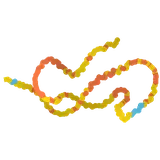 Uncharacterized protein C20orf203C20orf203 · Q8NBC4 Uncharacterized protein C20orf203C20orf203 · Q8NBC4 | A soluble nucleocytoplasmic adaptor that uses multivalent protein binding to coordinate transport and quality-control pathways. | Dark |
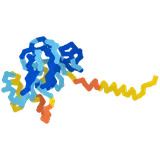 Uncharacterized protein C21orf62C21orf62 · Q9NYP8 Uncharacterized protein C21orf62C21orf62 · Q9NYP8 | A single-pass membrane adaptor that assembles signaling and trafficking complexes at the Golgi and related endomembrane stations. | Dark |
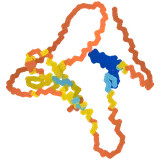 Uncharacterized protein C22orf31C22orf31 · O95567 Uncharacterized protein C22orf31C22orf31 · O95567 | A soluble mitochondrial matrix adaptor that uses multivalent binding to organize matrix-facing assemblies involved in energy production. | Dark |
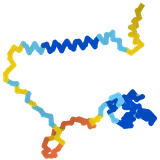 UPF0561 protein C2orf68C2orf68 · Q2NKX9 UPF0561 protein C2orf68C2orf68 · Q2NKX9 | A soluble cytoplasmic adaptor that promotes assembly and stabilization of cytosolic ribonucleoprotein complexes to preserve mRNA integrity. | Dark |
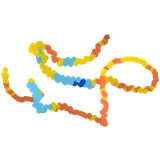 Uncharacterized membrane protein C3orf80C3orf80 · F5H4A9 Uncharacterized membrane protein C3orf80C3orf80 · F5H4A9 | A cytoplasmic adaptor that promotes apoptosis and modulates proteostasis by assembling protein complexes rather than catalyzing reactions. | Dark |
 Uncharacterized protein C4orf51C4orf51 · C9J302 Uncharacterized protein C4orf51C4orf51 · C9J302 | A soluble nuclear adaptor that is transcriptionally induced by a viral transactivator and operates in the nucleoplasm to organize higher-order assemblies. | Dark |
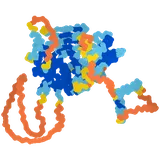 Uncharacterized protein C5orf34C5orf34 · Q96MH7 Uncharacterized protein C5orf34C5orf34 · Q96MH7 | A human cytosolic scaffold that concentrates at the centrosome and organizes multivalent protein assemblies. | Dark |
 Putative uncharacterized protein C6orf52C6orf52 · Q5T4I8 Putative uncharacterized protein C6orf52C6orf52 · Q5T4I8 | A soluble human adaptor that shuttles between cytoplasm and nucleus to coordinate RNA-centered assemblies with transcriptional control. | Dark |
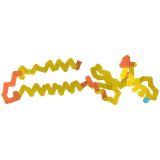 Uncharacterized protein C7orf69C7orf69 · Q9H7B7 Uncharacterized protein C7orf69C7orf69 · Q9H7B7 | A soluble human adaptor that concentrates in the nucleus and uses multivalent protein binding to tune receptor-driven JAK-STAT signaling. | Dark |
 Uncharacterized protein C8orf74C8orf74 · Q6P047 Uncharacterized protein C8orf74C8orf74 · Q6P047 | A soluble human adaptor that organizes ribonucleoprotein assemblies through multivalent binding. | Dark |
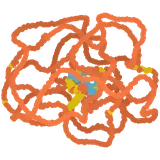 Uncharacterized protein C9orf131C9orf131 · Q5VYM1 Uncharacterized protein C9orf131C9orf131 · Q5VYM1 | A large human assembly scaffold that uses extensive protein–protein interaction surfaces to organize the biogenesis of the vacuolar proton pump and associated trafficking pathways. | Dark |
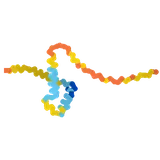 Uncharacterized protein C9orf153C9orf153 · Q5TBE3 Uncharacterized protein C9orf153C9orf153 · Q5TBE3 | A small nucleoplasmic adaptor that lacks catalytic motifs and instead uses multivalent protein binding to assemble and stabilize chromatin-regulatory complexes. | Dark |
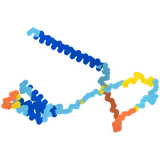 Ciliary-associated calcium-binding coiled-coil protein 1CABCOCO1 · Q8IVU9 Ciliary-associated calcium-binding coiled-coil protein 1CABCOCO1 · Q8IVU9 | A soluble adaptor that organizes ribonucleoprotein assemblies required for pre-mRNA processing. | Dark |
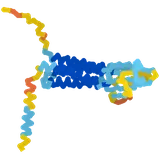 Voltage-dependent calcium channel gamma-6 subunitCACNG6 · Q9BXT2 Voltage-dependent calcium channel gamma-6 subunitCACNG6 · Q9BXT2 | A multi-pass membrane auxiliary subunit of voltage-gated calcium channel complexes in human cells that uses a claudin-like tetraspan scaffold to regulate channel assembly, trafficking, and gating. | Dark |
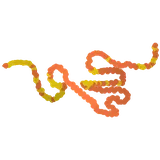 Putative uncharacterized protein encoded by CACTIN-AS1CACTIN-AS1 · Q8N1I8 Putative uncharacterized protein encoded by CACTIN-AS1CACTIN-AS1 · Q8N1I8 | A soluble human adaptor that promotes cell proliferation by organizing protein assemblies controlling the cell cycle and mitosis. | Dark |
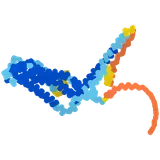 Calcium homeostasis modulator protein 3CALHM3 · Q86XJ0 Calcium homeostasis modulator protein 3CALHM3 · Q86XJ0 | A human multi-pass membrane protein that assembles into homooligomeric complexes at the cell surface to modulate calcium and broader ion homeostasis. | Dark |
 Calcyphosin-2CAPS2 · Q9BXY5 Calcyphosin-2CAPS2 · Q9BXY5 | A calcium-regulated adaptor that couples membrane lipids to the cytoskeleton. | Dark |
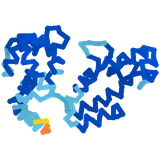 Calcyphosin-like proteinCAPSL · Q8WWF8 Calcyphosin-like proteinCAPSL · Q8WWF8 | A soluble human calcium sensor that uses paired EF-hand motifs to bind Ca2+ and undergo a conformational switch that promotes assembly of cytosolic protein complexes. | Dark |
 Protein CASC1CASC1 · Q6TDU7 Protein CASC1CASC1 · Q6TDU7 | A cytoplasmic dynein-associated scaffold that organizes microtubule-based transport and ciliary motility. | Dark |
 Protein CASC2, isoforms 1/2CASC2 · Q8IU53 Protein CASC2, isoforms 1/2CASC2 · Q8IU53 | A soluble mitochondrial RNA–protein assembly factor that uses multivalent binding to stabilize mitochondrial transcripts and coordinate their delivery to the translation machinery. | Dark |
 Cation channel sperm-associated protein subunit gammaCATSPERG · Q6ZRH7 Cation channel sperm-associated protein subunit gammaCATSPERG · Q6ZRH7 | An auxiliary membrane subunit that organizes and stabilizes a sperm flagellar calcium-channel assembly. | Dark |
 Cation channel sperm-associated protein subunit zetaCATSPERZ · Q9NTU4 Cation channel sperm-associated protein subunit zetaCATSPERZ · Q9NTU4 | An auxiliary subunit of the sperm flagellar machinery that assembles and stabilizes complexes required for calcium-dependent motility. | Dark |
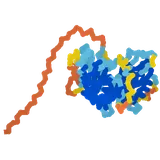 COBW domain-containing protein 3CBWD3 · Q5JTY5 COBW domain-containing protein 3CBWD3 · Q5JTY5 | A soluble human GTP-dependent metallochaperone that uses an NTPase switch coupled to a zinc-handling C-terminal module to activate zinc-requiring client proteins and ribosome-associated pathways. | Dark |
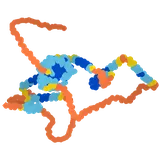 Coiled-coil domain-containing protein 17CCDC17 · Q96LX7 Coiled-coil domain-containing protein 17CCDC17 · Q96LX7 | A soluble, coiled-coil–rich scaffold that assembles multiprotein complexes to nucleate and stabilize microtubules, thereby building and maintaining the mitotic spindle. | Dark |
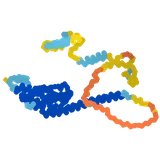 Coiled-coil domain-containing protein 84CCDC84 · Q86UT8 Coiled-coil domain-containing protein 84CCDC84 · Q86UT8 | A human centrosome- and spindle-associated scaffold that uses multivalent protein binding to organize assemblies controlling centrosome duplication and mitotic spindle function. | Dark |
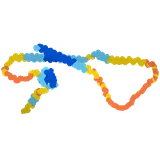 Coiled-coil domain-containing glutamate-rich protein 2CCER2 · I3L3R5 Coiled-coil domain-containing glutamate-rich protein 2CCER2 · I3L3R5 | A human adaptor-like regulator that concentrates on secretory granules to organize protein assemblies governing the regulated secretory pathway. | Dark |
 Cyclin-I2CCNI2 · Q6ZMN8 Cyclin-I2CCNI2 · Q6ZMN8 | A nuclear scaffold that uses a cyclin-box fold to bind regulatory partners and assemble nucleoplasmic complexes controlling proliferation. | Dark |
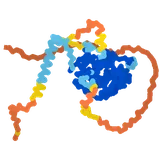 Cyclin-Y-like protein 1CCNYL1 · Q8N7R7 Cyclin-Y-like protein 1CCNYL1 · Q8N7R7 | A human regulatory cyclin that assembles with and modulates cyclin-dependent kinases to coordinate cell-cycle control. | Dark |
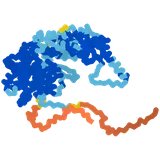 Putative T-complex protein 1 subunit theta-like 1CCT8L1P · A6NM43 Putative T-complex protein 1 subunit theta-like 1CCT8L1P · A6NM43 | A cytoplasmic subunit of the eukaryotic group II chaperonin complex that assembles with related subunits to form an ATP-driven folding cage. | Dark |
 Putative T-cell surface glycoprotein CD8 beta-2 chainCD8B2 · A6NJW9 Putative T-cell surface glycoprotein CD8 beta-2 chainCD8B2 · A6NJW9 | A cell-surface glycoprotein that forms a single-pass membrane receptor with a large extracellular immunoglobulin-like ectodomain. | Dark |
 Cadherin-related family member 4CDHR4 · A6H8M9 Cadherin-related family member 4CDHR4 · A6H8M9 | A single-pass plasma membrane adhesion molecule whose extracellular region comprises tandem cadherin-like repeats that bind calcium to stabilize a rigid adhesive scaffold. | Dark |
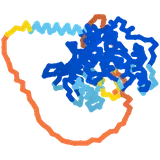 Cyclin-dependent kinase-like 4CDKL4 · Q5MAI5 Cyclin-dependent kinase-like 4CDKL4 · Q5MAI5 | A human nucleocytoplasmic serine/threonine kinase that uses a CDK-like catalytic core to phosphorylate diverse substrates, integrating cytoplasmic signaling with nuclear programs. | Dark |
 Testis-specific chromodomain protein Y 2CDY2A · Q9Y6F7 Testis-specific chromodomain protein Y 2CDY2A · Q9Y6F7 | A nuclear chromatin-associated regulator that uses an N-terminal methyl-lysine–recognition module to anchor on modified nucleosomes and a C-terminal crotonase-like scaffold to assemble regulatory complexes. | Dark |
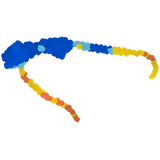 Carcinoembryonic antigen-related cell adhesion molecule 21CEACAM21 · Q3KPI0 Carcinoembryonic antigen-related cell adhesion molecule 21CEACAM21 · Q3KPI0 | A human cell-surface adhesion molecule that presents a tandem immunoglobulin architecture to mediate multivalent binding at the plasma membrane interface. | Dark |
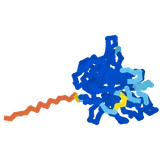 Chymotrypsin-like elastase family member 2BCELA2B · P08218 Chymotrypsin-like elastase family member 2BCELA2B · P08218 | A secreted human serine endopeptidase that operates in the extracellular space to remodel protein substrates through elastase-like cleavage. | Dark |
 Putative uncharacterized protein CELF2-AS1CELF2-AS1 · Q8N7Q2 Putative uncharacterized protein CELF2-AS1CELF2-AS1 · Q8N7Q2 | A soluble human scaffold that accumulates in nuclear bodies and the nucleolus, where it assembles inhibitory complexes that suppress cell migration and invasion. | Dark |
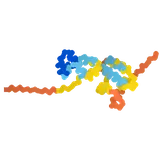 CENPB DNA-binding domain-containing protein 1CENPBD1 · B2RD01 CENPB DNA-binding domain-containing protein 1CENPBD1 · B2RD01 | A nuclear chromatin-associated regulator that uses a bipartite helix–turn–helix/homeodomain-like scaffold to assemble transcriptional complexes in the nucleoplasm. | Dark |
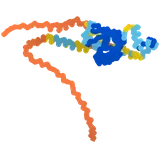 Centromere protein V-like protein 1CENPVL1 · A0A0U1RR11 Centromere protein V-like protein 1CENPVL1 · A0A0U1RR11 | A human mitotic scaffold that assembles and stabilizes higher-order complexes controlling chromosome–microtubule coupling and late mitotic events. | Dark |
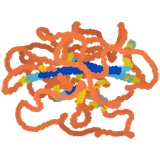 Centrosomal protein of 126 kDaCEP126 · Q9P2H0 Centrosomal protein of 126 kDaCEP126 · Q9P2H0 | A large human centrosomal scaffold that organizes microtubule-based structures by assembling multiprotein complexes required for spindle formation and faithful chromosome segregation. | Dark |
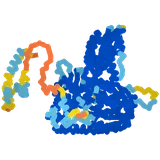 Centrosomal protein of 76 kDaCEP76 · Q8TAP6 Centrosomal protein of 76 kDaCEP76 · Q8TAP6 | A centrosome-localized adaptor that assembles and regulates large protein complexes controlling centriole and centrosome number. | Dark |
 Cilia- and flagella-associated protein 57CFAP57 · Q96MR6 Cilia- and flagella-associated protein 57CFAP57 · Q96MR6 | A human cilia/flagella-associated scaffold that uses tandem beta-propeller modules to organize multiprotein assemblies at the base of motile cilia and sperm flagella. | Dark |
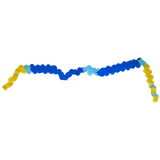 Uncharacterized protein CFAP97D2CFAP97D2 · A0A1B0GU71 Uncharacterized protein CFAP97D2CFAP97D2 · A0A1B0GU71 | A human cilia-associated scaffold that concentrates in the axoneme and uses multivalent protein binding to organize axonemal assemblies. | Dark |
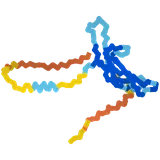 Choriogonadotropin subunit beta variant 1CGB1 · A6NKQ9 Choriogonadotropin subunit beta variant 1CGB1 · A6NKQ9 | A secreted, disulfide-rich glycoprotein hormone subunit that assembles into a heterodimeric ligand and signals through cell-surface receptors to coordinate reproductive and broader endocrine pathways. | Dark |
 Putative charged multivesicular body protein 4B-like protein CHMP4BP1CHMP4BP1 · P59074 Putative charged multivesicular body protein 4B-like protein CHMP4BP1CHMP4BP1 · P59074 | A cytosolic ESCRT-III filament-forming factor that homodimerizes and polymerizes to remodel membranes during endosomal sorting, multivesicular body biogenesis, and late cytokinesis. | Dark |
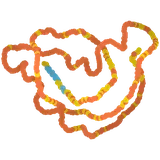 Chromosome transmission fidelity protein 8 homolog isoform 2CHTF8 · P0CG12 Chromosome transmission fidelity protein 8 homolog isoform 2CHTF8 · P0CG12 | A human nuclear regulatory scaffold that assembles through self-association to bind other proteins and dampen transcriptional output. | Dark |
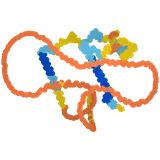 Corepressor interacting with RBPJ 1CIR1 · Q86X95 Corepressor interacting with RBPJ 1CIR1 · Q86X95 | A human transcriptional corepressor that assembles multi-protein repression complexes to silence RNA polymerase II–driven genes. | Dark |
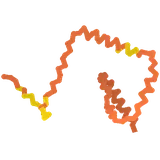 Putative uncharacterized protein CIRBP-AS1CIRBP-AS1 · Q8TBR5 Putative uncharacterized protein CIRBP-AS1CIRBP-AS1 · Q8TBR5 | A soluble nuclear scaffold that concentrates in nuclear bodies and the nucleolus to modulate signaling-dependent transcription. | Dark |
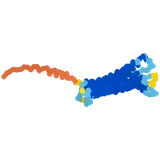 Putative claudin-24CLDN24 · A6NM45 Putative claudin-24CLDN24 · A6NM45 | A multi-pass membrane component of epithelial tight junctions that assembles into linear strands to seal the paracellular space and organize cell polarity. | Dark |
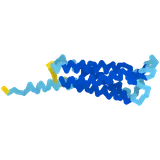 Claudin domain-containing protein 2CLDND2 · Q8NHS1 Claudin domain-containing protein 2CLDND2 · Q8NHS1 | A four-pass membrane scaffold that assembles higher-order complexes at the cell surface and along the endolysosomal pathway. | Dark |
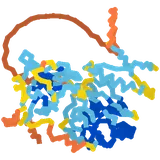 Putative C-type lectin domain family 20 member ACLEC20A · Q6ZU45 Putative C-type lectin domain family 20 member ACLEC20A · Q6ZU45 | A secreted human lectin-like scaffold that operates outside the cell to organize adhesion and signaling assemblies. | Dark |
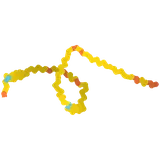 Putative chronic lymphocytic leukemia up-regulated protein 1 opposite strand transcript proteinCLLU1OS · Q5K130 Putative chronic lymphocytic leukemia up-regulated protein 1 opposite strand transcript proteinCLLU1OS · Q5K130 | A soluble human scaffold that assembles into tetramers to coordinate transcriptional regulation and signal-responsive pathways. | Dark |
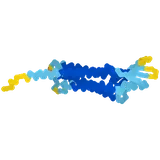 Clarin-3CLRN3 · Q8NCR9 Clarin-3CLRN3 · Q8NCR9 | A multi-pass membrane organizer that stabilizes specialized membrane microdomains and junctional complexes in human sensory and epithelial cells. | Dark |
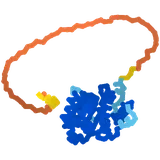 Protein CMSS1CMSS1 · Q9BQ75 Protein CMSS1CMSS1 · Q9BQ75 | A predominantly nuclear RNA-processing factor that assembles and remodels ribonucleoprotein complexes to fine-tune pre-mRNA splicing and broader RNA metabolism. | Dark |
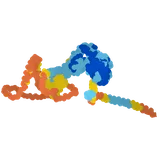 Cyclic nucleotide-binding domain-containing protein 2CNBD2 · Q96M20 Cyclic nucleotide-binding domain-containing protein 2CNBD2 · Q96M20 | A soluble human cytosolic scaffold that uses a tandem cyclic-nucleotide–binding–like core to regulate phosphatidylcholine breakdown. | Dark |
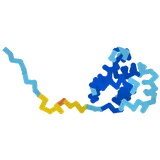 CornifelinCNFN · Q9BYD5 CornifelinCNFN · Q9BYD5 | A membrane-associated adaptor that concentrates at the plasma membrane and within cytoplasmic pools of stratified epithelia, where it organizes protein–protein assemblies that tune post-translational modification pathways during terminal differentiation. | Dark |
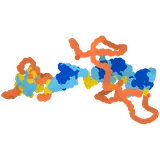 Metal transporter CNNM1CNNM1 · Q9NRU3 Metal transporter CNNM1CNNM1 · Q9NRU3 | A human multi-pass membrane transporter that assembles into higher-order complexes and uses an extracellular immunoglobulin-like module, a transmembrane ion-conducting core, and a cytosolic CBS/CNBH regulatory tail to control cellular magnesium balance. | Dark |
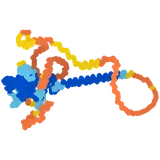 Protein CNPPD1CNPPD1 · Q9BV87 Protein CNPPD1CNPPD1 · Q9BV87 | A human cyclin-like adaptor that assembles and regulates kinase-centered signaling modules at the endoplasmic reticulum to coordinate cell division and ciliogenesis. | Dark |
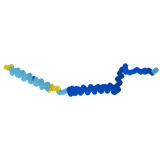 Cytochrome c oxidase subunit 7B2, mitochondrialCOX7B2 · Q8TF08 Cytochrome c oxidase subunit 7B2, mitochondrialCOX7B2 · Q8TF08 | A small single-pass membrane subunit of human cytochrome c oxidase that stabilizes the architecture of the terminal oxidase in the mitochondrial inner membrane. | Dark |
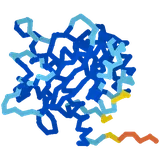 Ciliogenesis and planar polarity effector 2CPLANE2 · Q9BU20 Ciliogenesis and planar polarity effector 2CPLANE2 · Q9BU20 | A centrosome- and centriole-anchored small GTPase that orchestrates ciliogenesis and planar polarity by switching between GTP- and GDP-bound states to assemble trafficking and gating complexes at the ciliary base and transition zone. | Dark |
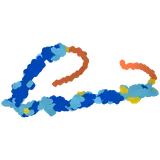 Complement component receptor 1-like proteinCR1L · Q2VPA4 Complement component receptor 1-like proteinCR1L · Q2VPA4 | A human cell-surface regulator that presents a long extracellular array of complement-control modules to bind multiple partners and assemble receptor complexes that tune complement pathway activity. | Dark |
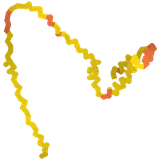 Chondrosarcoma-associated gene 2/3 proteinCSAG2 · Q9Y5P2 Chondrosarcoma-associated gene 2/3 proteinCSAG2 · Q9Y5P2 | A secreted, vesicle-packaged binding scaffold that modulates signaling by assembling inhibitory complexes and by acting as a soluble modulator outside the cell. | Dark |
 Casein kinase II subunit alpha 3CSNK2A3 · Q8NEV1 Casein kinase II subunit alpha 3CSNK2A3 · Q8NEV1 | A nuclear serine/threonine kinase catalytic subunit that drives constitutive phosphorylation programs in the nucleoplasm. | Dark |
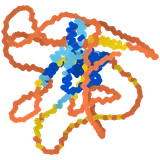 Cysteine/serine-rich nuclear protein 3CSRNP3 · Q8WYN3 Cysteine/serine-rich nuclear protein 3CSRNP3 · Q8WYN3 | A nuclear regulatory scaffold that assembles phosphatase-containing complexes to modulate gene expression and cell-fate decisions. | Dark |
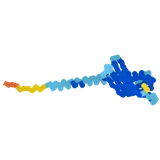 Putative cystatin-9-like protein CST9LP1CST9LP1 · Q5W188 Putative cystatin-9-like protein CST9LP1CST9LP1 · Q5W188 | A secreted human cystatin-like protein that deploys a cystatin fold to mediate high-affinity protein binding in the extracellular space. | Dark |
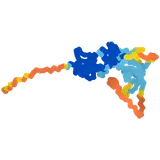 Cancer/testis antigen 55CT55 · Q8WUE5 Cancer/testis antigen 55CT55 · Q8WUE5 | A cytoplasmic RNA–protein scaffold that uses an OB-fold core and a CT antigen-like interaction module to bind nucleic acids and assemble effector complexes controlling mRNA fate during germ cell differentiation. | Dark |
 cTAGE family member 9CTAGE9 · A4FU28 cTAGE family member 9CTAGE9 · A4FU28 | A human ER-associated scaffold that uses an extended coiled-coil to assemble membrane-proximal complexes controlling protein quality and signaling. | Dark |
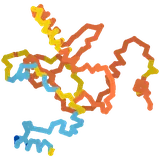 Putative inactive cathepsin L-like protein CTSL3PCTSL3P · Q5NE16 Putative inactive cathepsin L-like protein CTSL3PCTSL3P · Q5NE16 | A soluble cysteine protease that is synthesized as an auto-inhibited zymogen and activated in acidic compartments to perform limited proteolysis. | Dark |
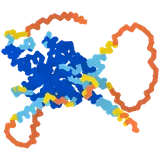 Cytoplasmic tRNA 2-thiolation protein 2CTU2 · Q2VPK5 Cytoplasmic tRNA 2-thiolation protein 2CTU2 · Q2VPK5 | A cytoplasmic assembly factor that organizes the cytosolic machinery responsible for installing sulfur at the wobble uridine of select tRNAs. | Dark |
 Protein CUSTOSCUSTOS · Q96C57 Protein CUSTOSCUSTOS · Q96C57 | A human regulatory scaffold that suppresses canonical Wnt signaling by assembling protein complexes at the nuclear envelope. | Dark |
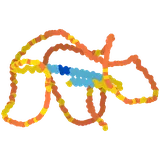 Uncharacterized protein CXorf66CXorf66 · Q5JRM2 Uncharacterized protein CXorf66CXorf66 · Q5JRM2 | A soluble human adaptor that uses multivalent binding to organize complexes controlling calcium release from intracellular stores into the cytosol. | Dark |
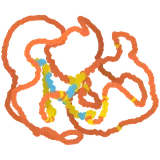 Cylicin-1CYLC1 · P35663 Cylicin-1CYLC1 · P35663 | A nuclear scaffold in human germ cells that uses a cylicin-specific N-terminal module and an extended family framework to assemble multivalent protein complexes essential for spermatogenesis. | Dark |
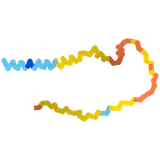 Cysteine-rich and transmembrane domain-containing protein 1CYSTM1 · Q9H1C7 Cysteine-rich and transmembrane domain-containing protein 1CYSTM1 · Q9H1C7 | A small, single-pass membrane organizer that uses a cysteine-rich extracellular loop to assemble binding-dependent complexes controlling vesicle trafficking and cell-surface signaling. | Dark |
 Dynein assembly factor with WDR repeat domains 1DAW1 · Q8N136 Dynein assembly factor with WDR repeat domains 1DAW1 · Q8N136 | A cytosolic beta-propeller scaffold that concentrates at centrosomes and basal bodies to coordinate cilium biogenesis. | Dark |
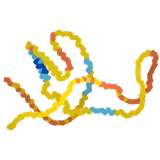 Dysbindin domain-containing protein 2DBNDD2 · Q9BQY9 Dysbindin domain-containing protein 2DBNDD2 · Q9BQY9 | A soluble scaffold that assembles higher-order complexes controlling vesicle-associated trafficking and signaling. | Dark |
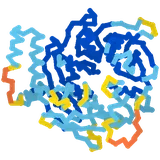 DDB1- and CUL4-associated factor 4-like protein 1DCAF4L1 · Q3SXM0 DDB1- and CUL4-associated factor 4-like protein 1DCAF4L1 · Q3SXM0 | A nucleoplasmic adaptor that uses a WD40 β-propeller scaffold to bind and present nuclear protein substrates to a cullin-RING ubiquitin ligase. | Dark |
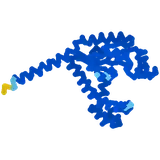 Dephospho-CoA kinase domain-containing proteinDCAKD · Q8WVC6 Dephospho-CoA kinase domain-containing proteinDCAKD · Q8WVC6 | A soluble human kinase that completes coenzyme A biosynthesis by using ATP to phosphorylate dephospho-CoA, thereby supplying coenzyme A for central acyl-transfer reactions. | Dark |
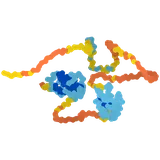 Doublecortin domain-containing protein 2BDCDC2B · A2VCK2 Doublecortin domain-containing protein 2BDCDC2B · A2VCK2 | A human doublecortin-like scaffold that uses tandem microtubule-binding modules to assemble and stabilize cytoskeletal and ciliary structures. | Dark |
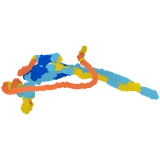 DC-STAMP domain-containing protein 2DCST2 · Q5T1A1 DC-STAMP domain-containing protein 2DCST2 · Q5T1A1 | An ER-resident, multi-pass membrane scaffold that assembles ubiquitin-signaling modules to dampen interferon-driven innate immune pathways. | Dark |
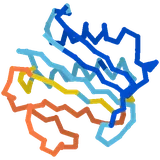 D-dopachrome decarboxylase-like proteinDDTL · A6NHG4 D-dopachrome decarboxylase-like proteinDDTL · A6NHG4 | A soluble immune-modulatory protein that assembles into a trimeric scaffold to regulate inflammatory signaling and cell motility. | Dark |
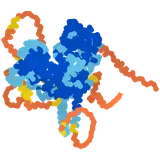 Putative ATP-dependent RNA helicase DDX12DDX12P · Q92771 Putative ATP-dependent RNA helicase DDX12DDX12P · Q92771 | An ATP-driven helicase that remodels nucleic acids and chromatin to coordinate nucleolar transcription with genome maintenance. | Dark |
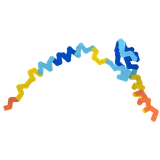 Beta-defensin 115DEFB115 · Q30KQ5 Beta-defensin 115DEFB115 · Q30KQ5 | A secreted human β-defensin that deploys a cystine-stabilized antimicrobial scaffold to neutralize microbes in the extracellular milieu. | Dark |
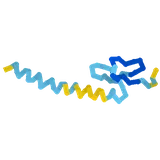 Beta-defensin 134DEFB134 · Q4QY38 Beta-defensin 134DEFB134 · Q4QY38 | A secreted human antimicrobial effector that is synthesized through the secretory pathway and released to the extracellular milieu, where a disulfide-stabilized defensin fold binds bacterial envelope components and disrupts membranes. | Dark |
 Desumoylating isopeptidase 1DESI1 · Q6ICB0 Desumoylating isopeptidase 1DESI1 · Q6ICB0 | A soluble cytosolic adaptor that uses a PPPDE peptidase-like core to assemble and regulate macromolecular complexes controlling nucleocytoplasmic transport and proteostasis. | Dark |
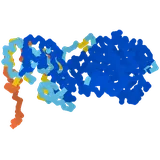 D-glutamate cyclase, mitochondrialDGLUCY · Q7Z3D6 D-glutamate cyclase, mitochondrialDGLUCY · Q7Z3D6 | A soluble mitochondrial matrix enzyme that assembles a lyase-like catalytic chamber to cyclize D‑glutamate and thereby tune glutamate-centered metabolism. | Dark |
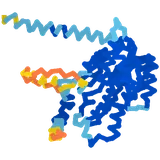 Dehydrogenase/reductase SDR family member 7CDHRS7C · A6NNS2 Dehydrogenase/reductase SDR family member 7CDHRS7C · A6NNS2 | A membrane-associated human oxidoreductase that uses a short-chain dehydrogenase/reductase catalytic core to bind nicotinamide cofactors and interconvert retinoids and small carbonyl substrates. | Dark |
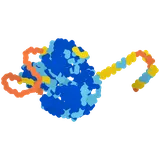 Probable ATP-dependent RNA helicase DHX40DHX40 · Q8IX18 Probable ATP-dependent RNA helicase DHX40DHX40 · Q8IX18 | An ATP-driven RNA-remodeling enzyme that assembles and remodels nuclear ribonucleoprotein complexes. | Dark |
 Early lymphoid activation gene proteinDIAPH2-AS1 · Q14236 Early lymphoid activation gene proteinDIAPH2-AS1 · Q14236 | A soluble human regulatory scaffold that enhances transcription by assembling and stabilizing transcriptional co-regulator complexes and recruiting chromatin-remodeling activities. | Dark |
 Disrupted in renal carcinoma protein 1DIRC1 · Q969H9 Disrupted in renal carcinoma protein 1DIRC1 · Q969H9 | A soluble adaptor that organizes protein assemblies to optimize energy production. | Dark |
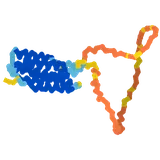 Leukemia-associated protein 7DLEU7 · Q6UYE1 Leukemia-associated protein 7DLEU7 · Q6UYE1 | A soluble human adaptor that assembles trafficking and cytoskeletal modules to regulate vesicle pathways and organelle dynamics. | Dark |
 Doublesex- and mab-3-related transcription factor C1DMRTC1 · Q5HYR2 Doublesex- and mab-3-related transcription factor C1DMRTC1 · Q5HYR2 | A nuclear transcriptional regulator that assembles repression complexes to fine-tune gene expression programs important for male germ cell development. | Dark |
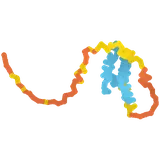 DnaJ homolog subfamily B member 3DNAJB3 · Q8WWF6 DnaJ homolog subfamily B member 3DNAJB3 · Q8WWF6 | A soluble human co-chaperone that uses a J-domain to bind and activate Hsp70, thereby stimulating ATPase-driven cycles that capture and release non-native proteins. | Dark |
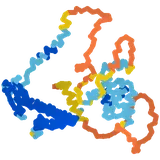 DnaJ homolog subfamily C member 18DNAJC18 · Q9H819 DnaJ homolog subfamily C member 18DNAJC18 · Q9H819 | A human J-domain co-chaperone that operates at the endoplasmic reticulum and membrane interface to stimulate Hsp70-driven folding cycles. | Dark |
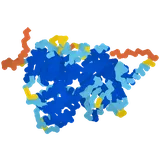 ATP-dependent RNA helicase DQX1DQX1 · Q8TE96 ATP-dependent RNA helicase DQX1DQX1 · Q8TE96 | An ATP-driven RNA-remodeling enzyme that assembles with ribonucleoprotein complexes to coordinate antiviral signaling and pre-mRNA splicing. | Dark |
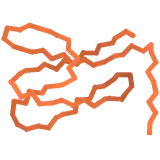 Down syndrome critical region protein 10DSCR10 · P59022 Down syndrome critical region protein 10DSCR10 · P59022 | A non-enzymatic scaffold/adaptor that operates during late stages of male germ cell maturation. | Dark |
 DTW domain-containing protein 1DTWD1 · Q8N5C7 DTW domain-containing protein 1DTWD1 · Q8N5C7 | A soluble human enzyme that installs an aminocarboxypropyl group onto uridine within structured tRNA, using a soluble catalytic core to recognize RNA and transfer a non-methyl alkyl group from an activated donor. | Dark |
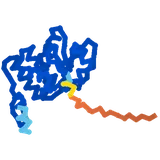 Dual specificity protein phosphatase 21DUSP21 · Q9H596 Dual specificity protein phosphatase 21DUSP21 · Q9H596 | A soluble human dual-specificity phosphatase that uses a cysteine-dependent catalytic center to remove phosphate groups from intracellular signaling proteins. | Dark |
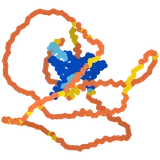 Double homeobox protein 4-like protein 6DUX4L6 · P0CJ89 Double homeobox protein 4-like protein 6DUX4L6 · P0CJ89 | A nuclear transcriptional regulator that uses tandem homeodomain DNA-binding modules to recognize cis-regulatory elements and activate RNA polymerase II–dependent transcription. | Dark |
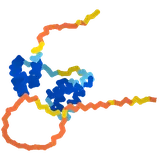 Double homeobox protein 5DUX5 · Q96PT3 Double homeobox protein 5DUX5 · Q96PT3 | A nuclear transcriptional regulator that uses tandem homeobox DNA-binding modules to recognize specific regulatory elements and stimulate RNA polymerase II–dependent transcription. | Dark |
 DPY30 domain-containing protein 1DYDC1 · Q8WWB3 DPY30 domain-containing protein 1DYDC1 · Q8WWB3 | A soluble dimeric scaffold that concentrates and stabilizes axonemal protein assemblies required for motile cilia and sperm flagella. | Dark |
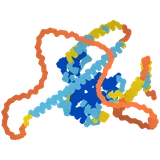 DystrotelinDYTN · A2CJ06 DystrotelinDYTN · A2CJ06 | A calcium-responsive scaffold that assembles membrane-proximal complexes controlling cytoskeletal organization during neuronal development. | Dark |
 Endogenous Bornavirus-like nucleoprotein 1EBLN1 · P0CF75 Endogenous Bornavirus-like nucleoprotein 1EBLN1 · P0CF75 | A soluble nucleoprotein scaffold that assembles higher-order ribonucleoprotein complexes and binds multiple partners to coordinate nuclear RNA–protein assemblies with broader cellular programs. | Dark |
 Enoyl-CoA hydratase domain-containing protein 3, mitochondrialECHDC3 · Q96DC8 Enoyl-CoA hydratase domain-containing protein 3, mitochondrialECHDC3 · Q96DC8 | A soluble mitochondrial matrix protein built on a crotonase-like scaffold that assembles and stabilizes matrix enzyme complexes involved in acyl-CoA and related metabolic pathways. | Dark |
 Extracellular matrix protein 2ECM2 · O94769 Extracellular matrix protein 2ECM2 · O94769 | A secreted extracellular matrix-associated adhesion modulator that uses an N-terminal adhesive module and an extended leucine-rich repeat scaffold to bind integrins and assemble higher-order complexes. | Dark |
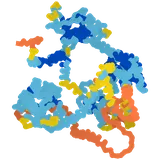 Epithelial cell-transforming sequence 2 oncogene-likeECT2L · Q008S8 Epithelial cell-transforming sequence 2 oncogene-likeECT2L · Q008S8 | A cytoplasmic signaling scaffold that combines an N-terminal F-box with a C-terminal guanine nucleotide exchange engine to coordinate small GTPase pathways and regulated proteolysis. | Dark |
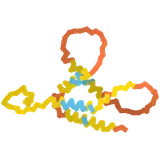 Epididymal protein 13EDDM13 · A0A1B0GTR0 Epididymal protein 13EDDM13 · A0A1B0GTR0 | A secreted extracellular modulator that binds cell-surface receptors to condition the adhesive and signaling environment required for fertilization. | Dark |
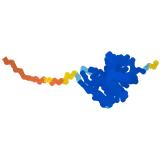 EEF1A lysine methyltransferase 3EEF1AKMT3 · Q96AZ1 EEF1A lysine methyltransferase 3EEF1AKMT3 · Q96AZ1 | A SAM-dependent lysine-directed methyltransferase that modifies protein substrates by lysine methylation and operates within multiprotein assemblies across the cytoplasm and nucleus. | Dark |
 EF-hand calcium-binding domain-containing protein 13EFCAB13 · Q8IY85 EF-hand calcium-binding domain-containing protein 13EFCAB13 · Q8IY85 | A calcium-regulated cytoplasmic scaffold that associates with the intermediate filament network and coordinates cytoskeletal assemblies tied to cell-cycle transitions and cilium biogenesis. | Dark |
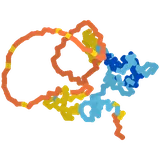 Dynein regulatory complex protein 8EFCAB2 · Q5VUJ9 Dynein regulatory complex protein 8EFCAB2 · Q5VUJ9 | A cytoplasmic calcium-sensing adaptor that uses a tandem EF-hand module to bind partners in a calcium-dependent manner and tune the contractile machinery of muscle. | Dark |
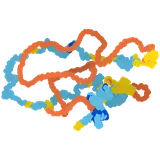 EF-hand domain-containing family member BEFHB · Q8N7U6 EF-hand domain-containing family member BEFHB · Q8N7U6 | A calcium-sensing scaffold that uses multiple EF-hand modules to switch between conformations and regulate partner assembly at the foundation of the cilium. | Dark |
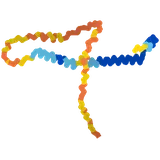 EP300-interacting inhibitor of differentiation 2BEID2B · Q96D98 EP300-interacting inhibitor of differentiation 2BEID2B · Q96D98 | A nuclear transcriptional repressor that assembles through homotypic binding to form inhibitory complexes that antagonize EP300/CBP-mediated coactivation. | Dark |
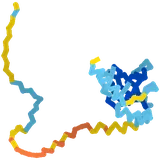 Probable RNA-binding protein EIF1ADEIF1AD · Q8N9N8 Probable RNA-binding protein EIF1ADEIF1AD · Q8N9N8 | A soluble RNA-binding assembly factor that shuttles between nucleolus and cytosol. | Dark |
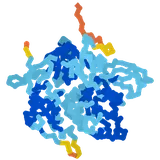 Eukaryotic translation initiation factor 2 subunit 3BEIF2S3B · Q2VIR3 Eukaryotic translation initiation factor 2 subunit 3BEIF2S3B · Q2VIR3 | A cytosolic translational GTPase that forms the GTP-bound core of the initiation heterotrimer, assembling with initiator tRNA to deliver it to the small ribosomal subunit and drive start-site commitment during initiation. | Dark |
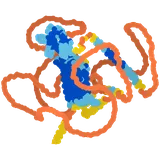 Protein phosphatase 1 regulatory subunit 29ELFN2 · Q5R3F8 Protein phosphatase 1 regulatory subunit 29ELFN2 · Q5R3F8 | A secreted human extracellular scaffold that uses a leucine-rich repeat array followed by a fibronectin type III module to assemble high-avidity binding platforms. | Dark |
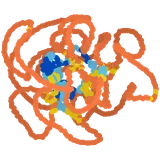 ELM2 and SANT domain-containing protein 1ELMSAN1 · Q6PJG2 ELM2 and SANT domain-containing protein 1ELMSAN1 · Q6PJG2 | A nuclear corepressor scaffold that assembles chromatin-modifying complexes to silence transcription. | Dark |
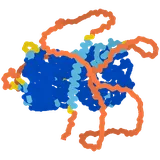 Echinoderm microtubule-associated protein-like 3EML3 · Q32P44 Echinoderm microtubule-associated protein-like 3EML3 · Q32P44 | A soluble cytoskeletal scaffold that uses tandem beta-propeller modules to self-associate and organize spindle microtubules. | Dark |
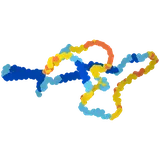 Enkurin domain-containing protein 1ENKD1 · Q9H0I2 Enkurin domain-containing protein 1ENKD1 · Q9H0I2 | A human cytoplasmic adaptor that concentrates at centrosomes and basal bodies to organize the microtubule cytoskeleton. | Dark |
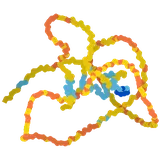 Elongin BC and Polycomb repressive complex 2-associated proteinEPOP · A6NHQ4 Elongin BC and Polycomb repressive complex 2-associated proteinEPOP · A6NHQ4 | A nuclear adaptor that assembles and stabilizes transcription-repressive complexes in human cells. | Dark |
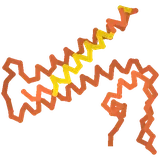 Putative uncharacterized protein encoded by ERC2-IT1ERC2-IT1 · O76042 Putative uncharacterized protein encoded by ERC2-IT1ERC2-IT1 · O76042 | A nuclear transcriptional modulator that uses multivalent protein-binding capacity to assemble and tune regulatory complexes controlling gene expression. | Dark |
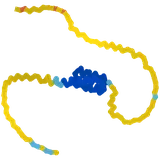 Glutamate-rich protein 2ERICH2 · A1L162 Glutamate-rich protein 2ERICH2 · A1L162 | A soluble, glutamate-rich human scaffold that operates through multivalent protein binding to coordinate neurodevelopmental programs. | Dark |
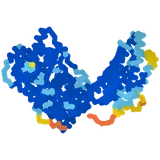 Endoplasmic reticulum membrane-associated RNA degradation proteinERMARD · Q5T6L9 Endoplasmic reticulum membrane-associated RNA degradation proteinERMARD · Q5T6L9 | A soluble human RNA-handling scaffold that assembles ribonucleoprotein complexes for RNA surveillance and processing. | Dark |
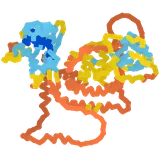 Endogenous retrovirus group FC1 member 1 Env polyproteinERVFC1-1 · P60608 Endogenous retrovirus group FC1 member 1 Env polyproteinERVFC1-1 · P60608 | A cell-surface fusogenic glycoprotein that is essential for terminal stages of muscle formation. | Dark |
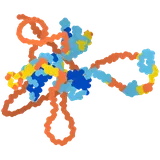 Endogenous retrovirus group K member 9 Gag polyproteinERVK-9 · P63126 Endogenous retrovirus group K member 9 Gag polyproteinERVK-9 · P63126 | A multifunctional assembly factor that builds higher-order structures in the cytoplasm and at endoplasmic reticulum membranes. | Dark |
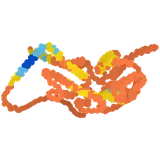 Endogenous retroviral envelope protein HEMOERVMER34-1 · Q9H9K5 Endogenous retroviral envelope protein HEMOERVMER34-1 · Q9H9K5 | A human Env-like fusogenic polyprotein that is synthesized as a single chain and proteolytically matured into a receptor-binding surface module and a membrane-anchored fusion module. | Dark |
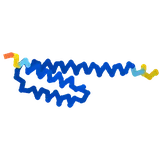 Electron transfer flavoprotein regulatory factor 1ETFRF1 · Q6IPR1 Electron transfer flavoprotein regulatory factor 1ETFRF1 · Q6IPR1 | A soluble mitochondrial matrix adaptor that uses an LYR-centered binding platform to regulate electron flow from ETF into the respiratory chain. | Dark |
 ETS translocation variant 3-like proteinETV3L · Q6ZN32 ETS translocation variant 3-like proteinETV3L · Q6ZN32 | A nuclear transcriptional regulator that uses a winged-helix DNA-binding core to recognize purine-rich regulatory elements and assemble repressive transcriptional complexes. | Dark |
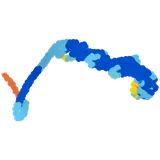 Exocyst complex component 3-like proteinEXOC3L1 · Q86VI1 Exocyst complex component 3-like proteinEXOC3L1 · Q86VI1 | A cytoplasmic scaffold of the exocyst that organizes vesicle tethering and docking during exocytosis. | Dark |
 Fatty acid desaturase 6FADS6 · Q8N9I5 Fatty acid desaturase 6FADS6 · Q8N9I5 | A multi-pass endoplasmic reticulum membrane enzyme that belongs to the fatty acid desaturase class but exhibits low intrinsic activity. | Dark |
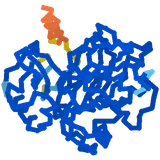 Fumarylacetoacetate hydrolase domain-containing protein 2BFAHD2B · Q6P2I3 Fumarylacetoacetate hydrolase domain-containing protein 2BFAHD2B · Q6P2I3 | A soluble mitochondrial enzyme that assembles as an oligomer to catalyze the hydro-lyase step that converts fumarylacetoacetate into fumarate and acetoacetate during tyrosine and phenylalanine catabolism. | Dark |
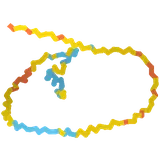 Protein FAM229AFAM229A · H3BQW9 Protein FAM229AFAM229A · H3BQW9 | A soluble human adaptor that concentrates in the nucleus and supports germ cell differentiation. | Dark |
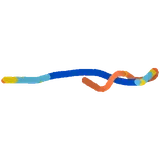 Protein FAM81BFAM81B · Q96LP2 Protein FAM81BFAM81B · Q96LP2 | A human nuclear scaffold that cooperates with a transcriptional repressor to assemble higher-order silencing complexes. | Dark |
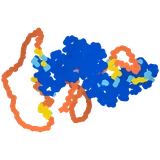 FAST kinase domain-containing protein 5, mitochondrialFASTKD5 · Q7L8L6 FAST kinase domain-containing protein 5, mitochondrialFASTKD5 · Q7L8L6 | A mitochondrial RNA-assembly scaffold that organizes ribonucleoprotein granules and nucleoids to sustain mitochondrial gene expression. | Dark |
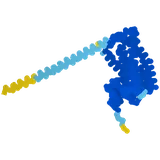 Fatty acid hydroxylase domain-containing protein 2FAXDC2 · Q96IV6 Fatty acid hydroxylase domain-containing protein 2FAXDC2 · Q96IV6 | A membrane-associated regulator of hematopoiesis that assembles signaling and redox modules at the endoplasmic reticulum to promote megakaryocyte differentiation and elevate phosphorylation pathways. | Dark |
 Putative uncharacterized protein FBXL19-AS1FBXL19-AS1 · Q494R0 Putative uncharacterized protein FBXL19-AS1FBXL19-AS1 · Q494R0 | A nuclear, nuclear-body–associated regulator that uses multivalent protein binding to assemble and stabilize transcriptional repression assemblies. | Dark |
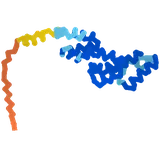 F-box only protein 48FBXO48 · Q5FWF7 F-box only protein 48FBXO48 · Q5FWF7 | A soluble adaptor of an SCF ubiquitin ligase that uses an N-terminal F-box to assemble with SKP1 and build a CUL1–RBX1 E3 complex. | Dark |
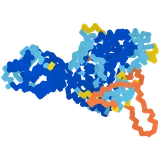 Ferredoxin-fold anticodon-binding domain-containing protein 1FDXACB1 · Q9BRP7 Ferredoxin-fold anticodon-binding domain-containing protein 1FDXACB1 · Q9BRP7 | A cytosolic aminoacylation factor that assembles a Class II aminoacylation platform to activate amino acids and support tRNA charging for protein synthesis. | Dark |
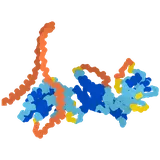 FYVE, RhoGEF and PH domain-containing protein 2FGD2 · Q7Z6J4 FYVE, RhoGEF and PH domain-containing protein 2FGD2 · Q7Z6J4 | A cytoplasmic, membrane-tetherable guanine nucleotide exchange factor that activates small GTPases through an N-terminal catalytic core and a tandem array of pleckstrin-homology and FYVE modules. | Dark |
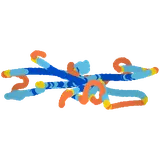 Forkhead-associated domain-containing protein 1FHAD1 · B1AJZ9 Forkhead-associated domain-containing protein 1FHAD1 · B1AJZ9 | A human centrosome-associated scaffold that combines an N-terminal phospho-recognition module with a large coiled-coil body to assemble signaling and structural complexes. | Dark |
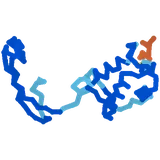 Putative FK506-binding protein 9-like proteinFKBP9P1 · Q75LS8 Putative FK506-binding protein 9-like proteinFKBP9P1 · Q75LS8 | A soluble human protein that combines an FKBP-type isomerase core with a tandem EF-hand calcium sensor to coordinate calcium-dependent folding and assembly. | Dark |
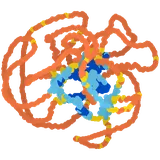 Formin-binding protein 4FNBP4 · Q8N3X1 Formin-binding protein 4FNBP4 · Q8N3X1 | A large human nuclear scaffold that concentrates RNA-processing machinery within nuclear speckles. | Dark |
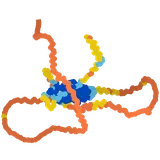 Fibronectin type III domain-containing protein 8FNDC8 · Q8TC99 Fibronectin type III domain-containing protein 8FNDC8 · Q8TC99 | A nuclear adaptor that uses a fibronectin type III/immunoglobulin-like scaffold to assemble protein complexes that dampen canonical Wnt signaling. | Dark |
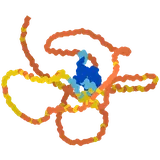 Forkhead box protein D4-like 3FOXD4L3 · Q6VB84 Forkhead box protein D4-like 3FOXD4L3 · Q6VB84 | A nuclear transcriptional regulator that uses a winged-helix DNA-binding core to anchor on chromatin and assemble regulatory complexes controlling RNA polymerase II output. | Dark |
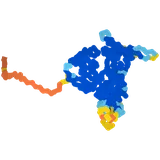 Putative FERM domain-containing protein FRMD8P1FRMD8P1 · Q9BZ68 Putative FERM domain-containing protein FRMD8P1FRMD8P1 · Q9BZ68 | A human cytoplasmic scaffold that uses a FERM-based architecture to assemble membrane-proximal signaling complexes. | Dark |
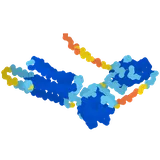 Ferric-chelate reductase 1FRRS1 · Q6ZNA5 Ferric-chelate reductase 1FRRS1 · Q6ZNA5 | A multi-pass membrane redox enzyme that uses an extracellular Reeler module and a DOMON scaffold to position and regulate a cytochrome b561-like electron-transfer core. | Dark |
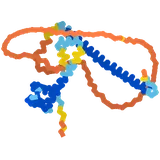 Fibrinogen silencer-binding proteinFSBP · O95073 Fibrinogen silencer-binding proteinFSBP · O95073 | A nuclear transcriptional repressor that binds silencer-associated chromatin through an N‑terminal Myb/SANT-like module and assembles homotypic oligomers to stabilize repression complexes. | Dark |
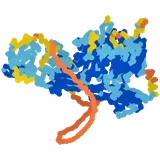 Follistatin-related protein 4FSTL4 · Q6MZW2 Follistatin-related protein 4FSTL4 · Q6MZW2 | A secreted, granule-stored extracellular antagonist that uses a Kazal inhibitory module, a calcium-sensitive EF-hand pair, and tandem immunoglobulin-like plus β-propeller scaffolds to bind and neutralize growth factors. | Dark |
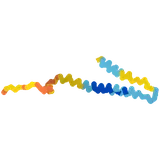 FXYD domain-containing ion transport regulator 4FXYD4 · P59646 FXYD domain-containing ion transport regulator 4FXYD4 · P59646 | A single-pass plasma-membrane regulator that binds and tunes ion-transport machinery. | Dark |
 Putative uncharacterized protein GAFA-1GAFA1 · Q96PS6 Putative uncharacterized protein GAFA-1GAFA1 · Q96PS6 | A soluble human adaptor that concentrates binding interactions to regulate humoral antimicrobial defense. | Dark |
 G antigen 10GAGE10 · A6NGK3 G antigen 10GAGE10 · A6NGK3 | A human cancer/testis antigen family member that functions as a soluble adaptor coordinating intracellular signaling with transcriptional repression. | Dark |
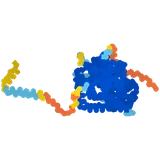 Galactose-3-O-sulfotransferase 3GAL3ST3 · Q96A11 Galactose-3-O-sulfotransferase 3GAL3ST3 · Q96A11 | A membrane-anchored sulfotransferase that uses a nucleotide-binding catalytic core to transfer sulfate from PAPS onto terminal galactose residues of glycolipids and glycoproteins. | Dark |
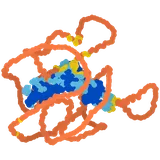 GRB2-associated and regulator of MAPK protein 2GAREM2 · Q75VX8 GRB2-associated and regulator of MAPK protein 2GAREM2 · Q75VX8 | A soluble cytoplasmic adaptor that assembles and stabilizes growth-factor signaling complexes to potentiate ERK pathway output. | Dark |
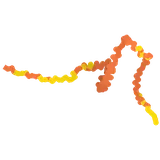 Uncharacterized protein GAS8-AS1GAS8-AS1 · O95177 Uncharacterized protein GAS8-AS1GAS8-AS1 · O95177 | A soluble human adaptor that uses a dedicated interaction module to assemble transcriptional repression complexes. | Dark |
 Glutamine amidotransferase-like class 1 domain-containing protein 3A, mitochondrialGATD3A · P0DPI2 Glutamine amidotransferase-like class 1 domain-containing protein 3A, mitochondrialGATD3A · P0DPI2 | A soluble mitochondrial matrix enzyme that uses a glutamine amidotransferase-like core to execute lyase-type chemistry and assemble transient protein complexes. | Dark |
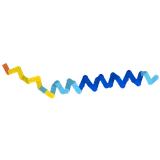 Putative gastric cancer-related gene 224 proteinGCRG224 · Q8WZA8 Putative gastric cancer-related gene 224 proteinGCRG224 · Q8WZA8 | A non-enzymatic adaptor that uses multivalent protein binding to organize mitochondrial function and suppress assembly of proinflammatory and amyloidogenic complexes. | Dark |
 Germinal center-associated signaling and motility-like proteinGCSAML · Q5JQS6 Germinal center-associated signaling and motility-like proteinGCSAML · Q5JQS6 | A cytoplasmic adaptor that assembles receptor-proximal signaling complexes in germinal center lymphocytes. | Dark |
 Protein GDF5OS, mitochondrialGDF5OS · Q5U4N7 Protein GDF5OS, mitochondrialGDF5OS · Q5U4N7 | A human mitochondrial protein that likely functions as a non-enzymatic assembly and regulatory factor. | Dark |
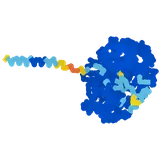 Putative glutathione hydrolase 3 proenzymeGGT3P · A6NGU5 Putative glutathione hydrolase 3 proenzymeGGT3P · A6NGU5 | A secreted human enzyme that is produced as an inactive precursor and autocatalytically matures into a heterodimeric catalyst that cleaves and transfers gamma-glutamyl groups. | Dark |
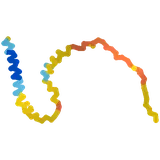 Inactive N-acetyllactosaminide alpha-1,3-galactosyltransferaseGGTA1P · Q4G0N0 Inactive N-acetyllactosaminide alpha-1,3-galactosyltransferaseGGTA1P · Q4G0N0 | A Golgi-anchored, single-pass type II membrane regulator that uses multivalent protein binding to assemble and position signaling-modulatory complexes. | Dark |
 Glycoprotein integral membrane protein 1GINM1 · Q9NU53 Glycoprotein integral membrane protein 1GINM1 · Q9NU53 | A single-pass membrane glycoprotein that assembles multiprotein complexes through two luminal domains to modulate transcriptional programs indirectly from the endoplasmic reticulum. | Dark |
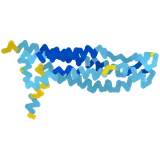 Putative gap junction epsilon-1 proteinGJE1 · A6NN92 Putative gap junction epsilon-1 proteinGJE1 · A6NN92 | A multi-pass membrane channel that assembles into hexameric hemichannels and docks across adjacent cells to form gap junctions. | Dark |
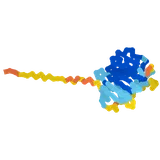 Gastrokine-3GKN3P · P0CG01 Gastrokine-3GKN3P · P0CG01 | A secretory-pathway protein that is synthesized as a single-pass membrane precursor and then proteolytically processed to release a soluble extracellular factor. | Dark |
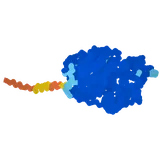 Beta-galactosidase-1-like protein 2GLB1L2 · Q8IW92 Beta-galactosidase-1-like protein 2GLB1L2 · Q8IW92 | A secretory pathway glycan-processing enzyme that uses a β-galactosidase-like catalytic core coupled to auxiliary galactose-recognition modules to bind and remodel complex glycans. | Dark |
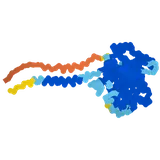 Glycosylated lysosomal membrane proteinGLMP · Q8WWB7 Glycosylated lysosomal membrane proteinGLMP · Q8WWB7 | A human multi-pass membrane scaffold that resides predominantly on lysosomal membranes and uses multivalent protein binding to organize trafficking and signaling assemblies that maintain lysosome function and biogenesis. | Dark |
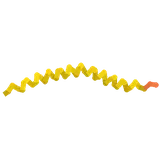 Putative glycosylation-dependent cell adhesion molecule 1GLYCAM1 · Q8IVK1 Putative glycosylation-dependent cell adhesion molecule 1GLYCAM1 · Q8IVK1 | A human cell-surface adhesion molecule that presents a glycosylation-dependent extracellular domain to mediate calcium-independent cell–cell adhesion while using a single-pass type I topology to anchor at the membrane and assemble intracellular signaling complexes. | Dark |
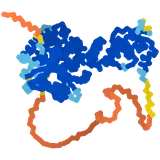 Germ cell-less protein-like 2GMCL2 · Q8NEA9 Germ cell-less protein-like 2GMCL2 · Q8NEA9 | A BTB/POZ-domain adaptor that assembles with a cullin-based ubiquitin ligase to drive substrate ubiquitination and turnover. | Dark |
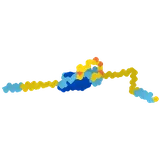 Glycosyl-phosphatidylinositol-anchored molecule-like proteinGML · Q99445 Glycosyl-phosphatidylinositol-anchored molecule-like proteinGML · Q99445 | A GPI-anchored, plasma membrane–associated LU-domain protein that uses a rigid three-finger extracellular scaffold to bind and allosterically inhibit membrane receptor complexes, notably acetylcholine receptors. | Dark |
 Golgin subfamily A member 8NGOLGA8N · F8WBI6 Golgin subfamily A member 8NGOLGA8N · F8WBI6 | A peripheral, membrane-associated Golgi-tethering scaffold that uses an extended coiled-coil core and a C-terminal targeting motif to assemble multivalent protein complexes at the Golgi surface. | Dark |
 Vesicle transport protein GOT1AGOLT1A · Q6ZVE7 Vesicle transport protein GOT1AGOLT1A · Q6ZVE7 | A multi-pass membrane scaffold in human cells that organizes vesicle docking and fusion along the early secretory pathway. | Dark |
 EKC/KEOPS complex subunit GON7GON7 · Q9BXV9 EKC/KEOPS complex subunit GON7GON7 · Q9BXV9 | A small, soluble adaptor subunit of the human KEOPS assembly that organizes and stabilizes the complex responsible for installing the threonylcarbamoyladenosine modification at position 37 of ANN-decoding tRNAs. | Dark |
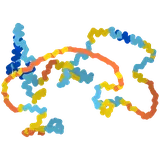 GPALPP motifs-containing protein 1GPALPP1 · Q8IXQ4 GPALPP motifs-containing protein 1GPALPP1 · Q8IXQ4 | A nucleoplasmic assembly scaffold that organizes ribonucleoprotein complexes for pre-mRNA splicing. | Dark |
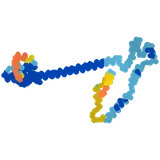 G patch domain-containing protein 11GPATCH11 · Q8N954 G patch domain-containing protein 11GPATCH11 · Q8N954 | A human chromatin-assembly adaptor that concentrates at kinetochores and uses a central G-patch interaction module to organize nucleosome assembly and chromatin-remodeling machinery. | Dark |
 Probable G-protein coupled receptor 63GPR63 · Q9BZJ6 Probable G-protein coupled receptor 63GPR63 · Q9BZJ6 | A seven-pass cell-surface receptor that transduces extracellular cues into intracellular signals through heterotrimeric G proteins. | Dark |
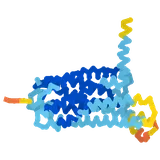 Probable G-protein coupled receptor 82GPR82 · Q96P67 Probable G-protein coupled receptor 82GPR82 · Q96P67 | A human seven-pass cell-surface receptor that transduces extracellular cues into intracellular signals via a rhodopsin-like transmembrane core. | Dark |
 GRAM domain-containing protein 2BGRAMD2B · Q96HH9 GRAM domain-containing protein 2BGRAMD2B · Q96HH9 | A membrane-associated scaffold that organizes ER-centered trafficking hubs. | Dark |
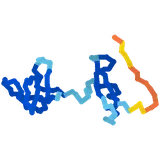 GRB2-related adapter protein-likeGRAPL · Q8TC17 GRB2-related adapter protein-likeGRAPL · Q8TC17 | A soluble adaptor that shuttles between the cytosol and plasma membrane to assemble inhibitory and trafficking complexes. | Dark |
 Germ cell-specific gene 1-like protein 2GSG1L2 · A8MUP6 Germ cell-specific gene 1-like protein 2GSG1L2 · A8MUP6 | A membrane-proximal scaffold in human cells that assembles multiprotein complexes at the endoplasmic reticulum and in the cytoplasm to tune postsynaptic signaling. | Dark |
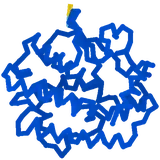 Glutathione S-transferase theta-2GSTT2 · P0CG29 Glutathione S-transferase theta-2GSTT2 · P0CG29 | A cytosolic theta-class glutathione S-transferase that forms a soluble dimer and uses a glutathione-binding N-terminal thioredoxin-like module coupled to a hydrophobic C-terminal pocket to catalyze glutathione-dependent isomerization and conjugation reactions. | Dark |
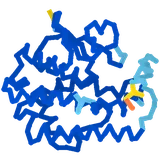 Glutathione S-transferase theta-4GSTT4 · A0A1W2PR19 Glutathione S-transferase theta-4GSTT4 · A0A1W2PR19 | A soluble human enzyme that forms a cytosolic dimer and uses a glutathione-binding N-terminal module coupled to a hydrophobic C-terminal pocket to catalyze glutathione conjugation and peroxide reduction. | Dark |
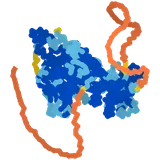 General transcription factor 3C polypeptide 4GTF3C4 · Q9UKN8 General transcription factor 3C polypeptide 4GTF3C4 · Q9UKN8 | A nucleoplasmic initiation-factor scaffold that organizes assembly of the RNA polymerase III machinery at internal promoter elements. | Dark |
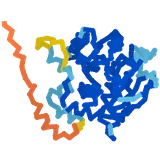 GTP-binding protein 8GTPBP8 · Q8N3Z3 GTP-binding protein 8GTPBP8 · Q8N3Z3 | A soluble mitochondrial assembly GTPase that uses a nucleotide-driven switch to chaperone the assembly of the mitochondrial small ribosomal subunit. | Dark |
 Gilles de la Tourette syndrome chromosomal region candidate gene 1 proteinGTSCR1 · Q86UQ5 Gilles de la Tourette syndrome chromosomal region candidate gene 1 proteinGTSCR1 · Q86UQ5 | A soluble nuclear adaptor that enhances inflammatory gene programs by assembling protein complexes in the nucleoplasm. | Dark |
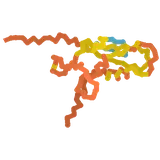 Putative inactive beta-glucuronidase-like protein SMA3GUSBP1 · Q15486 Putative inactive beta-glucuronidase-like protein SMA3GUSBP1 · Q15486 | A secreted, matrix-associated adhesion modulator that uses a beta-sandwich scaffold to bind partners and organize extracellular–intracellular signaling pathways. | Dark |
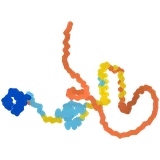 Protein GVQW3GVQW3 · Q3ZCU0 Protein GVQW3GVQW3 · Q3ZCU0 | A nucleoplasmic scaffold that enforces nuclear RNA quality control by organizing assemblies that degrade aberrant transcripts produced by RNA polymerase II and III. | Dark |
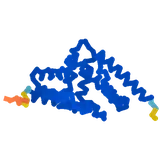 HD domain-containing protein 2HDDC2 · Q7Z4H3 HD domain-containing protein 2HDDC2 · Q7Z4H3 | A soluble human enzyme that hydrolyzes phosphate from deoxyribonucleotides and related nucleotide derivatives, thereby tuning deoxynucleotide pools and supporting nucleotide homeostasis. | Dark |
 Haloacid dehalogenase-like hydrolase domain-containing protein 3HDHD3 · Q9BSH5 Haloacid dehalogenase-like hydrolase domain-containing protein 3HDHD3 · Q9BSH5 | A soluble human phosphatase that belongs to a metal-dependent hydrolase fold and uses a cap-domain architecture to hydrolyze phosphate monoesters and related intermediates. | Dark |
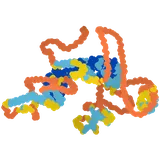 HEAT repeat-containing protein 4HEATR4 · Q86WZ0 HEAT repeat-containing protein 4HEATR4 · Q86WZ0 | A cytoplasmic and cytoskeletal scaffold that uses an extended armadillo/HEAT-repeat solenoid to mediate multivalent protein binding and assemble mitotic machinery. | Dark |
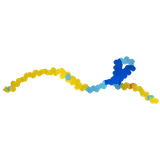 Endogenous retrovirus group K member 113 Rec proteinHERVK_113 · P61574 Endogenous retrovirus group K member 113 Rec proteinHERVK_113 · P61574 | A small human adaptor/scaffold that uses a Rec21/ENK19-family binding module to assemble signaling and transcriptional complexes. | Dark |
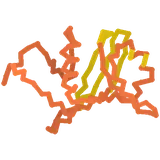 Putative uncharacterized protein encoded by HEXA-AS1HEXA-AS1 · Q9H8Q6 Putative uncharacterized protein encoded by HEXA-AS1HEXA-AS1 · Q9H8Q6 | A cytosolic regulatory scaffold that uses multivalent protein binding to assemble and stabilize transcription-repressive complexes. | Dark |
 HHIP-like protein 2HHIPL2 · Q6UWX4 HHIP-like protein 2HHIPL2 · Q6UWX4 | A soluble neuronal assembly factor that resides predominantly in the endoplasmic reticulum lumen and is partially secreted. | Dark |
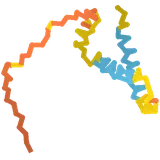 Putative HIG1 domain family member 2BHIGD2B · Q4VC39 Putative HIG1 domain family member 2BHIGD2B · Q4VC39 | A mitochondrial assembly factor that uses a hypoxia-induced helical module to bind and organize respiratory-chain components into higher-order supercomplexes. | Dark |
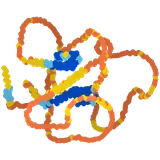 HIRA-interacting protein 3HIRIP3 · Q9BW71 HIRA-interacting protein 3HIRIP3 · Q9BW71 | A nuclear scaffold that binds chromatin-assembly machinery to organize silent chromatin and support replication-independent nucleosome assembly. | Dark |
 Histone H2A type 1-DHIST1H2AD · P20671 Histone H2A type 1-DHIST1H2AD · P20671 | A nuclear chromatin core protein that pairs with a companion histone to form a dimer that assembles into nucleosomes, wrapping DNA and shaping higher-order chromatin structure. | Dark |
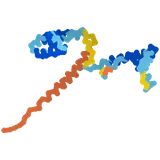 Putative high mobility group protein B1-like 1HMGB1P1 · B2RPK0 Putative high mobility group protein B1-like 1HMGB1P1 · B2RPK0 | A tandem HMG-box chromatin architectural protein that bends DNA and binds RNA to assemble and remodel transcriptional complexes in the nucleus, while also moonlighting at the cell surface and in secretory pathways to modulate adhesion and innate immunity. | Dark |
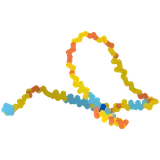 Putative Dresden prostate carcinoma protein 2HMGN2P46 · Q86SG4 Putative Dresden prostate carcinoma protein 2HMGN2P46 · Q86SG4 | A soluble human adaptor that organizes the assembly of the ciliary axoneme. | Dark |
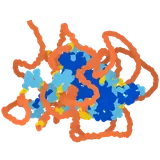 HMG domain-containing protein 3HMGXB3 · Q12766 HMG domain-containing protein 3HMGXB3 · Q12766 | A large nuclear architectural factor that uses an N-terminal DNA-bending module to engage and reshape chromatin at small nuclear RNA loci, assembling multivalent transcriptional complexes through internal cysteine-rich scaffolding. | Dark |
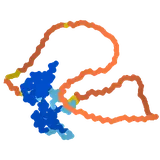 Heterogeneous nuclear ribonucleoprotein A1-like 2HNRNPA1L2 · Q32P51 Heterogeneous nuclear ribonucleoprotein A1-like 2HNRNPA1L2 · Q32P51 | A nucleocytoplasmic RNA-binding protein that assembles and remodels ribonucleoprotein particles to control pre-mRNA processing and fate. | Dark |
 Heterogeneous nuclear ribonucleoprotein C-like 2HNRNPCL2 · B2RXH8 Heterogeneous nuclear ribonucleoprotein C-like 2HNRNPCL2 · B2RXH8 | A nucleoplasmic RNA-binding assembly factor that organizes ribonucleoprotein particles for pre-mRNA processing and mRNA fate control. | Dark |
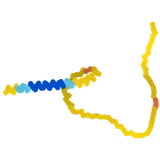 Histidine-rich carboxyl terminus protein 1HRCT1 · Q6UXD1 Histidine-rich carboxyl terminus protein 1HRCT1 · Q6UXD1 | A nucleoplasmic scaffold that uses a histidine-rich, intrinsically disordered architecture to assemble transcriptional and chromatin-associated complexes. | Dark |
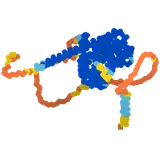 Heparan-sulfate 6-O-sulfotransferase 3HS6ST3 · Q8IZP7 Heparan-sulfate 6-O-sulfotransferase 3HS6ST3 · Q8IZP7 | A Golgi-resident, single-pass type II membrane enzyme that transfers sulfate groups from a nucleotide-sulfate donor onto heparan sulfate chains during proteoglycan maturation. | Dark |
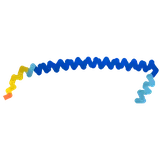 Heat shock factor-binding protein 1-like protein 1HSBP1L1 · C9JCN9 Heat shock factor-binding protein 1-like protein 1HSBP1L1 · C9JCN9 | A small soluble adaptor that resides predominantly in the nucleoplasm and uses a conserved binding module to engage heat shock–responsive transcriptional machinery. | Dark |
 Putative heat shock protein HSP 90-beta 2HSP90AB2P · Q58FF8 Putative heat shock protein HSP 90-beta 2HSP90AB2P · Q58FF8 | A cytoplasmic ATP-dependent molecular chaperone that assembles into a dimeric machine to bind and remodel client proteins central to cell signaling and stress-adaptive proteostasis. | Dark |
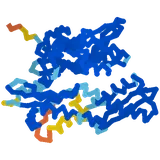 Putative heat shock 70 kDa protein 7HSPA7 · P48741 Putative heat shock 70 kDa protein 7HSPA7 · P48741 | A cytoplasmic ATP-dependent chaperone that uses a two-lobed nucleotide-binding engine to bind and remodel non-native polypeptides, thereby promoting productive folding and proteostasis. | Dark |
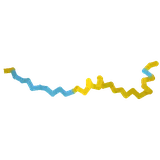 Putative DNA-binding protein inhibitor ID-2BID2B · Q14602 Putative DNA-binding protein inhibitor ID-2BID2B · Q14602 | A human adaptor protein that uses multivalent binding to assemble and regulate protein complexes controlling gene expression. | Dark |
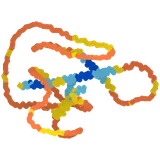 Immediate early response gene 5-like proteinIER5L · Q5T953 Immediate early response gene 5-like proteinIER5L · Q5T953 | A rapidly inducible regulatory scaffold that operates downstream of extracellular cues to modulate gene expression and cell-cycle programs. | Dark |
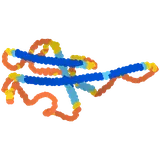 Intermediate filament family orphan 2IFFO2 · Q5TF58 Intermediate filament family orphan 2IFFO2 · Q5TF58 | A nuclear intermediate-filament scaffold that assembles and stabilizes large protein complexes through an extended coiled-coil core. | Dark |
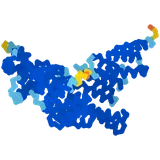 Interferon-induced protein with tetratricopeptide repeats 1BIFIT1B · Q5T764 Interferon-induced protein with tetratricopeptide repeats 1BIFIT1B · Q5T764 | A cytosolic helical-repeat scaffold that uses multiple tetratricopeptide motifs to assemble and tune antiviral and interferon-responsive complexes. | Dark |
 Insulin growth factor-like family member 2IGFL2 · Q6UWQ7 Insulin growth factor-like family member 2IGFL2 · Q6UWQ7 | A secreted, disulfide-rich extracellular signaling modulator that binds cell-surface receptors to tune pathway outputs controlling growth and differentiation. | Dark |
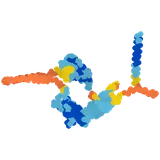 Immunoglobulin heavy constant deltaIGHD · P01880 Immunoglobulin heavy constant deltaIGHD · P01880 | A membrane-associated immunoglobulin heavy-chain subunit that assembles a multivalent Ig-like scaffold to form the membrane-bound form of an antibody. | Dark |
 Immunoglobulin heavy joining 1IGHJ1 · A0A0C4DH62 Immunoglobulin heavy joining 1IGHJ1 · A0A0C4DH62 | A modular adaptor that uses an immunoglobulin-like scaffold to organize protein assemblies controlling signal-to-transcription coupling. | Dark |
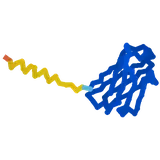 Immunoglobulin heavy variable 3-30-5IGHV3-30-5 · P0DP03 Immunoglobulin heavy variable 3-30-5IGHV3-30-5 · P0DP03 | A human immunoglobulin heavy-chain variable module that forms the antigen-recognition core of antibodies. | Dark |
 Immunoglobulin kappa variable 1D-33IGKV1D-33 · P01593 Immunoglobulin kappa variable 1D-33IGKV1D-33 · P01593 | A human immunoglobulin light-chain variable region that forms a beta-sandwich recognition module for antigen binding. | Dark |
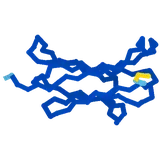 Immunoglobulin lambda constant 2IGLC2 · P0DOY2 Immunoglobulin lambda constant 2IGLC2 · P0DOY2 | An extracellular constant-region module of a human immune receptor that uses an immunoglobulin C1-set fold to mediate multivalent protein binding and stabilize receptor assemblies that drive lymphocyte signaling. | Dark |
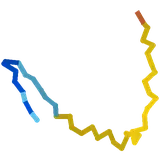 Immunoglobulin lambda joining 1IGLJ1 · A0A0A0MT76 Immunoglobulin lambda joining 1IGLJ1 · A0A0A0MT76 | A single-pass membrane adaptor that resides predominantly at mitochondria and also associates with the endoplasmic reticulum, where it uses multivalent protein binding to organize assemblies that coordinate organelle communication and mitochondrial remodeling during germ cell development. | Dark |
 Immunoglobulin lambda variable 3-1IGLV3-1 · P01715 Immunoglobulin lambda variable 3-1IGLV3-1 · P01715 | A kappa-type light-chain variable region that pairs with a heavy-chain variable region to create the antigen-binding site of antibodies. | Dark |
 Putative inactivation escape 1 proteinINE1 · O15225 Putative inactivation escape 1 proteinINE1 · O15225 | A nucleoplasmic adaptor that uses multivalent protein binding to assemble and modulate nuclear regulatory complexes controlling gene expression. | Dark |
 PAK4-inhibitor INKA1INKA1 · Q96EL1 PAK4-inhibitor INKA1INKA1 · Q96EL1 | A soluble human signaling regulator that binds serine/threonine kinases and suppresses their activity to tune pathway flux between cytoplasmic kinase hubs and nuclear transcriptional programs. | Dark |
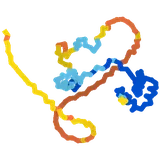 INO80 complex subunit CINO80C · Q6PI98 INO80 complex subunit CINO80C · Q6PI98 | A nuclear chromatin-remodeling scaffold that integrates into an ATP-dependent remodeling assembly to organize and target nucleosome remodeling at active chromatin. | Dark |
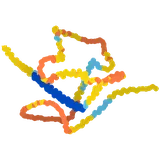 Inhibitory synaptic factor 1INSYN1 · Q2T9L4 Inhibitory synaptic factor 1INSYN1 · Q2T9L4 | A soluble adaptor that modulates inhibitory synaptic signaling in human neurons. | Dark |
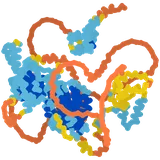 Integrator complex subunit 6-likeINTS6L · Q5JSJ4 Integrator complex subunit 6-likeINTS6L · Q5JSJ4 | A large, soluble scaffold that assembles multiprotein complexes to regulate transcription and chromatin state. | Dark |
 IQ domain-containing protein F6IQCF6 · A8MYZ5 IQ domain-containing protein F6IQCF6 · A8MYZ5 | A small human adaptor protein that centers on tandem IQ motifs to bind calcium-sensor partners and organize multiprotein assemblies during spermiogenesis. | Dark |
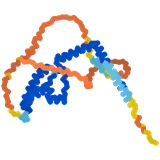 IQ domain-containing protein KIQCK · Q8N0W5 IQ domain-containing protein KIQCK · Q8N0W5 | A soluble human scaffold that assembles multiprotein complexes through a central dimerization/docking module. | Dark |
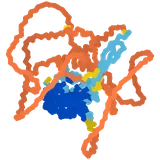 Isthmin-2ISM2 · Q6H9L7 Isthmin-2ISM2 · Q6H9L7 | A secretory-pathway glycoprotein that assembles an extracellular adhesion and signaling scaffold to restrain angiogenic drive and bias cells toward differentiation and apoptosis. | Dark |
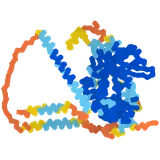 Inositol 1,4,5-trisphosphate receptor-interacting protein-like 1ITPRIPL1 · Q6GPH6 Inositol 1,4,5-trisphosphate receptor-interacting protein-like 1ITPRIPL1 · Q6GPH6 | A human adaptor that assembles membrane-proximal signaling complexes controlling calcium-dependent pathways. | Dark |
 Izumo sperm-egg fusion protein 2IZUMO2 · Q6UXV1 Izumo sperm-egg fusion protein 2IZUMO2 · Q6UXV1 | A type I single-pass membrane protein expressed during spermatogenesis that assembles a binding-driven surface complex required for sperm–egg membrane interactions. | Dark |
 KN motif and ankyrin repeat domain-containing protein 4KANK4 · Q5T7N3 KN motif and ankyrin repeat domain-containing protein 4KANK4 · Q5T7N3 | A human cytosolic scaffold that uses an N-terminal KN motif and a C-terminal ankyrin-repeat array to assemble inhibitory complexes controlling developmental signaling and transcription. | Dark |
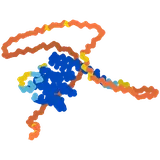 KATNB1-like protein 1KATNBL1 · Q9H079 KATNB1-like protein 1KATNBL1 · Q9H079 | A soluble adaptor that assembles and targets a microtubule-severing module to remodel the cytoskeleton. | Dark |
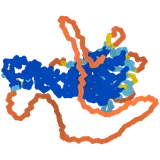 Kelch repeat and BTB domain-containing protein 11KBTBD11 · O94819 Kelch repeat and BTB domain-containing protein 11KBTBD11 · O94819 | A cytosolic adaptor that uses an N-terminal assembly module and a C-terminal beta-propeller to build soluble complexes that dampen stress-activated signaling. | Dark |
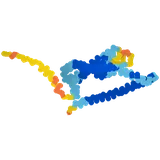 Potassium channel subfamily K member 7KCNK7 · Q9Y2U2 Potassium channel subfamily K member 7KCNK7 · Q9Y2U2 | A human multi-pass membrane channel that forms a constitutive outwardly rectifying pathway for potassium. | Dark |
 Keratinocyte-associated transmembrane protein 2KCT2 · Q8NC54 Keratinocyte-associated transmembrane protein 2KCT2 · Q8NC54 | A polytopic membrane scaffold in human cells that concentrates binding interactions to organize membrane trafficking and recycling pathways central to keratinocyte biology. | Dark |
 BTB/POZ domain-containing protein KCTD3KCTD3 · Q9Y597 BTB/POZ domain-containing protein KCTD3KCTD3 · Q9Y597 | A cytosolic adaptor that assembles into homo-oligomeric scaffolds and uses a C-terminal beta-propeller to recruit pathway and proteostasis factors. | Dark |
 BTB/POZ domain-containing protein KCTD4KCTD4 · Q8WVF5 BTB/POZ domain-containing protein KCTD4KCTD4 · Q8WVF5 | A soluble cytosolic adaptor that uses an N-terminal oligomerizing scaffold to assemble inhibitory complexes on delayed rectifier potassium channels. | Dark |
 KDEL motif-containing protein 2KDELC2 · Q7Z4H8 KDEL motif-containing protein 2KDELC2 · Q7Z4H8 | A soluble glycosyltransferase in human cells that installs O-linked glycans onto serine residues of secretory and extracellular matrix proteins. | Dark |
 Protein KHNYNKHNYN · O15037 Protein KHNYNKHNYN · O15037 | A modular RNA-binding and RNA-degrading factor that concentrates in cytoplasmic ribonucleoprotein granules and exchanges with the nucleoplasm. | Dark |
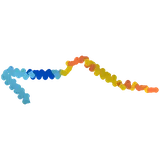 Uncharacterized protein KIAA0040KIAA0040 · Q15053 Uncharacterized protein KIAA0040KIAA0040 · Q15053 | A human single-pass membrane adaptor that promotes NF-kappaB pathway activation by assembling signaling complexes at the cell surface and along the secretory pathway. | Dark |
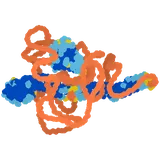 Uncharacterized protein KIAA1755KIAA1755 · Q5JYT7 Uncharacterized protein KIAA1755KIAA1755 · Q5JYT7 | A large human signaling scaffold that assembles and activates small GTPase pathways. | Dark |
 Kinesin-like protein KIF28PKIF28P · B7ZC32 Kinesin-like protein KIF28PKIF28P · B7ZC32 | A cytoplasmic, ATP-driven microtubule motor that uses an N-terminal kinesin engine and a central phospho-recognition module to couple cargo transport with signaling. | Dark |
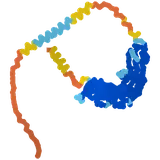 Killer cell immunoglobulin-like receptor 2DS3KIR2DS3 · Q14952 Killer cell immunoglobulin-like receptor 2DS3KIR2DS3 · Q14952 | A cell-surface, single-pass immune receptor with tandem immunoglobulin-like domains that binds class I–like ligands to regulate leukocyte defense programs. | Dark |
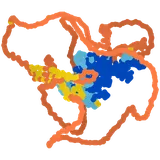 Kelch domain-containing protein 7AKLHDC7A · Q5VTJ3 Kelch domain-containing protein 7AKLHDC7A · Q5VTJ3 | A cytoplasmic scaffold that assembles a β-propeller–based binding platform to chaperone precursor proteins toward the mitochondrial surface and promote their insertion into the outer membrane during mitochondrial biogenesis. | Dark |
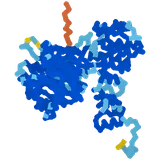 Kelch-like protein 33KLHL33 · A6NCF5 Kelch-like protein 33KLHL33 · A6NCF5 | A cytoplasmic adaptor that assembles ubiquitination machinery and captures substrates through a C-terminal beta-propeller to promote their ubiquitin tagging and proteasomal turnover. | Dark |
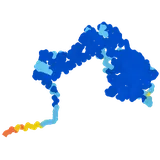 Kelch-like protein 36KLHL36 · Q8N4N3 Kelch-like protein 36KLHL36 · Q8N4N3 | A cytosolic adaptor that assembles a cullin-based ubiquitin ligase to control substrate selection and turnover. | Dark |
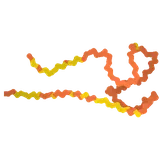 Putative protein KRIP1KLKP1 · Q107X0 Putative protein KRIP1KLKP1 · Q107X0 | A soluble nuclear scaffold that likely participates in immune and reproductive pathways by assembling regulatory protein complexes in the nucleoplasm. | Dark |
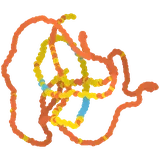 Keratinocyte proline-rich proteinKPRP · Q5T749 Keratinocyte proline-rich proteinKPRP · Q5T749 | A human binding scaffold that assembles regulatory complexes in the nucleus and is also routed into extracellular vesicles. | Dark |
 KRAB domain-containing protein 1KRBOX1 · C9JBD0 KRAB domain-containing protein 1KRBOX1 · C9JBD0 | A nuclear transcriptional regulator that uses an N-terminal repression module to assemble co-repressor complexes and modulate chromatin, thereby tuning gene expression programs. | Dark |
 Keratin, type II cuticular Hb4KRT84 · Q9NSB2 Keratin, type II cuticular Hb4KRT84 · Q9NSB2 | A type II keratin that assembles with type I keratins to build the intermediate filament network characteristic of epithelial cells. | Dark |
 Keratin-associated protein 5-10KRTAP5-10 · Q6L8G5 Keratin-associated protein 5-10KRTAP5-10 · Q6L8G5 | A human nucleo-cytoplasmic regulatory protein that functions primarily through multivalent protein binding. | Dark |
 Keratin-associated protein 9-6KRTAP9-6 · A8MVA2 Keratin-associated protein 9-6KRTAP9-6 · A8MVA2 | A small, soluble matrix component that binds and stabilizes keratin filament networks during hair fiber assembly. | Dark |
 LBH domain-containing protein 2LBHD2 · A0A0U1RRK4 LBH domain-containing protein 2LBHD2 · A0A0U1RRK4 | A small human adaptor that uses an LBH interaction module to assemble transcriptional co-regulatory complexes. | Dark |
 Late cornified envelope protein 2DLCE2D · Q5TA82 Late cornified envelope protein 2DLCE2D · Q5TA82 | A human late cornified envelope precursor that operates as a soluble, binding-competent scaffold during terminal differentiation of keratinocytes. | Dark |
 Late cornified envelope protein 5ALCE5A · Q5TCM9 Late cornified envelope protein 5ALCE5A · Q5TCM9 | A small, soluble structural protein that assembles through self-association and becomes incorporated late in keratinocyte maturation into the cornified envelope of the skin barrier. | Dark |
 Protein LCHNLCHN · A4D1U4 Protein LCHNLCHN · A4D1U4 | A human cytosolic guanine nucleotide exchange factor that assembles on late endosomal membranes to activate small GTPases and drive membrane-trafficking pathways. | Dark |
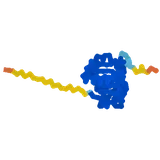 Lipocalin-15LCN15 · Q6UWW0 Lipocalin-15LCN15 · Q6UWW0 | A secreted human lipocalin that forms a β-barrel cavity to sequester and transport hydrophobic metabolites, particularly retinoic acid, within the extracellular space. | Dark |
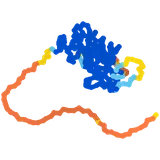 Low-density lipoprotein receptor class A domain-containing protein 2LDLRAD2 · Q5SZI1 Low-density lipoprotein receptor class A domain-containing protein 2LDLRAD2 · Q5SZI1 | A single-pass cell-surface receptor-like protein that presents a modular extracellular recognition platform to bind extracellular ligands and matrix components, thereby organizing signaling pathways that guide neuronal maturation. | Dark |
 Leucine-, glutamate- and lysine-rich protein 1LEKR1 · Q6ZMV7 Leucine-, glutamate- and lysine-rich protein 1LEKR1 · Q6ZMV7 | A soluble human adaptor that organizes mitotic machinery by using a single LEKR1-family scaffold to bind and stabilize spindle-associated assemblies. | Dark |
 Leukocyte receptor cluster member 8LENG8 · Q96PV6 Leukocyte receptor cluster member 8LENG8 · Q96PV6 | A nucleoplasmic scaffold that organizes transcription-coupled mRNP maturation and handoff to the nuclear export pathway. | Dark |
 Putative uncharacterized protein encoded by LINC00269LINC00269 · Q8N2A0 Putative uncharacterized protein encoded by LINC00269LINC00269 · Q8N2A0 | A soluble human ribonucleoprotein component that contributes to immune response. | Dark |
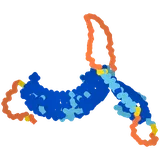 Leucine-rich repeat and immunoglobulin-like domain-containing nogo receptor-interacting protein 3LINGO3 · P0C6S8 Leucine-rich repeat and immunoglobulin-like domain-containing nogo receptor-interacting protein 3LINGO3 · P0C6S8 | A membrane-anchored extracellular adhesion receptor that uses a leucine-rich repeat scaffold capped by a cysteine-rich segment and followed by an immunoglobulin-like domain to mediate high-specificity protein binding at the cell surface. | Dark |
 Leishmanolysin-like peptidase 2LMLN2 · A0A1B0GTW7 Leishmanolysin-like peptidase 2LMLN2 · A0A1B0GTW7 | A human endopeptidase that operates as a secreted matrix-acting protease with an intracellular isoform pool. | Dark |
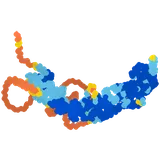 LON peptidase N-terminal domain and RING finger protein 2LONRF2 · Q1L5Z9 LON peptidase N-terminal domain and RING finger protein 2LONRF2 · Q1L5Z9 | A nuclear scaffold that organizes ubiquitination and proteasome-directed protein turnover. | Dark |
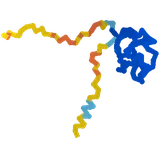 Putative apolipoprotein(a)-like protein 2LPAL2 · Q16609 Putative apolipoprotein(a)-like protein 2LPAL2 · Q16609 | A secreted human extracellular adaptor built around a single kringle module that mediates high-affinity binding to lysine- and matrix-rich surfaces. | Dark |
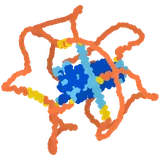 Leucine-rich repeat and calponin homology domain-containing protein 3LRCH3 · Q96II8 Leucine-rich repeat and calponin homology domain-containing protein 3LRCH3 · Q96II8 | A cytoplasmic adaptor that combines an N-terminal leucine-rich repeat scaffold with a C-terminal calponin-homology module to assemble and position cytoskeletal complexes. | Dark |
 Leucine-rich repeat, immunoglobulin-like domain and transmembrane domain-containing protein 1LRIT1 · Q9P2V4 Leucine-rich repeat, immunoglobulin-like domain and transmembrane domain-containing protein 1LRIT1 · Q9P2V4 | A single-pass type I membrane glycoprotein with an extensive extracellular leucine-rich repeat scaffold followed by immunoglobulin-like and fibronectin type III modules that collectively create a high-affinity binding platform. | Dark |
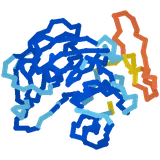 Low-density lipoprotein receptor-related protein 5-like proteinLRP5L · A4QPB2 Low-density lipoprotein receptor-related protein 5-like proteinLRP5L · A4QPB2 | A single-pass cell-surface glycoprotein whose N-terminal beta-propeller decorated with LDL receptor repeats forms a high-avidity ectodomain that binds other signaling receptors and co-receptors. | Dark |
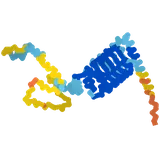 Leucine-rich repeat-containing protein 72LRRC72 · A6NJI9 Leucine-rich repeat-containing protein 72LRRC72 · A6NJI9 | A human LRR-based scaffold that assembles and tunes the ciliary apparatus. | Dark |
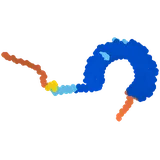 Leucine-rich repeat and IQ domain-containing protein 4LRRIQ4 · A6NIV6 Leucine-rich repeat and IQ domain-containing protein 4LRRIQ4 · A6NIV6 | A human LRR-based scaffold that organizes signaling assemblies controlling cell-cycle progression and apoptosis. | Dark |
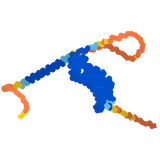 Leucine-rich repeat and transmembrane domain-containing protein 1LRTM1 · Q9HBL6 Leucine-rich repeat and transmembrane domain-containing protein 1LRTM1 · Q9HBL6 | A single-pass cell-surface organizer that presents an extracellular leucine‑rich repeat scaffold to bind and cluster partner proteins at the plasma membrane. | Dark |
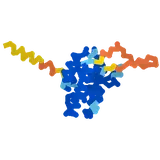 Lysozyme g-like protein 1LYG1 · Q8N1E2 Lysozyme g-like protein 1LYG1 · Q8N1E2 | A secreted human antimicrobial glycoenzyme-like protein that operates in extracellular fluids where it binds bacterial cell-wall components and host macromolecules to defend against Gram-negative pathogens. | Dark |
 LYR motif-containing protein 2LYRM2 · Q9NU23 LYR motif-containing protein 2LYRM2 · Q9NU23 | A soluble mitochondrial assembly factor that uses a LYR-module scaffold to bind and stabilize early intermediates of the NADH:ubiquinone oxidoreductase. | Dark |
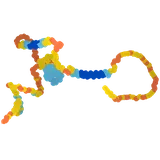 LysM and putative peptidoglycan-binding domain-containing protein 4LYSMD4 · Q5XG99 LysM and putative peptidoglycan-binding domain-containing protein 4LYSMD4 · Q5XG99 | A secreted and membrane-associated human adaptor that uses a central LysM module to organize transient protein assemblies controlling gene expression and protein turnover. | Dark |
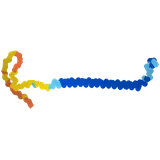 MaFF-interacting proteinMAFIP · Q8WZ33 MaFF-interacting proteinMAFIP · Q8WZ33 | A human tektin-like scaffold that assembles higher-order protein complexes during spermatogenesis. | Dark |
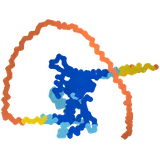 Putative MAGE domain-containing protein MAGEA13PMAGEA13P · A6NCF6 Putative MAGE domain-containing protein MAGEA13PMAGEA13P · A6NCF6 | A soluble human adaptor that shuttles between cytoplasm and nucleus to coordinate proteostasis and transcriptional repression. | Dark |
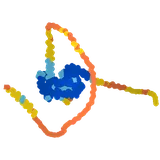 Melanoma-associated antigen B4MAGEB4 · O15481 Melanoma-associated antigen B4MAGEB4 · O15481 | A soluble human adaptor that predominates in the cytoplasm and accesses the nucleoplasm, where it uses a structured interaction scaffold to organize ubiquitin-system assemblies and chromatin-associated complexes. | Dark |
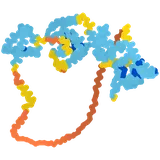 Melanoma-associated antigen E2MAGEE2 · Q8TD90 Melanoma-associated antigen E2MAGEE2 · Q8TD90 | A soluble regulatory scaffold that uses a bipartite MAGE homology domain with tandem winged-helix modules to assemble transcriptional repression complexes. | Dark |
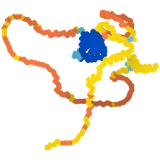 PDZ domain-containing protein MAGIXMAGIX · Q9H6Y5 PDZ domain-containing protein MAGIXMAGIX · Q9H6Y5 | A cytoplasmic PDZ-scaffold that assembles signaling complexes to dampen Ca2+-responsive pathways. | Dark |
 Membrane-anchored junction proteinMAJIN · Q3KP22 Membrane-anchored junction proteinMAJIN · Q3KP22 | A membrane-anchored junction protein family member that uses an N-terminal anchor and a sizable cytosolic interaction domain to scaffold assemblies required for faithful chromosome segregation. | Dark |
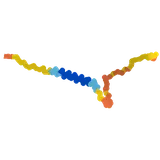 Protein MANBALMANBAL · Q9NQG1 Protein MANBALMANBAL · Q9NQG1 | A small human membrane-tethered adaptor that assembles protein complexes at the endoplasmic reticulum. | Dark |
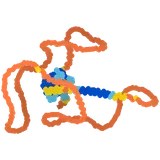 MANSC domain-containing protein 1MANSC1 · Q9H8J5 MANSC domain-containing protein 1MANSC1 · Q9H8J5 | A secreted, cysteine-rich extracellular regulator that uses a disulfide-stabilized module to bind other proteins and modulate endothelial signaling. | Dark |
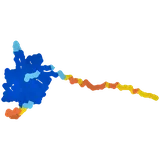 Metallo-beta-lactamase domain-containing protein 1MBLAC1 · A4D2B0 Metallo-beta-lactamase domain-containing protein 1MBLAC1 · A4D2B0 | A soluble human endoribonuclease that uses a metallo-β-lactamase catalytic core to coordinate divalent metal ions and cleave phosphodiester bonds in structured RNA. | Dark |
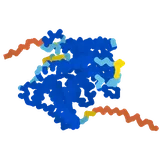 Lysophospholipid acyltransferase 1MBOAT1 · Q6ZNC8 Lysophospholipid acyltransferase 1MBOAT1 · Q6ZNC8 | A multi-pass endoplasmic reticulum membrane acyltransferase that uses a membrane-embedded catalytic center to transfer acyl groups from acyl-CoA donors onto lysophospholipids, thereby generating diacylated products that feed phosphatidylcholine and phosphatidylserine pathways. | Dark |
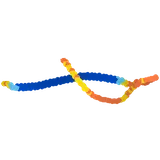 Mast cell-expressed membrane protein 1MCEMP1 · Q8IX19 Mast cell-expressed membrane protein 1MCEMP1 · Q8IX19 | A mast cell-enriched single-pass membrane protein that oligomerizes to organize signaling assemblies at the cell surface and within secretory granule membranes. | Dark |
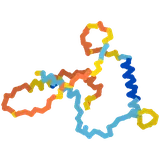 MAPK regulated corepressor interacting protein 2MCRIP2 · Q9BUT9 MAPK regulated corepressor interacting protein 2MCRIP2 · Q9BUT9 | A MAPK-responsive scaffold that assembles regulatory complexes to coordinate transcriptional repression with cytoplasmic RNA control. | Dark |
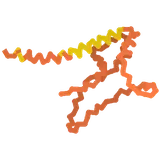 Myelodysplastic syndrome 2 translocation-associated proteinMDS2 · Q8NDY4 Myelodysplastic syndrome 2 translocation-associated proteinMDS2 · Q8NDY4 | A soluble nuclear adaptor that organizes protein assemblies required for accurate chromosome handling. | Dark |
 Mediator of RNA polymerase II transcription subunit 10MED10 · Q9BTT4 Mediator of RNA polymerase II transcription subunit 10MED10 · Q9BTT4 | A nuclear scaffold subunit of the core Mediator assembly that organizes protein–protein interfaces to recruit and stabilize the RNA polymerase II initiation machinery. | Dark |
 Mediator of RNA polymerase II transcription subunit 11MED11 · Q9P086 Mediator of RNA polymerase II transcription subunit 11MED11 · Q9P086 | A nuclear scaffold subunit of the human Mediator complex that stabilizes assemblies between gene-specific regulators and the basal transcription machinery. | Dark |
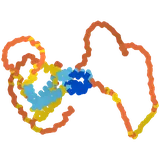 Putative homeobox protein Meis3-like 2MEIS3P2 · A8K0S8 Putative homeobox protein Meis3-like 2MEIS3P2 · A8K0S8 | A nuclear transcriptional regulator that combines an N-terminal interaction platform with a C-terminal DNA-binding module to control gene expression programs. | Dark |
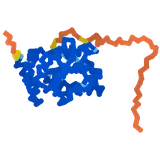 Methyltransferase-like protein 27METTL27 · Q8N6F8 Methyltransferase-like protein 27METTL27 · Q8N6F8 | A soluble human methyltransferase that uses a SAM-dependent catalytic core to iteratively methylate lysine residues on protein substrates. | Dark |
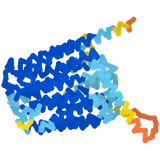 UNC93-like protein MFSD11MFSD11 · O43934 UNC93-like protein MFSD11MFSD11 · O43934 | A human multi-pass membrane regulator that resides in the endoplasmic reticulum and uses a transmembrane scaffold to bind and organize other membrane proteins. | Dark |
 Hippocampus abundant transcript-like protein 1MFSD14B · Q5SR56 Hippocampus abundant transcript-like protein 1MFSD14B · Q5SR56 | A lysosomal multi-pass membrane transporter that uses an alternating-access mechanism to move leucine and arginine across the lysosomal membrane, thereby tuning amino acid pools that feed into autophagy pathways. | Dark |
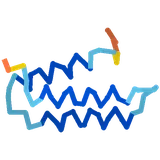 MIEF1 upstream open reading frame proteinMIEF1 · L0R8F8 MIEF1 upstream open reading frame proteinMIEF1 · L0R8F8 | A soluble mitochondrial matrix adaptor that uses an LYR-module scaffold to bind partner proteins and ribonucleoprotein assemblies, thereby stimulating mitochondrial protein synthesis and coupling it to respiratory complex maturation. | Dark |
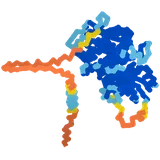 Inactive ubiquitin carboxyl-terminal hydrolase MINDY-4BMINDY4B · A8MYZ0 Inactive ubiquitin carboxyl-terminal hydrolase MINDY-4BMINDY4B · A8MYZ0 | A soluble human deubiquitinase that resides in the cytosol and removes ubiquitin from modified proteins and polyubiquitin chains. | Dark |
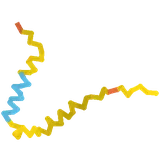 Putative uncharacterized protein encoded by MIR22HGMIR22HG · Q0VDD5 Putative uncharacterized protein encoded by MIR22HGMIR22HG · Q0VDD5 | A human regulatory scaffold that modulates smooth muscle contraction by assembling protein complexes rather than catalyzing reactions. | Dark |
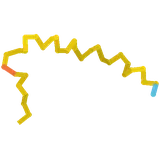 Putative makorin-5MKRN9P · Q6NVV0 Putative makorin-5MKRN9P · Q6NVV0 | A nuclear regulator that assembles a makorin-type ligase scaffold to bind and modulate nuclear protein targets, thereby repressing RNA polymerase II–dependent transcription. | Dark |
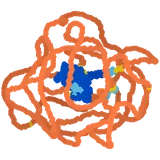 Protein AF-17MLLT6 · P55198 Protein AF-17MLLT6 · P55198 | A nuclear chromatin reader that uses tandem PHD-type zinc-finger modules to bind histone tails and nucleosomes, thereby recruiting and positioning histone-modifying assemblies to regulate transcription. | Dark |
 Protein MMP24OSMMP24OS · A0A0U1RRL7 Protein MMP24OSMMP24OS · A0A0U1RRL7 | A membrane-associated human adaptor that uses multivalent protein binding to stabilize client proteins and assemble transport and signaling modules at the Golgi. | Dark |
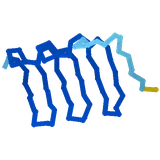 MORN repeat-containing protein 2MORN2 · Q502X0 MORN repeat-containing protein 2MORN2 · Q502X0 | A small human adaptor that uses tandem repeat modules to mediate multivalent protein interactions central to ciliogenesis. | Dark |
 Motile sperm domain-containing protein 1MOSPD1 · Q9UJG1 Motile sperm domain-containing protein 1MOSPD1 · Q9UJG1 | A human regulatory scaffold that uses an Ig-like beta-sandwich core and a major sperm protein domain to mediate multivalent protein binding and assemble transcriptional control complexes. | Dark |
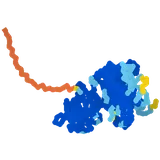 Putative DBH-like monooxygenase protein 2MOXD2P · A6NHM9 Putative DBH-like monooxygenase protein 2MOXD2P · A6NHM9 | A secreted, copper-dependent monooxygenase that assembles a DOMON recognition module with a bilobal catalytic core to hydroxylate catecholamine-like substrates using a copper center and ascorbate. | Dark |
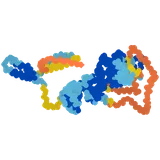 MAGUK p55 subfamily member 4MPP4 · Q96JB8 MAGUK p55 subfamily member 4MPP4 · Q96JB8 | A cytosolic MAGUK scaffold that assembles multiprotein complexes to position membrane and adhesion proteins at specialized cell–cell contacts and neuronal synapses. | Dark |
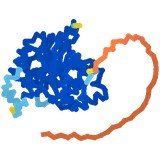 Metallophosphoesterase domain-containing protein 1MPPED1 · O15442 Metallophosphoesterase domain-containing protein 1MPPED1 · O15442 | A soluble human metallophosphoesterase–fold protein that primarily acts as a scaffold and assembly hub. | Dark |
 MORF4 family-associated protein 1-like 1MRFAP1L1 · Q96HT8 MORF4 family-associated protein 1-like 1MRFAP1L1 · Q96HT8 | A soluble adaptor that self-associates to form a scaffold coordinating nuclear chromatin-regulatory assemblies and cytoskeletal modules. | Dark |
 Maestro heat-like repeat-containing protein family member 9MROH9 · Q5TGP6 Maestro heat-like repeat-containing protein family member 9MROH9 · Q5TGP6 | A human nucleocytoplasmic scaffold that uses a HEAT/armadillo repeat solenoid to assemble and tune innate immune signaling complexes. | Dark |
 39S ribosomal protein L24, mitochondrialMRPL24 · Q96A35 39S ribosomal protein L24, mitochondrialMRPL24 · Q96A35 | A core architectural protein of the human mitochondrial large ribosomal subunit that stabilizes rRNA and neighboring components to sustain mitochondrial translation. | Dark |
 28S ribosomal protein S31, mitochondrialMRPS31 · Q92665 28S ribosomal protein S31, mitochondrialMRPS31 · Q92665 | A mitochondrial ribosomal protein that integrates into the small subunit to support intra-mitochondrial protein synthesis. | Dark |
 Membrane-spanning 4-domains subfamily A member 18MS4A18 · Q3C1V0 Membrane-spanning 4-domains subfamily A member 18MS4A18 · Q3C1V0 | A human multi-pass membrane organizer that assembles and stabilizes receptor signaling platforms at the cell surface, particularly in hematopoietic lineages. | Dark |
 Myb/SANT-like DNA-binding domain-containing protein 2MSANTD2 · Q6P1R3 Myb/SANT-like DNA-binding domain-containing protein 2MSANTD2 · Q6P1R3 | A nuclear DNA-binding regulator that uses a central Myb/SANT-like module to recognize specific genomic sites and assemble repressive chromatin complexes. | Dark |
 Mesothelin-like proteinMSLNL · Q96KJ4 Mesothelin-like proteinMSLNL · Q96KJ4 | A human extracellularly oriented binding scaffold that assembles and stabilizes protein complexes at the cell surface. | Dark |
 ATP synthase protein 8MT-ATP8 · P03928 ATP synthase protein 8MT-ATP8 · P03928 | A small, multi-pass membrane component of the mitochondrial ATP synthase that embeds within the inner membrane to stabilize the membrane sector and its stator interface. | Dark |
 Mitochondrial fission regulator 1-likeMTFR1L · Q9H019 Mitochondrial fission regulator 1-likeMTFR1L · Q9H019 | A soluble human adaptor that regulates mitochondrial division. | Dark |
 Methenyltetrahydrofolate synthase domain-containing proteinMTHFSD · Q2M296 Methenyltetrahydrofolate synthase domain-containing proteinMTHFSD · Q2M296 | A soluble human RNA-binding assembly that uses an N-terminal cyclo-ligase–like scaffold to organize a modification complex and a C-terminal RNA recognition motif to capture and orient tRNA substrates. | Dark |
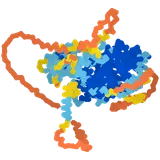 Myotubularin-related protein 11MTMR11 · A4FU01 Myotubularin-related protein 11MTMR11 · A4FU01 | A cytoplasmic myotubularin-lineage scaffold that uses a phosphatase-like core and a specialized C-terminal targeting module to assemble protein complexes controlling phosphoinositide metabolism. | Dark |
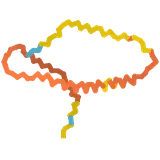 N-cym proteinMYCNOS · P40205 N-cym proteinMYCNOS · P40205 | A human membrane-proximal adaptor that uses multivalent protein binding to assemble and stabilize signaling complexes controlling programmed cell death. | Dark |
 Putative uncharacterized protein MYH16MYH16 · Q9H6N6 Putative uncharacterized protein MYH16MYH16 · Q9H6N6 | A cytosolic myosin-tail scaffold that nucleates and stabilizes thick-filament assembly in striated muscle. | Dark |
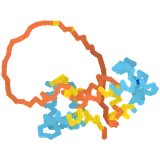 Myosin regulatory light chain 10MYL10 · Q9BUA6 Myosin regulatory light chain 10MYL10 · Q9BUA6 | A cytosolic regulatory light chain that binds myosin and uses a paired EF-hand module to sense calcium and stabilize actomyosin assemblies central to smooth muscle contraction. | Dark |
 Mitotic-spindle organizing protein 1MZT1 · Q08AG7 Mitotic-spindle organizing protein 1MZT1 · Q08AG7 | A cytoplasmic adaptor that organizes the mitotic spindle by assembling and positioning nucleation machinery. | Dark |
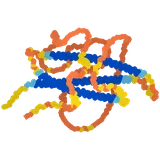 NEDD4-binding protein 3N4BP3 · O15049 NEDD4-binding protein 3N4BP3 · O15049 | A soluble human adaptor that assembles and positions ubiquitin-ligase signaling modules to dampen autophagy. | Dark |
 Homeobox protein NANOGP8NANOGP8 · Q6NSW7 Homeobox protein NANOGP8NANOGP8 · Q6NSW7 | A nuclear transcription factor that uses a homeodomain to recognize specific regulatory DNA elements and assemble transcriptional complexes controlling cell-cycle and growth programs. | Dark |
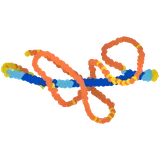 Putative neuroblastoma breakpoint family member 7NBPF7 · P0C2Y1 Putative neuroblastoma breakpoint family member 7NBPF7 · P0C2Y1 | A human NBPF-family scaffold that uses tandem Olduvai repeats to assemble multivalent protein complexes controlling centrosome biology and downstream signaling. | Dark |
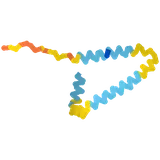 Uncharacterized protein NCBP2-AS2NCBP2-AS2 · Q69YL0 Uncharacterized protein NCBP2-AS2NCBP2-AS2 · Q69YL0 | A small human adaptor protein that operates through selective binding to assemble and stabilize pathways that deliver nuclear-encoded precursor proteins to mitochondria. | Dark |
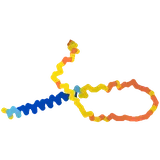 Putative nuclear receptor corepressor 1-like protein NCOR1P1NCOR1P1 · Q9H4R4 Putative nuclear receptor corepressor 1-like protein NCOR1P1NCOR1P1 · Q9H4R4 | A nuclear corepressor that assembles oligomeric repression platforms to control RNA polymerase II–dependent transcription. | Dark |
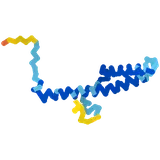 NADH dehydrogenase [ubiquinone] 1 subunit C2, isoform 2NDUFC2-KCTD14 · E9PQ53 NADH dehydrogenase [ubiquinone] 1 subunit C2, isoform 2NDUFC2-KCTD14 · E9PQ53 | A small membrane-associated subunit of human mitochondrial Complex I that acts as an assembly and stabilization module rather than a catalytic center. | Dark |
 Nuclear envelope integral membrane protein 2NEMP2 · A6NFY4 Nuclear envelope integral membrane protein 2NEMP2 · A6NFY4 | A multi-pass membrane scaffold that resides in the endoplasmic reticulum and nuclear envelope, where it organizes higher-order assemblies that shape and stabilize the nuclear envelope. | Dark |
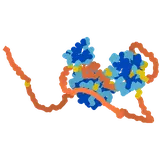 E3 ubiquitin-protein ligase NEURL1BNEURL1B · A8MQ27 E3 ubiquitin-protein ligase NEURL1BNEURL1B · A8MQ27 | A cytosolic adaptor and ubiquitin-system scaffold that organizes endocytic and trafficking assemblies. | Dark |
 Putative uncharacterized protein NEXN-AS1NEXN-AS1 · Q8NBZ9 Putative uncharacterized protein NEXN-AS1NEXN-AS1 · Q8NBZ9 | A soluble human scaffold that promotes programmed cell death by organizing nucleoplasmic protein assemblies that commit cells to apoptosis. | Dark |
 NHL-repeat-containing protein 4NHLRC4 · P0CG21 NHL-repeat-containing protein 4NHLRC4 · P0CG21 | A nucleocytoplasmic adaptor that uses an NHL-repeat beta-propeller scaffold to organize RNA–protein assemblies controlling post-transcriptional gene expression. | Dark |
 Nicolin-1NICN1 · Q9BSH3 Nicolin-1NICN1 · Q9BSH3 | A soluble nuclear adaptor that organizes nucleoplasmic ribonucleoprotein assemblies controlling small nuclear RNA maturation and utilization. | Dark |
 Magnesium transporter NIPA3NIPAL1 · Q6NVV3 Magnesium transporter NIPA3NIPAL1 · Q6NVV3 | A human multi-pass membrane transporter that mediates high-affinity uptake of magnesium. | Dark |
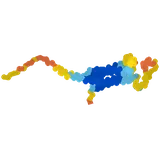 Sodium/potassium-transporting ATPase subunit beta-1-interacting protein 1NKAIN1 · Q4KMZ8 Sodium/potassium-transporting ATPase subunit beta-1-interacting protein 1NKAIN1 · Q4KMZ8 | A single-pass membrane-associated regulator that binds ATPase complexes and modulates their assembly and activity at the cell surface. | Dark |
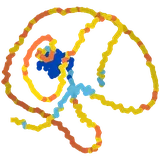 NK1 transcription factor-related protein 2NKX1-2 · Q9UD57 NK1 transcription factor-related protein 2NKX1-2 · Q9UD57 | A nuclear transcriptional regulator that uses a homeodomain to bind specific DNA sequences and control gene programs central to neuronal development. | Dark |
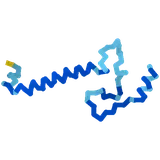 Normal mucosa of esophagus-specific gene 1 proteinNMES1 · Q9C002 Normal mucosa of esophagus-specific gene 1 proteinNMES1 · Q9C002 | A small, non-catalytic accessory subunit that supports the biogenesis and stability of mitochondrial complex I. | Dark |
 Nodal modulator 3NOMO3 · P69849 Nodal modulator 3NOMO3 · P69849 | A large, secreted and membrane-proximal scaffold that assembles multiple beta-sandwich and transthyretin-like modules to create high-avidity binding surfaces. | Dark |
 Homeobox protein notochordNOTO · A8MTQ0 Homeobox protein notochordNOTO · A8MTQ0 | A nuclear transcriptional regulator that uses a homeodomain to bind specific DNA motifs and assemble repressive regulatory complexes during development. | Dark |
 NADP-dependent oxidoreductase domain-containing protein 1NOXRED1 · Q6NXP6 NADP-dependent oxidoreductase domain-containing protein 1NOXRED1 · Q6NXP6 | A soluble human oxidoreductase that uses a Rossmann-like dinucleotide-binding core to catalyze reversible reduction of pyrroline-5-carboxylate to proline in the cytosol. | Dark |
 Nuclear pore complex-interacting protein family member A5NPIPA5 · E9PKD4 Nuclear pore complex-interacting protein family member A5NPIPA5 · E9PKD4 | A soluble nuclear scaffold that associates with the nuclear pore interface and uses multivalent binding to organize nucleoporin- and transport factor–rich assemblies in the nucleoplasm. | Dark |
 Nuclear pore complex-interacting protein family member B4NPIPB4 · C9JG80 Nuclear pore complex-interacting protein family member B4NPIPB4 · C9JG80 | A soluble nuclear scaffold that associates with nuclear pore–proximal assemblies to organize multivalent protein complexes in the nucleoplasm. | Dark |
 Nuclear pore complex-interacting protein family member B7NPIPB7 · O75200 Nuclear pore complex-interacting protein family member B7NPIPB7 · O75200 | A soluble nuclear scaffold that binds other proteins and assembles repressive complexes at the nuclear pore–chromatin interface. | Dark |
 Putative neuropeptide Y receptor type 6NPY6R · Q99463 Putative neuropeptide Y receptor type 6NPY6R · Q99463 | A seven-helix membrane receptor that detects extracellular neuropeptide signals and converts them into intracellular inhibitory signaling. | Dark |
 Protein NRDE2 homologNRDE2 · Q9H7Z3 Protein NRDE2 homologNRDE2 · Q9H7Z3 | A nuclear scaffold that organizes RNA processing and export pathways. | Dark |
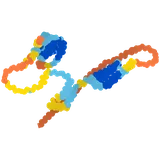 Non-structural maintenance of chromosomes element 4 homolog ANSMCE4A · Q9NXX6 Non-structural maintenance of chromosomes element 4 homolog ANSMCE4A · Q9NXX6 | A nuclear adaptor that scaffolds genome-maintenance assemblies. | Dark |
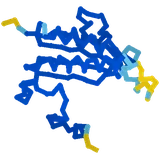 Putative NOL1/NOP2/Sun domain family member 5BNSUN5P1 · Q3KNT7 Putative NOL1/NOP2/Sun domain family member 5BNSUN5P1 · Q3KNT7 | A soluble nuclear RNA-modifying enzyme that uses S-adenosylmethionine to install 5-methylcytidine on structured RNA, targeting both ribosomal RNA and tRNA. | Dark |
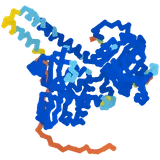 5'-nucleotidase domain-containing protein 4NT5DC4 · Q86YG4 5'-nucleotidase domain-containing protein 4NT5DC4 · Q86YG4 | A soluble human cytosolic phosphohydrolase that removes the 5′ phosphate from ribo- and deoxyribonucleotides, with a strong preference for purine substrates. | Dark |
 Putative uncharacterized protein NTM-AS1NTM-AS1 · Q6ZSK4 Putative uncharacterized protein NTM-AS1NTM-AS1 · Q6ZSK4 | A human nuclear regulatory scaffold that uses multivalent protein binding to assemble and stabilize transcriptional complexes controlling RNA polymerase II–dependent gene expression. | Dark |
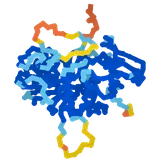 Nucleoside diphosphate-linked moiety X motif 19NUDT19 · A8MXV4 Nucleoside diphosphate-linked moiety X motif 19NUDT19 · A8MXV4 | A soluble human pyrophosphohydrolase that uses a NUDIX catalytic core to hydrolyze pyrophosphate bonds in nucleotide-derived metabolites, with a strong bias toward acyl-coenzyme A and related pools. | Dark |
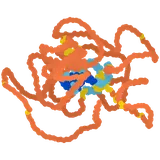 NUT family member 2ENUTM2E · B1AL46 NUT family member 2ENUTM2E · B1AL46 | A human nuclear scaffold that assembles higher-order chromatin-associated complexes to repress RNA polymerase II–driven transcription. | Dark |
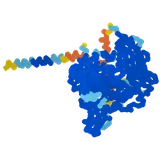 NXPE family member 3NXPE3 · Q969Y0 NXPE family member 3NXPE3 · Q969Y0 | A secreted human extracellular binder that uses an Ig-like core and a specialized C-terminal module to assemble and tune receptor-centered complexes outside the cell. | Dark |
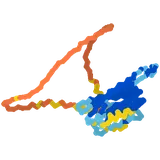 Neurexophilin-3NXPH3 · O95157 Neurexophilin-3NXPH3 · O95157 | A secreted human glycoprotein that assembles a neurexophilin-family binding module to act as an extracellular ligand. | Dark |
 Neuronal tyrosine-phosphorylated phosphoinositide-3-kinase adapter 1NYAP1 · Q6ZVC0 Neuronal tyrosine-phosphorylated phosphoinositide-3-kinase adapter 1NYAP1 · Q6ZVC0 | A nucleoplasm-enriched neuronal adaptor that assembles signaling complexes controlling phosphoinositide 3-kinase pathways, Rho GTPase signaling, and adhesion dynamics. | Dark |
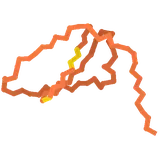 Ovarian cancer-related protein 1OCR1 · Q9BZK8 Ovarian cancer-related protein 1OCR1 · Q9BZK8 | A human regulatory scaffold that uses multivalent protein binding to assemble and tune transcriptional complexes. | Dark |
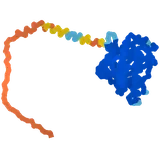 2-oxoglutarate and iron-dependent oxygenase domain-containing protein 3OGFOD3 · Q6PK18 2-oxoglutarate and iron-dependent oxygenase domain-containing protein 3OGFOD3 · Q6PK18 | A soluble Fe(II)/2-oxoglutarate-dependent oxygenase that installs 4-hydroxyproline on protein substrates. | Dark |
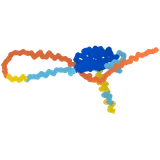 Oocyte-secreted protein 4AOOSP4A · A0A2R8YFL7 Oocyte-secreted protein 4AOOSP4A · A0A2R8YFL7 | A human developmental regulator that operates as a non-enzymatic binding platform within the secretory pathway. | Dark |
 Medium-wave-sensitive opsin 1OPN1MW · P04001 Medium-wave-sensitive opsin 1OPN1MW · P04001 | A cone opsin-class G protein–coupled receptor that binds retinal and converts photon absorption into downstream signaling at photoreceptor membranes. | Dark |
 Olfactory receptor 10J3OR10J3 · Q5JRS4 Olfactory receptor 10J3OR10J3 · Q5JRS4 | A seven-helix chemosensory receptor at the cell surface that detects small volatile molecules and converts their binding into intracellular signaling by coupling to heterotrimeric G proteins. | Dark |
 Olfactory receptor 11H7OR11H7 · Q8NGC8 Olfactory receptor 11H7OR11H7 · Q8NGC8 | A human seven-helix membrane receptor that belongs to the olfactory class of G protein–coupled receptors. | Dark |
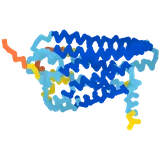 Olfactory receptor 13C4OR13C4 · Q8NGS5 Olfactory receptor 13C4OR13C4 · Q8NGS5 | A human chemosensory G protein-coupled receptor that resides predominantly at the plasma membrane and detects small volatile ligands to initiate signal transduction. | Dark |
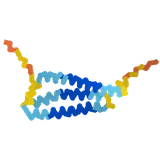 Putative olfactory receptor 13C6OR13C6P · Q8NH95 Putative olfactory receptor 13C6OR13C6P · Q8NH95 | A human seven-helix chemosensory receptor that resides at the cell surface and detects volatile odorants. | Dark |
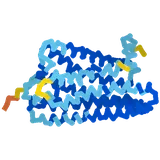 Olfactory receptor 14A16OR14A16 · Q8NHC5 Olfactory receptor 14A16OR14A16 · Q8NHC5 | A human seven-pass cell-surface receptor that belongs to the olfactory class of G protein–coupled receptors. | Dark |
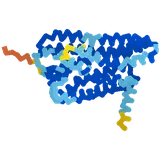 Olfactory receptor 1M1OR1M1 · Q8NGA1 Olfactory receptor 1M1OR1M1 · Q8NGA1 | A seven-helix chemosensory receptor at the cell surface that detects volatile odorants and converts their binding into intracellular signaling through heterotrimeric G proteins. | Dark |
 Olfactory receptor 2J2OR2J2 · O76002 Olfactory receptor 2J2OR2J2 · O76002 | A seven-helix chemosensory receptor at the cell surface that binds volatile odorants and activates heterotrimeric G protein signaling to initiate neuronal responses. | Dark |
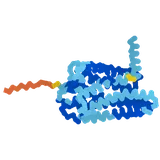 Olfactory receptor 2T34OR2T34 · Q8NGX1 Olfactory receptor 2T34OR2T34 · Q8NGX1 | A human seven-helix chemosensory receptor that resides at the cell surface and detects volatile odorant molecules. | Dark |
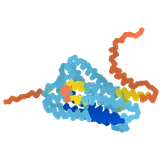 Putative olfactory receptor 3A4OR3A4P · P47883 Putative olfactory receptor 3A4OR3A4P · P47883 | A human seven-pass cell-surface receptor that detects volatile odorants and converts their binding into intracellular signals through heterotrimeric G proteins. | Dark |
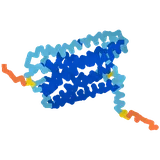 Olfactory receptor 4D5OR4D5 · Q8NGN0 Olfactory receptor 4D5OR4D5 · Q8NGN0 | A human cell-surface chemosensory receptor that spans the membrane seven times and detects volatile odorants. | Dark |
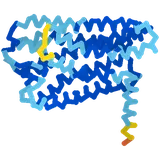 Olfactory receptor 4F17OR4F17 · Q8NGA8 Olfactory receptor 4F17OR4F17 · Q8NGA8 | A cell-surface, multi-pass chemosensory receptor that detects volatile odorants and converts their binding into intracellular signals through a seven-helix GPCR core. | Dark |
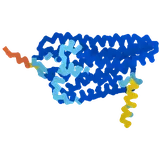 Olfactory receptor 51A7OR51A7 · Q8NH64 Olfactory receptor 51A7OR51A7 · Q8NH64 | A human seven-transmembrane receptor at the cell surface that detects hydrophobic odorant-like ligands and transduces this extracellular cue into intracellular signaling via heterotrimeric G proteins. | Dark |
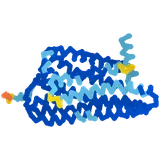 Olfactory receptor 52A1OR52A1 · Q9UKL2 Olfactory receptor 52A1OR52A1 · Q9UKL2 | A cell-surface, multi-pass receptor that detects volatile odorants and converts their binding into intracellular signaling. | Dark |
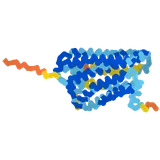 Olfactory receptor 56B4OR56B4 · Q8NH76 Olfactory receptor 56B4OR56B4 · Q8NH76 | A human odorant-sensing seven-helix receptor that resides at the cell surface and initiates olfactory signal transduction. | Dark |
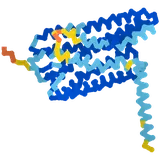 Olfactory receptor 5AS1OR5AS1 · Q8N127 Olfactory receptor 5AS1OR5AS1 · Q8N127 | A seven-helix cell-surface chemosensory receptor that detects volatile odorants and converts their binding into intracellular signals by activating heterotrimeric G proteins. | Dark |
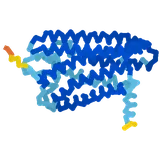 Olfactory receptor 5M8OR5M8 · Q8NGP6 Olfactory receptor 5M8OR5M8 · Q8NGP6 | A seven-helix membrane chemosensor that detects volatile odorants and initiates a G protein–mediated signaling cascade at the cell surface. | Dark |
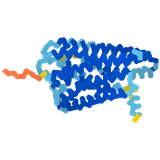 Olfactory receptor 6F1OR6F1 · Q8NGZ6 Olfactory receptor 6F1OR6F1 · Q8NGZ6 | A human seven-helix chemosensory receptor that detects extracellular odorant molecules and converts their binding into intracellular signaling through heterotrimeric G proteins. | Dark |
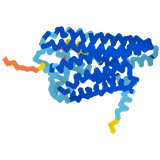 Olfactory receptor 7G3OR7G3 · Q8NG95 Olfactory receptor 7G3OR7G3 · Q8NG95 | A multi-pass cell-surface chemosensory receptor that detects extracellular odorant molecules and transduces this information through a seven-helix signaling core to activate intracellular pathways. | Dark |
 Olfactory receptor 8B2OR8B2 · Q96RD0 Olfactory receptor 8B2OR8B2 · Q96RD0 | A seven-pass cell-surface chemosensory receptor that detects volatile odorants and converts their binding into intracellular signals through heterotrimeric G proteins. | Dark |
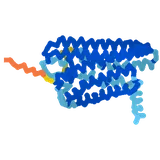 Olfactory receptor 8H3OR8H3 · Q8N146 Olfactory receptor 8H3OR8H3 · Q8N146 | A human cell-surface chemosensory receptor that spans the membrane seven times and detects volatile odorants. | Dark |
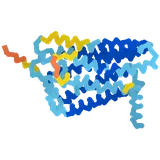 Olfactory receptor 9Q1OR9Q1 · Q8NGQ5 Olfactory receptor 9Q1OR9Q1 · Q8NGQ5 | A seven-pass membrane chemosensor in human olfactory neurons that binds volatile odorants within a transmembrane pocket and activates heterotrimeric G proteins to initiate cyclic-nucleotide signaling. | Dark |
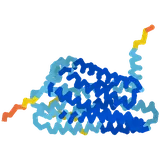 Olfactory receptor 9Q2OR9Q2 · Q8NGE9 Olfactory receptor 9Q2OR9Q2 · Q8NGE9 | A multi-pass cell-surface chemosensory receptor that detects volatile odorants and converts their binding into intracellular signals through a seven-helix transmembrane core. | Dark |
 Dolichyl-diphosphooligosaccharide--protein glycosyltransferase subunit 4OST4 · P0C6T2 Dolichyl-diphosphooligosaccharide--protein glycosyltransferase subunit 4OST4 · P0C6T2 | A small endoplasmic reticulum membrane subunit of the oligosaccharyltransferase that stabilizes and organizes the glycosylation machinery responsible for co-translational N-glycan transfer to nascent polypeptides. | Dark |
 OtospiralinOTOS · Q8NHW6 OtospiralinOTOS · Q8NHW6 | A small secreted human protein that operates outside cells to support hearing. | Dark |
 Ovochymase-1OVCH1 · Q7RTY7 Ovochymase-1OVCH1 · Q7RTY7 | A secreted human serine endopeptidase that assembles and activates protease-dependent immune complexes. | Dark |
 Putative G antigen family E member 3PAGE2B · Q5JRK9 Putative G antigen family E member 3PAGE2B · Q5JRK9 | A cytosolic adaptor that uses a GAGE-type binding module to organize protein assemblies controlling gene expression. | Dark |
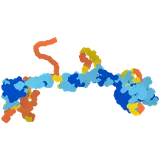 Inactive serine protease PAMR1PAMR1 · Q6UXH9 Inactive serine protease PAMR1PAMR1 · Q6UXH9 | A secreted human serine endopeptidase that assembles into extracellular complexes via modular CUB, calcium-binding EGF-like, and CCP/Sushi domains to capture substrates and organize pericellular assemblies. | Dark |
 Prostate and testis expressed protein 3PATE3 · B3GLJ2 Prostate and testis expressed protein 3PATE3 · B3GLJ2 | A secreted human extracellular regulator that uses a Ly-6/uPA receptor-like fold to bind and modulate acetylcholine receptor assemblies. | Dark |
 Protocadherin alpha-5PCDHA5 · Q9Y5H7 Protocadherin alpha-5PCDHA5 · Q9Y5H7 | A single-pass cell-surface adhesion receptor that presents a multi-repeat cadherin ectodomain to mediate calcium-stabilized homophilic binding between neighboring human cells. | Dark |
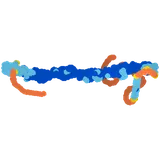 Protocadherin beta-12PCDHB12 · Q9Y5F1 Protocadherin beta-12PCDHB12 · Q9Y5F1 | A single-pass cell-surface adhesion molecule that presents a multi-repeat extracellular cadherin ectodomain to mediate calcium-stabilized cell-cell adhesion and a cytoplasmic tail that couples adhesion to intracellular signaling and cytoskeletal organization. | Dark |
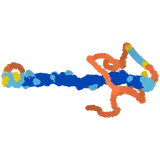 Protocadherin gamma-A8PCDHGA8 · Q9Y5G5 Protocadherin gamma-A8PCDHGA8 · Q9Y5G5 | A single-pass cell-surface adhesion receptor that uses a multi-repeat cadherin ectodomain to form calcium-stabilized adhesive bonds between neighboring cells and a cytoplasmic tail that recruits catenins to couple adhesion to the actin cytoskeleton. | Dark |
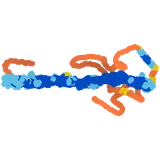 Protocadherin gamma-B1PCDHGB1 · Q9Y5G3 Protocadherin gamma-B1PCDHGB1 · Q9Y5G3 | A single-pass type I membrane adhesion molecule that uses a calcium-stabilized cadherin ectodomain to mediate homophilic cell-cell adhesion and a cytoplasmic tail to recruit catenin complexes that couple junctions to the actin cytoskeleton and signaling pathways. | Dark |
 Protocadherin gamma-C5PCDHGC5 · Q9Y5F6 Protocadherin gamma-C5PCDHGC5 · Q9Y5F6 | A single-pass membrane adhesion receptor that uses tandem cadherin-like extracellular repeats to form calcium-stabilized adhesive assemblies and a cytoplasmic tail to recruit catenin adaptors and the actin cytoskeleton. | Dark |
 Protein-L-isoaspartate O-methyltransferase domain-containing protein 2PCMTD2 · Q9NV79 Protein-L-isoaspartate O-methyltransferase domain-containing protein 2PCMTD2 · Q9NV79 | A soluble human enzyme that uses S-adenosyl-L-methionine–dependent methyl transfer to recognize and repair isoaspartyl damage in proteins. | Dark |
 Purkinje cell protein 2 homologPCP2 · Q8IVA1 Purkinje cell protein 2 homologPCP2 · Q8IVA1 | A human neuronal adaptor that uses a helical scaffold and two noncatalytic regulatory motifs to assemble and tune heterotrimeric G-protein signaling assemblies. | Dark |
 Profilin-3PFN3 · P60673 Profilin-3PFN3 · P60673 | A cytoplasmic actin-monomer adaptor that organizes the cytoskeleton by binding G-actin and proline-rich partners to tune filament assembly. | Dark |
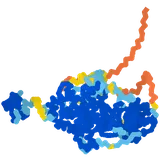 PiggyBac transposable element-derived protein 2PGBD2 · Q6P3X8 PiggyBac transposable element-derived protein 2PGBD2 · Q6P3X8 | A domesticated, PiggyBac-derived nuclear regulator that binds specific DNA motifs and assembles repressive complexes in the nucleoplasm to modulate transcription and integrate with genome-maintenance pathways. | Dark |
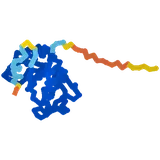 Pyroglutamyl-peptidase 1-like proteinPGPEP1L · A6NFU8 Pyroglutamyl-peptidase 1-like proteinPGPEP1L · A6NFU8 | A soluble cytosolic metalloprotease that removes N-terminal pyroglutamate from intracellular peptides, thereby unblocking their N-termini and feeding them back into general peptide turnover. | Dark |
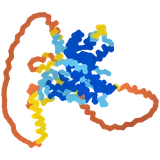 PHD finger protein 24PHF24 · Q9UPV7 PHD finger protein 24PHF24 · Q9UPV7 | A nucleoplasmic scaffold that organizes protein assemblies controlling neuronal morphogenesis. | Dark |
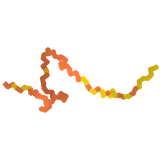 Proline, histidine and glycine-rich protein 1PHGR1 · C9JFL3 Proline, histidine and glycine-rich protein 1PHGR1 · C9JFL3 | A human cytosolic adaptor that organizes protein assemblies governing vesicular trafficking and macromolecular complex formation. | Dark |
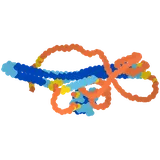 Pleckstrin homology-like domain family B member 3PHLDB3 · Q6NSJ2 Pleckstrin homology-like domain family B member 3PHLDB3 · Q6NSJ2 | A human membrane-proximal scaffold that uses a C-terminal pleckstrin-homology module to anchor soluble signaling assemblies at the cytoplasmic face of the plasma membrane. | Dark |
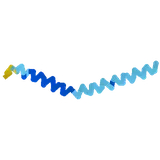 Protein PIGBOS1PIGBOS1 · A0A0B4J2F0 Protein PIGBOS1PIGBOS1 · A0A0B4J2F0 | A small single-pass membrane adaptor in human cells that resides at the mitochondrial surface and uses selective protein binding to organize stress-responsive assemblies. | Dark |
 Phosphatidylinositol-glycan biosynthesis class X proteinPIGX · Q8TBF5 Phosphatidylinositol-glycan biosynthesis class X proteinPIGX · Q8TBF5 | An endoplasmic reticulum–associated scaffold that organizes early steps of glycosylphosphatidylinositol anchor assembly. | Dark |
 Putative uncharacterized protein PIK3CD-AS1PIK3CD-AS1 · Q5SR53 Putative uncharacterized protein PIK3CD-AS1PIK3CD-AS1 · Q5SR53 | A human nucleoplasmic scaffold that advances the mitotic cell cycle by organizing protein assemblies rather than catalyzing reactions. | Dark |
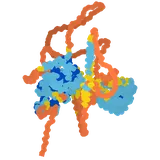 Putative PIP5K1A and PSMD4-like proteinPIPSL · A2A3N6 Putative PIP5K1A and PSMD4-like proteinPIPSL · A2A3N6 | A soluble human adaptor that organizes proteostasis and signaling assemblies. | Dark |
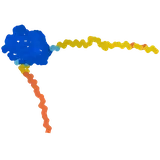 PITH domain-containing protein 1PITHD1 · Q9GZP4 PITH domain-containing protein 1PITHD1 · Q9GZP4 | A soluble adaptor that shuttles between the nucleoplasm and cytoplasm to organize protein assemblies controlling gene expression and cell fate. | Dark |
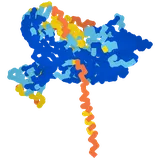 Cytosolic phospholipase A2 zetaPLA2G4F · Q68DD2 Cytosolic phospholipase A2 zetaPLA2G4F · Q68DD2 | A cytosolic, calcium-responsive phospholipase/lysophospholipase that transiently docks onto cytosolic membrane surfaces via a C2 module and hydrolyzes the sn-1 ester of membrane phospholipids and their lyso-derivatives. | Dark |
 PI-PLC X domain-containing protein 2PLCXD2 · Q0VAA5 PI-PLC X domain-containing protein 2PLCXD2 · Q0VAA5 | A human membrane-proximal scaffold that uses a PLC-like barrel with an embedded X domain to bind and organize phosphoinositide signaling assemblies at the cell surface. | Dark |
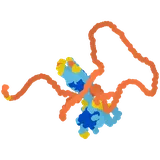 Pleckstrin homology domain-containing family G member 7PLEKHG7 · Q6ZR37 Pleckstrin homology domain-containing family G member 7PLEKHG7 · Q6ZR37 | A cytosolic signaling enzyme that uses a DH–PH tandem to activate small GTPases and assemble multiprotein complexes. | Dark |
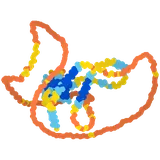 Pleckstrin homology domain-containing family O member 2PLEKHO2 · Q8TD55 Pleckstrin homology domain-containing family O member 2PLEKHO2 · Q8TD55 | A human cytoplasmic scaffold that uses a pleckstrin homology module to dock onto phosphoinositide-rich membrane sites and assemble multiprotein complexes that tune survival pathways in myeloid lineages. | Dark |
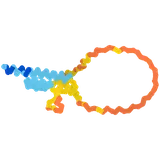 Transmembrane protein PMIS2PMIS2 · A0A1W2PS18 Transmembrane protein PMIS2PMIS2 · A0A1W2PS18 | A small multi-pass membrane organizer that assembles signaling and trafficking hubs at the cell surface and endo-lysosomal system. | Dark |
 Putative postmeiotic segregation increased 2-like protein 2PMS2P2 · O95744 Putative postmeiotic segregation increased 2-like protein 2PMS2P2 · O95744 | A nuclear DNA repair factor that assembles and regulates mismatch repair complexes in human cells. | Dark |
 Paraneoplastic antigen Ma6EPNMA6E · A0A0J9YXQ4 Paraneoplastic antigen Ma6EPNMA6E · A0A0J9YXQ4 | A soluble human regulatory scaffold that uses two Ma-like binding modules to assemble inhibitory complexes that dampen RNA polymerase II–driven transcription. | Dark |
 DNA-directed RNA polymerase II subunit RPB11-b2POLR2J3 · Q9H1A7 DNA-directed RNA polymerase II subunit RPB11-b2POLR2J3 · Q9H1A7 | A small, soluble nuclear subunit of the human transcription machinery that structurally organizes the core of the RNA-synthesizing enzyme responsible for mRNA precursor and non-coding RNA production. | Dark |
 Nuclear envelope pore membrane protein POM 121CPOM121C · A8CG34 Nuclear envelope pore membrane protein POM 121CPOM121C · A8CG34 | A large scaffold component of the nuclear pore that organizes the transport conduit between nucleus and cytoplasm. | Dark |
 POM121-like protein 2POM121L2 · Q96KW2 POM121-like protein 2POM121L2 · Q96KW2 | A human nuclear pore complex scaffold that resides in the nucleus and nucleoplasm and uses multivalent binding surfaces to organize transport machinery. | Dark |
 POTE ankyrin domain family member B3POTEB3 · A0JP26 POTE ankyrin domain family member B3POTEB3 · A0JP26 | A human scaffold protein built from tandem ankyrin repeats and a C-terminal coiled-coil that organizes multiprotein assemblies to maintain tissue integrity. | Dark |
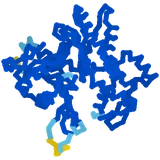 Putative beta-actin-like protein 3POTEKP · Q9BYX7 Putative beta-actin-like protein 3POTEKP · Q9BYX7 | A cytosolic actin that assembles into dynamic filaments and uses an ATP-driven conformational cycle to regulate cytoskeletal organization. | Dark |
 Peptidyl-prolyl cis-trans isomerase A-like 4FPPIAL4F · P0DN26 Peptidyl-prolyl cis-trans isomerase A-like 4FPPIAL4F · P0DN26 | A soluble human peptidyl-prolyl isomerase that accelerates folding and remodeling of client proteins through a cyclophilin catalytic core. | Dark |
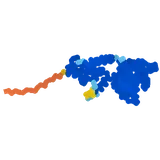 Probable inactive peptidyl-prolyl cis-trans isomerase-like 6PPIL6 · Q8IXY8 Probable inactive peptidyl-prolyl cis-trans isomerase-like 6PPIL6 · Q8IXY8 | A soluble human cyclophilin-fold protein that operates as a binding-centric adaptor in proteostasis. | Dark |
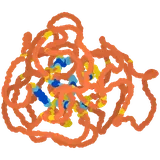 Protein phosphatase 1 regulatory subunit 26PPP1R26 · Q5T8A7 Protein phosphatase 1 regulatory subunit 26PPP1R26 · Q5T8A7 | A large human nuclear scaffold that assembles and directs a protein phosphatase complex to transcription machinery. | Dark |
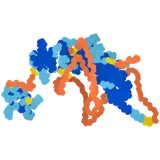 Protein PPP4R3CPPP4R3C · Q6ZMV5 Protein PPP4R3CPPP4R3C · Q6ZMV5 | A non-catalytic regulatory subunit that assembles and targets a serine/threonine phosphatase complex to chromatin and RNA-processing hubs. | Dark |
 Putative pancreatic polypeptide 2PPY2P · Q9NRI7 Putative pancreatic polypeptide 2PPY2P · Q9NRI7 | A human secretory-pathway protein that relies on multivalent binding to regulate programmed cell death. | Dark |
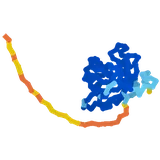 Protease-associated domain-containing protein 1PRADC1 · Q9BSG0 Protease-associated domain-containing protein 1PRADC1 · Q9BSG0 | A human PA-domain scaffold that operates outside the cell to organize binding-driven signaling assemblies. | Dark |
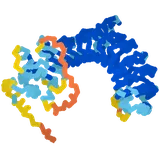 PRAME family member 27PRAMEF27 · A3QJZ7 PRAME family member 27PRAMEF27 · A3QJZ7 | A nucleocytoplasmic adaptor that assembles with a cullin-RING ubiquitin ligase to promote ubiquitination and proteasome-dependent turnover of selected targets. | Dark |
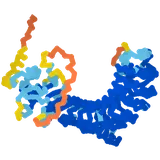 PRAME family member 4PRAMEF4 · O60810 PRAME family member 4PRAMEF4 · O60810 | A soluble adaptor that uses an N-terminal PRAME-like module and a C-terminal leucine-rich repeat scaffold to recruit specific substrates to a Cul2-RING ubiquitin ligase. | Dark |
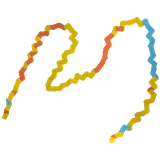 Protamine-3PRM3 · Q9NNZ6 Protamine-3PRM3 · Q9NNZ6 | A human protamine-like chromatin-condensing protein that operates in the nucleoplasm of late-stage germ cells to compact and stabilize paternal chromatin during spermiogenesis. | Dark |
 Putative testis-specific prion proteinPRNT · Q86SH4 Putative testis-specific prion proteinPRNT · Q86SH4 | A soluble human regulatory scaffold that uses a prion-like interaction module to assemble inhibitory complexes controlling gene expression. | Dark |
 Proline-rich protein, Y-linkedPRORY · Q9H606 Proline-rich protein, Y-linkedPRORY · Q9H606 | A human nucleoplasmic adaptor that relies on multivalent protein binding to organize regulatory complexes during male germ cell development. | Dark |
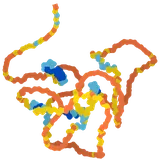 Proline and serine-rich protein 2PROSER2 · Q86WR7 Proline and serine-rich protein 2PROSER2 · Q86WR7 | A human cytoskeletal adaptor that uses multivalent protein binding to organize actin-regulatory assemblies. | Dark |
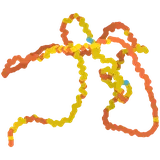 Proline-rich protein 32PRR32 · B1ATL7 Proline-rich protein 32PRR32 · B1ATL7 | A soluble human adaptor that uses a DUF4645 scaffold to organize protein–protein assemblies controlling ribonucleoprotein dynamics in the cytoplasm. | Dark |
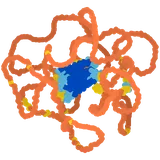 Proline-rich transmembrane protein 3PRRT3 · Q5FWE3 Proline-rich transmembrane protein 3PRRT3 · Q5FWE3 | A membrane-anchored, proline-rich scaffold that organizes signaling assemblies to promote osteoblast lineage progression. | Dark |
 Serine protease 53PRSS53 · Q2L4Q9 Serine protease 53PRSS53 · Q2L4Q9 | A secreted human serine endopeptidase that is produced as a tandem-trypsin zymogen and activated outside the cell to cleave peptide substrates in the extracellular milieu. | Dark |
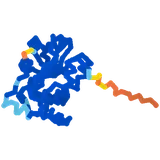 Prostamide/prostaglandin F synthasePRXL2B · Q8TBF2 Prostamide/prostaglandin F synthasePRXL2B · Q8TBF2 | A soluble human redox-scaffold that uses a thioredoxin-like core within a peroxiredoxin-like framework to bind partner proteins and organize pathways that produce prostaglandins and govern their secretion. | Dark |
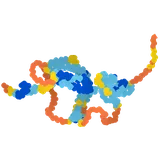 Proactivator polypeptide-like 1PSAPL1 · Q6NUJ1 Proactivator polypeptide-like 1PSAPL1 · Q6NUJ1 | A human soluble, multi-repeat saposin-like protein that binds membranes and lipoprotein assemblies to remodel vesicular and extracellular membranes. | Dark |
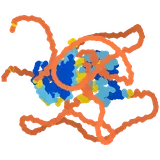 PH and SEC7 domain-containing protein 2PSD2 · Q9BQI7 PH and SEC7 domain-containing protein 2PSD2 · Q9BQI7 | A cytoplasmic, membrane-recruited guanine-nucleotide exchange factor that activates ARF small GTPases through a Sec7 catalytic core and a pleckstrin homology module that targets phosphoinositide-rich cortical membranes. | Dark |
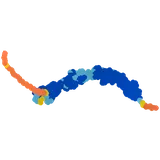 Pregnancy-specific beta-1-glycoprotein 8PSG8 · Q9UQ74 Pregnancy-specific beta-1-glycoprotein 8PSG8 · Q9UQ74 | A human immunoglobulin superfamily adhesion molecule that uses a tandem array of Ig-like domains to mediate multivalent protein binding and assemble receptor-centered signaling hubs. | Dark |
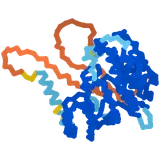 Serine/threonine-protein kinase H2PSKH2 · Q96QS6 Serine/threonine-protein kinase H2PSKH2 · Q96QS6 | A soluble human signaling kinase that binds ATP and assembles with diverse protein partners to regulate phosphorylation-dependent pathways. | Dark |
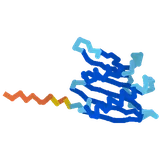 Proteasome assembly chaperone 4PSMG4 · Q5JS54 Proteasome assembly chaperone 4PSMG4 · Q5JS54 | A soluble cytoplasmic assembly chaperone that organizes early steps of proteasome biogenesis. | Dark |
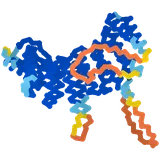 Protein prenyltransferase alpha subunit repeat-containing protein 1PTAR1 · Q7Z6K3 Protein prenyltransferase alpha subunit repeat-containing protein 1PTAR1 · Q7Z6K3 | A cytosolic alpha-subunit of a heteromeric geranylgeranyltransferase that assembles the catalytic platform required to attach geranylgeranyl groups to CAAX-motif proteins, notably the small GTPases RAC1 and RAC2. | Dark |
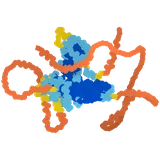 Pentatricopeptide repeat-containing protein 1, mitochondrialPTCD1 · O75127 Pentatricopeptide repeat-containing protein 1, mitochondrialPTCD1 · O75127 | A mitochondrial RNA-binding scaffold that organizes ribonucleoprotein assemblies for mitochondrial RNA metabolism. | Dark |
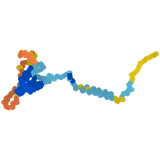 Putative protein PTGES3LPTGES3L · E9PB15 Putative protein PTGES3LPTGES3L · E9PB15 | A soluble co-chaperone that uses a p23-like HSP20 scaffold to bind and stabilize client proteins within Hsp90/Hsp70 cycles. | Dark |
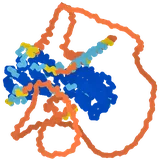 Protein tyrosine phosphatase domain-containing protein 1PTPDC1 · A2A3K4 Protein tyrosine phosphatase domain-containing protein 1PTPDC1 · A2A3K4 | A soluble human phosphatase that employs a cysteine-dependent catalytic core to remove phosphate groups from protein substrates and assemble transient regulatory complexes. | Dark |
 Putative pituitary tumor-transforming gene 3 proteinPTTG3P · Q9NZH4 Putative pituitary tumor-transforming gene 3 proteinPTTG3P · Q9NZH4 | A soluble regulatory scaffold that orchestrates chromosome-segregation timing by binding and activating specific cell-cycle effectors. | Dark |
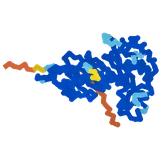 tRNA pseudouridine synthase-like 1PUSL1 · Q8N0Z8 tRNA pseudouridine synthase-like 1PUSL1 · Q8N0Z8 | A soluble mitochondrial RNA-modifying enzyme that binds structured tRNA and rRNA and catalyzes pseudouridylation, thereby stabilizing RNA architecture central to mitochondrial gene expression. | Dark |
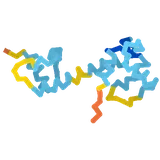 Parvalbumin-like EF-hand-containing proteinPVALEF · A0A1B0GWK0 Parvalbumin-like EF-hand-containing proteinPVALEF · A0A1B0GWK0 | A soluble human calcium-binding protein that uses a paired EF-hand fold to sense and buffer cytosolic calcium, thereby tuning calcium-dependent protein interactions that stabilize signaling and cytoskeletal assemblies. | Dark |
 Peroxisomal testis-specific protein 1PXT1 · Q8NFP0 Peroxisomal testis-specific protein 1PXT1 · Q8NFP0 | A small, soluble adaptor that concentrates near peroxisomes and uses multivalent binding to assemble regulatory complexes that tune germ-cell apoptosis. | Dark |
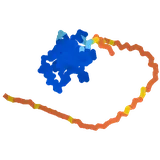 Peptidase inhibitor R3HDMLR3HDML · Q9H3Y0 Peptidase inhibitor R3HDMLR3HDML · Q9H3Y0 | A cysteine-rich, CAP-domain scaffold that operates primarily through multivalent protein binding to shape extracellular signaling and matrix remodeling during tissue development. | Dark |
 Ras-related protein Rab-6DRAB6D · Q53S08 Ras-related protein Rab-6DRAB6D · Q53S08 | A human small GTPase that cycles between GTP- and GDP-bound states to control membrane trafficking at the Golgi and associated pathways. | Dark |
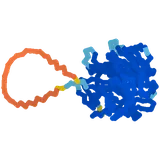 Rab9 effector protein with kelch motifsRABEPK · Q7Z6M1 Rab9 effector protein with kelch motifsRABEPK · Q7Z6M1 | A cytosolic kelch beta-propeller scaffold that functions as a Rab9-directed effector in human cells. | Dark |
 Ras-specific guanine nucleotide-releasing factor RalGPS2RALGPS2 · Q86X27 Ras-specific guanine nucleotide-releasing factor RalGPS2RALGPS2 · Q86X27 | A cytosolic guanine nucleotide exchange factor that uses an N-terminal catalytic module to accelerate GDP release from Ras-family small GTPases and a C-terminal pleckstrin homology domain to dock onto phosphoinositide-rich membranes. | Dark |
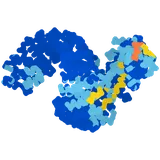 Ran-binding protein 6RANBP6 · O60518 Ran-binding protein 6RANBP6 · O60518 | A soluble transport receptor that shuttles between cytoplasm and nucleus to drive nuclear import of NLS-bearing proteins. | Dark |
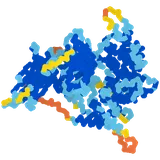 Ras GTPase-activating protein 4BRASA4B · C9J798 Ras GTPase-activating protein 4BRASA4B · C9J798 | A calcium-regulated small GTPase-activating scaffold that cycles between the cytosol and the plasma membrane. | Dark |
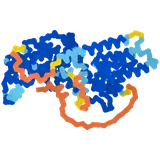 Ras-GEF domain-containing family member 1ARASGEF1A · Q8N9B8 Ras-GEF domain-containing family member 1ARASGEF1A · Q8N9B8 | A soluble human guanine nucleotide exchange factor that activates Ras-family small GTPases by catalyzing GDP release and GTP loading. | Dark |
 RNA-binding protein 44RBM44 · Q6ZP01 RNA-binding protein 44RBM44 · Q6ZP01 | A cytoplasmic scaffold that uses an RNA-recognition core and a C-terminal helical assembly module to organize macromolecular complexes controlling spindle formation and chromosome segregation. | Dark |
 RNA-binding motif protein, X-linked-like-3RBMXL3 · Q8N7X1 RNA-binding motif protein, X-linked-like-3RBMXL3 · Q8N7X1 | A nuclear RNA-binding regulator that assembles on pre-mRNA through an RRM-centered platform to control alternative splicing and mRNA fate. | Dark |
 RNA-binding motif protein, Y chromosome, family 1 member F/JRBMY1F · Q15415 RNA-binding motif protein, Y chromosome, family 1 member F/JRBMY1F · Q15415 | A nuclear RNA-binding protein that assembles into higher-order ribonucleoprotein complexes to regulate germline RNA metabolism. | Dark |
 REST corepressor 3RCOR3 · Q9P2K3 REST corepressor 3RCOR3 · Q9P2K3 | A nucleoplasmic transcriptional corepressor that assembles and stabilizes a histone deacetylase–containing repression complex. | Dark |
 Protein RD3-likeRD3L · P0DJH9 Protein RD3-likeRD3L · P0DJH9 | A soluble cytoplasmic adaptor that organizes membrane-trafficking assemblies. | Dark |
 Regulated endocrine-specific protein 18RESP18 · Q5W5W9 Regulated endocrine-specific protein 18RESP18 · Q5W5W9 | A soluble human adaptor that assembles regulatory complexes to control cholesterol handling and broader cellular programs. | Dark |
 RNA exonuclease 5REXO5 · Q96IC2 RNA exonuclease 5REXO5 · Q96IC2 | A soluble nuclear exoribonuclease that uses an RNase H-like catalytic core and tandem RNA-recognition motifs to bind and degrade structured nuclear RNAs from their 3′ ends. | Dark |
 DNA-binding protein RFX7RFX7 · Q2KHR2 DNA-binding protein RFX7RFX7 · Q2KHR2 | A nuclear transcriptional regulator that uses a central winged-helix DNA-binding module to recognize specific promoter elements and assemble coactivator complexes that enhance RNA polymerase II–dependent transcription. | Dark |
 Rhomboid-related protein 3RHBDL3 · P58872 Rhomboid-related protein 3RHBDL3 · P58872 | A human multi-pass membrane enzyme that couples a cytosolic calcium-sensing module to an intramembrane serine protease core to regulate signaling at the cell surface. | Dark |
 Regulator of microtubule dynamics protein 1RMDN1 · Q96DB5 Regulator of microtubule dynamics protein 1RMDN1 · Q96DB5 | A cytoplasmic, spindle-enriched alpha-helical scaffold that binds and stabilizes microtubules to organize mitotic spindle architecture and regulate microtubule dynamics. | Dark |
 RING finger protein 175RNF175 · Q8N4F7 RING finger protein 175RNF175 · Q8N4F7 | A membrane-anchored RING E3 ligase that operates at the endoplasmic reticulum and Golgi membranes to maintain proteostasis. | Dark |
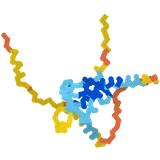 RING finger protein 227RNF227 · A6NIN4 RING finger protein 227RNF227 · A6NIN4 | A human RING-type E3 ubiquitin ligase that uses a catalytic zinc-binding module to transfer ubiquitin from E2 conjugating enzymes onto target proteins and a C-terminal adaptor region to engage substrates and localization factors. | Dark |
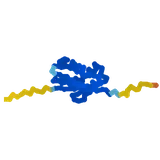 60S ribosomal protein L22-like 1RPL22L1 · Q6P5R6 60S ribosomal protein L22-like 1RPL22L1 · Q6P5R6 | A core structural element of the human large ribosomal subunit that stabilizes ribosomal RNA and neighboring proteins to sustain cytoplasmic protein synthesis. | Dark |
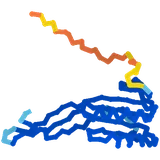 Ribonuclease P protein subunit p25-like proteinRPP25L · Q8N5L8 Ribonuclease P protein subunit p25-like proteinRPP25L · Q8N5L8 | A nuclear RNA-binding adaptor that assembles and stabilizes ribonucleoprotein machines for noncoding RNA maturation. | Dark |
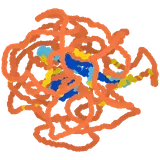 Regulation of nuclear pre-mRNA domain-containing protein 2RPRD2 · Q5VT52 Regulation of nuclear pre-mRNA domain-containing protein 2RPRD2 · Q5VT52 | A nuclear adaptor that uses a helical solenoid scaffold with a CID module to organize protein assemblies controlling late stages of transcript maturation. | Dark |
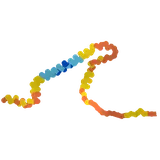 Reprimo-like proteinRPRML · Q8N4K4 Reprimo-like proteinRPRML · Q8N4K4 | A single-pass membrane-tethered regulator that uses a Reprimo-family scaffold to assemble protein complexes controlling cell-cycle progression. | Dark |
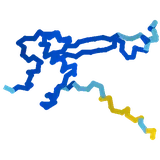 Putative 40S ribosomal protein S26-like 1RPS26P11 · Q5JNZ5 Putative 40S ribosomal protein S26-like 1RPS26P11 · Q5JNZ5 | A cytoplasmic component of the small ribosomal subunit that stabilizes the architecture of translating ribosomes and supports mRNA engagement during cytoplasmic protein synthesis. | Dark |
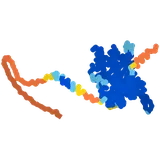 Mitochondrial RNA pseudouridine synthase RPUSD4RPUSD4 · Q96CM3 Mitochondrial RNA pseudouridine synthase RPUSD4RPUSD4 · Q96CM3 | An RNA-modifying enzyme that installs pseudouridine within structured RNA, using a conserved catalytic core to isomerize uridine in both cytoplasmic and mitochondrial RNA substrates. | Dark |
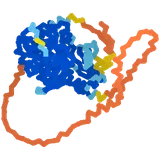 Ribosomal protein S6 kinase-related proteinRSKR · Q96LW2 Ribosomal protein S6 kinase-related proteinRSKR · Q96LW2 | A soluble serine/threonine kinase that operates within mitochondria to regulate phosphorylation-dependent signaling and metabolism. | Dark |
 RING finger and SPRY domain-containing protein 1RSPRY1 · Q96DX4 RING finger and SPRY domain-containing protein 1RSPRY1 · Q96DX4 | A cytoplasmic E3 ubiquitin ligase that assembles a recognition-and-catalysis platform to remodel the proteome. | Dark |
 Retrotransposon Gag-like protein 4RTL4 · Q6ZR62 Retrotransposon Gag-like protein 4RTL4 · Q6ZR62 | A human nucleoplasmic scaffold that oligomerizes through a capsid-like core and uses a CCHC zinc-knuckle module to assemble and stabilize macromolecular complexes involved in genome maintenance. | Dark |
 Retrotransposon Gag-like protein 5RTL5 · Q5HYW3 Retrotransposon Gag-like protein 5RTL5 · Q5HYW3 | A soluble human regulatory scaffold that assembles higher-order complexes through tandem capsid-like modules to modulate gene expression. | Dark |
 Receptor-transporting protein 5RTP5 · Q14D33 Receptor-transporting protein 5RTP5 · Q14D33 | A receptor-transport scaffold that uses a zinc-finger–stabilized binding platform to assemble and chaperone membrane receptor complexes from the endoplasmic reticulum through trafficking hubs. | Dark |
 RUN domain-containing protein 1RUNDC1 · Q96C34 RUN domain-containing protein 1RUNDC1 · Q96C34 | A cytosolic adaptor that organizes small GTPase-centered signaling assemblies controlling adhesion and migration during embryonic tissue formation. | Dark |
 RWD domain-containing protein 2ARWDD2A · Q9UIY3 RWD domain-containing protein 2ARWDD2A · Q9UIY3 | A soluble adaptor that assembles repression complexes to dampen RNA polymerase II transcription. | Dark |
 Sterile alpha motif domain-containing protein 5SAMD5 · Q5TGI4 Sterile alpha motif domain-containing protein 5SAMD5 · Q5TGI4 | A cytoplasmic adaptor that uses a sterile alpha motif to assemble higher-order signaling complexes. | Dark |
 Spermidine/spermine N(1)-acetyltransferase-like protein 1SATL1 · Q86VE3 Spermidine/spermine N(1)-acetyltransferase-like protein 1SATL1 · Q86VE3 | A cytosolic acetyltransferase that uses acetyl-CoA to acetylate the terminal amino groups of cellular polyamines, with a preference for spermidine and spermine. | Dark |
 Serine/threonine-protein kinase SBK2SBK2 · P0C263 Serine/threonine-protein kinase SBK2SBK2 · P0C263 | A human cytosolic serine/threonine kinase that uses a canonical bilobal catalytic core to bind ATP and phosphorylate target proteins, thereby driving signaling pathways that regulate membrane trafficking and cargo sorting near the Golgi apparatus. | Dark |
 Protein strawberry notch homolog 1SBNO1 · A3KN83 Protein strawberry notch homolog 1SBNO1 · A3KN83 | A large human nuclear scaffold that integrates developmental signaling into transcriptional control. | Dark |
 Somatomedin-B and thrombospondin type-1 domain-containing proteinSBSPON · Q8IVN8 Somatomedin-B and thrombospondin type-1 domain-containing proteinSBSPON · Q8IVN8 | A secreted extracellular matrix glycoprotein that uses an N-terminal somatomedin B module and a thrombospondin type-1 repeat to build a multivalent adhesion scaffold. | Dark |
 Sec1 family domain-containing protein 2SCFD2 · Q8WU76 Sec1 family domain-containing protein 2SCFD2 · Q8WU76 | A soluble adaptor of the early secretory pathway that organizes vesicle docking and fusion between the endoplasmic reticulum and the Golgi apparatus. | Dark |
 Secretoglobin family 1D member 4SCGB1D4 · Q6XE38 Secretoglobin family 1D member 4SCGB1D4 · Q6XE38 | A small secreted human protein that adopts a secretoglobin fold to function as an extracellular binder rather than an enzyme. | Dark |
 Transcriptional repressor scratch 2SCRT2 · Q9NQ03 Transcriptional repressor scratch 2SCRT2 · Q9NQ03 | A human nuclear DNA-binding regulator that uses tandem zinc-finger modules to recognize specific genomic motifs and repress RNA polymerase II–driven transcription. | Dark |
 Small cysteine and glycine repeat-containing protein 3SCYGR3 · A0A286YF60 Small cysteine and glycine repeat-containing protein 3SCYGR3 · A0A286YF60 | A small, soluble neuronal scaffold that uses a cysteine–glycine repeat core to assemble cytosolic protein complexes controlling calcium-responsive pathways tied to higher-order brain functions. | Dark |
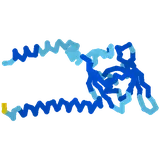 Putative signal peptidase complex catalytic subunit SEC11BSEC11B · P0C7V7 Putative signal peptidase complex catalytic subunit SEC11BSEC11B · P0C7V7 | A membrane-embedded serine endopeptidase in human cells that resides in the endoplasmic reticulum and executes essential maturation cleavages for secretory and membrane proteins. | Dark |
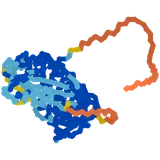 Serpin A11SERPINA11 · Q86U17 Serpin A11SERPINA11 · Q86U17 | A human serpin-fold protein that assembles high-affinity macromolecular complexes to modulate signaling and gene-regulatory pathways tied to vascular and neural biology. | Dark |
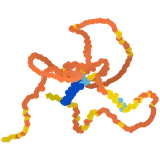 SERTA domain-containing protein 4SERTAD4 · Q9NUC0 SERTA domain-containing protein 4SERTAD4 · Q9NUC0 | A soluble human regulatory scaffold that uses a SERTA-centered interaction module to assemble transcriptional and signaling complexes. | Dark |
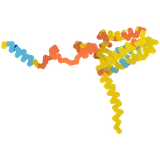 Vesicle transport protein SFT2CSFT2D3 · Q587I9 Vesicle transport protein SFT2CSFT2D3 · Q587I9 | A multi-pass membrane trafficking factor that assembles within Golgi membranes to organize retrograde flow from endosomes. | Dark |
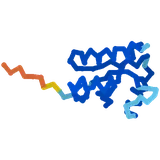 SH3 domain-binding glutamic acid-rich-like protein 2SH3BGRL2 · Q9UJC5 SH3 domain-binding glutamic acid-rich-like protein 2SH3BGRL2 · Q9UJC5 | A predominantly cytoplasmic, acidic adaptor that uses a thioredoxin-like scaffold to organize protein–protein assemblies controlling translation initiation and protein quality control. | Dark |
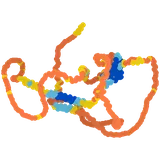 Protein shisa-6SHISA6 · Q6ZSJ9 Protein shisa-6SHISA6 · Q6ZSJ9 | A single-pass membrane regulator at excitatory synapses that uses an extracellular Shisa module and a short cytosolic tail to assemble and tune postsynaptic receptor complexes. | Dark |
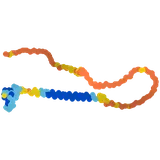 Protein shisa-like-2ASHISAL2A · Q6UWV7 Protein shisa-like-2ASHISAL2A · Q6UWV7 | A single-pass membrane adaptor that dampens canonical Wnt signaling by assembling inhibitory complexes at intracellular membranes. | Dark |
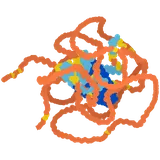 Protein Shroom1SHROOM1 · Q2M3G4 Protein Shroom1SHROOM1 · Q2M3G4 | A human cytoskeletal scaffold that organizes actin filament bundles by using a bipartite assembly platform to bind and align cytoskeletal regulators. | Dark |
 Seven in absentia homolog 3SIAH3 · Q8IW03 Seven in absentia homolog 3SIAH3 · Q8IW03 | A soluble human E3-ligase–like scaffold that assembles TRAF-like binding modules to organize ubiquitination complexes controlling protein stability. | Dark |
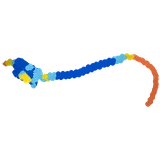 SIGLEC family-like protein 1SIGLECL1 · Q8N7X8 SIGLEC family-like protein 1SIGLECL1 · Q8N7X8 | A single-pass cell-surface lectin that presents a two-Ig ectodomain to recognize sialylated glycans and assemble binding platforms at the plasma membrane. | Dark |
 Signal-regulatory protein deltaSIRPD · Q9H106 Signal-regulatory protein deltaSIRPD · Q9H106 | A cell-surface immunoglobulin-like receptor that uses an extracellular Ig platform to bind ligands and initiate signaling at the plasma membrane. | Dark |
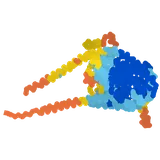 Solute carrier family 15 member 5SLC15A5 · A6NIM6 Solute carrier family 15 member 5SLC15A5 · A6NIM6 | A human multi-pass membrane transporter that uses the proton gradient to move di- and tripeptides across biological membranes. | Dark |
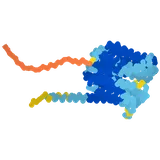 MFS-type transporter SLC18B1SLC18B1 · Q6NT16 MFS-type transporter SLC18B1SLC18B1 · Q6NT16 | A vesicle-localized, multi-pass transporter that uses the proton gradient established by V-type ATPases to exchange protons for cationic monoamines and polyamines. | Dark |
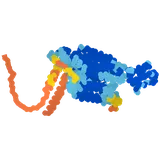 Solute carrier family 22 member 14SLC22A14 · Q9Y267 Solute carrier family 22 member 14SLC22A14 · Q9Y267 | A multi-pass membrane carrier that uses a major facilitator fold to shuttle small metabolites across the mitochondrial inner membrane. | Dark |
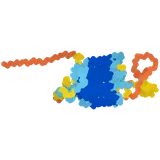 Putative solute carrier family 22 member 31SLC22A31 · A6NKX4 Putative solute carrier family 22 member 31SLC22A31 · A6NKX4 | A human multi-pass membrane carrier that belongs to the major facilitator superfamily and operates by an alternating-access mechanism to move small solutes across lipid bilayers. | Dark |
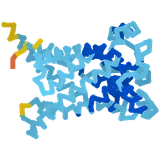 Solute carrier family 25 member 34SLC25A34 · Q6PIV7 Solute carrier family 25 member 34SLC25A34 · Q6PIV7 | A multi-pass transporter embedded in the mitochondrial inner membrane that uses a tripartite carrier architecture to exchange small metabolites, prominently amino acids and related organic acids. | Dark |
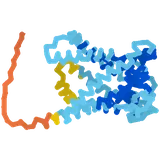 Solute carrier family 25 member 52SLC25A52 · Q3SY17 Solute carrier family 25 member 52SLC25A52 · Q3SY17 | A multi-pass inner-membrane transporter in human mitochondria that selectively imports NAD+ into the matrix. | Dark |
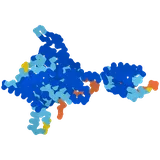 Sodium-independent sulfate anion transporterSLC26A11 · Q86WA9 Sodium-independent sulfate anion transporterSLC26A11 · Q86WA9 | A human multi-pass anion transporter that uses a membrane-embedded SLC26/SulP core to exchange chloride, iodide, and other inorganic anions across the cell surface, thereby supporting epithelial fluid secretion and systemic anion balance. | Dark |
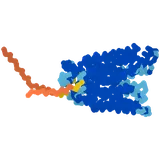 Solute carrier family 2, facilitated glucose transporter member 7SLC2A7 · Q6PXP3 Solute carrier family 2, facilitated glucose transporter member 7SLC2A7 · Q6PXP3 | A multi-pass membrane carrier that forms a 12-helix pore to mediate energy-independent, facilitated diffusion of hexoses across the cell surface. | Dark |
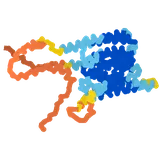 Solute carrier family 35 member E1SLC35E1 · Q96K37 Solute carrier family 35 member E1SLC35E1 · Q96K37 | A multi-pass membrane transporter in human cells that resides at the Golgi and uses an alternating-access antiport mechanism to exchange small, often phosphorylated metabolites across the membrane. | Dark |
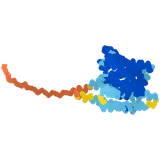 Solute carrier family 35 member G6SLC35G6 · P0C7Q6 Solute carrier family 35 member G6SLC35G6 · P0C7Q6 | A human multi-pass membrane transporter that assembles a tandem EamA translocation core to move small metabolites—particularly purine nucleobases—across cellular membranes. | Dark |
 Proton-associated sugar transporter ASLC45A1 · Q9Y2W3 Proton-associated sugar transporter ASLC45A1 · Q9Y2W3 | A multi-pass membrane transporter that uses the proton gradient to drive sugar uptake and handling within the endolysosomal system. | Dark |
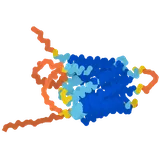 Thymic stromal cotransporter homologSLC46A2 · Q9BY10 Thymic stromal cotransporter homologSLC46A2 · Q9BY10 | A multi-pass membrane protein that adopts a transporter-like fold to build a membrane-anchored platform for assembling innate immune signaling complexes. | Dark |
 Putative L-type amino acid transporter 1-like protein MLASSLC7A5P1 · Q8MH63 Putative L-type amino acid transporter 1-like protein MLASSLC7A5P1 · Q8MH63 | A human multi-pass membrane carrier that transports neutral amino acids—especially branched-chain species—across the cell surface. | Dark |
 Sodium/hydrogen exchanger 10SLC9C1 · Q4G0N8 Sodium/hydrogen exchanger 10SLC9C1 · Q4G0N8 | A multi-pass membrane Na+/H+ exchanger that resides at the cell surface and uses a conserved ion-exchange core to couple sodium influx to proton efflux, thereby controlling intracellular pH and ion balance. | Dark |
 Schlafen family member 13SLFN13 · Q68D06 Schlafen family member 13SLFN13 · Q68D06 | A cytoplasmic RNA-processing factor that binds structured RNAs via an N-terminal nucleic-acid–binding platform and uses a central nucleotide-hydrolyzing engine to remodel RNA architecture. | Dark |
 Single-pass membrane and coiled-coil domain-containing protein 2SMCO2 · A6NFE2 Single-pass membrane and coiled-coil domain-containing protein 2SMCO2 · A6NFE2 | A membrane-embedded coiled-coil scaffold that assembles protein complexes at endoplasmic reticulum and mitochondria-associated ER membranes to tune receptor trafficking. | Dark |
 Small integral membrane protein 22SMIM22 · K7EJ46 Small integral membrane protein 22SMIM22 · K7EJ46 | A small multi-pass membrane modulator that assembles Golgi-centered protein complexes to coordinate lipid droplet biogenesis and cytoskeleton-coupled trafficking. | Dark |
 Submaxillary gland androgen-regulated protein 3BSMR3B · P02814 Submaxillary gland androgen-regulated protein 3BSMR3B · P02814 | A small secreted human protein that functions as an extracellular binder and modulator of cell-surface signaling. | Dark |
 Spermatid-specific manchette-related protein 1SMRP1 · Q8NCR6 Spermatid-specific manchette-related protein 1SMRP1 · Q8NCR6 | A non-enzymatic scaffold that organizes microtubule-based assemblies central to motile cilia and the sperm flagellum. | Dark |
 Smoothelin-like protein 2SMTNL2 · Q2TAL5 Smoothelin-like protein 2SMTNL2 · Q2TAL5 | A cytoplasmic actin-regulatory scaffold that uses a calponin-homology fold to bind filamentous actin and organize cortical and perinuclear filament arrays. | Dark |
 snRNA-activating protein complex subunit 5SNAPC5 · O75971 snRNA-activating protein complex subunit 5SNAPC5 · O75971 | A nuclear assembly factor that forms part of the snRNA-activating complex and organizes preinitiation scaffolds at small nuclear RNA promoters. | Dark |
 Uncharacterized protein encoded by SND1-IT1SND1-IT1 · Q9HBX3 Uncharacterized protein encoded by SND1-IT1SND1-IT1 · Q9HBX3 | A soluble mitochondrial factor that binds other proteins to assemble and stabilize mitochondrial ribonucleoprotein complexes, thereby prolonging the lifetime of organellar transcripts and coordinating their delivery to the mitoribosome. | Dark |
 StanninSNN · O75324 StanninSNN · O75324 | A small single-pass membrane protein that anchors to cellular membranes and presents a cytosolic tail optimized for regulated binding. | Dark |
 Protein SNORCSNORC · Q6UX34 Protein SNORCSNORC · Q6UX34 | A secreted extracellular regulator that accumulates within collagen-rich cartilage matrices and promotes chondrocyte differentiation and function. | Dark |
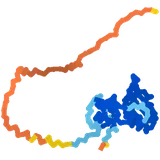 U11/U12 small nuclear ribonucleoprotein 35 kDa proteinSNRNP35 · Q16560 U11/U12 small nuclear ribonucleoprotein 35 kDa proteinSNRNP35 · Q16560 | A nuclear RNA-binding assembly factor that organizes spliceosomal ribonucleoprotein particles. | Dark |
 Putative SNURF-like proteinSNURFL · B1AK76 Putative SNURF-like proteinSNURFL · B1AK76 | A small nuclear adaptor that concentrates in nuclear bodies and uses multivalent protein binding to assemble repressive hubs that dampen RNA polymerase II–driven transcription. | Dark |
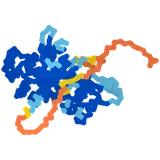 Sorting nexin-31SNX31 · Q8N9S9 Sorting nexin-31SNX31 · Q8N9S9 | A soluble endosomal adaptor that uses an N-terminal lipid-binding module to target PI3P-enriched early endosomes and a C-terminal FERM/PH-like scaffold to oligomerize and assemble sorting platforms. | Dark |
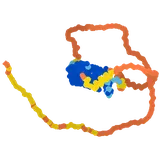 Ankyrin repeat domain-containing protein SOWAHDSOWAHD · A6NJG2 Ankyrin repeat domain-containing protein SOWAHDSOWAHD · A6NJG2 | A nucleoplasmic scaffold that uses an ankyrin-repeat array to assemble transcriptional complexes. | Dark |
 Transcription factor Sp9SP9 · P0CG40 Transcription factor Sp9SP9 · P0CG40 | A human nuclear DNA-binding regulator that uses tandem zinc finger modules to recognize specific genomic motifs and assemble transcriptional complexes. | Dark |
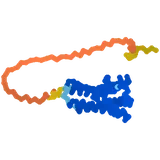 Sperm acrosome-associated protein 9SPACA9 · Q96E40 Sperm acrosome-associated protein 9SPACA9 · Q96E40 | A sperm-specific scaffold that associates with the acrosome and cytoplasmic microtubules to coordinate acrosome biogenesis and head morphogenesis. | Dark |
 Sperm protein associated with the nucleus on the X chromosome N2SPANXN2 · Q5MJ10 Sperm protein associated with the nucleus on the X chromosome N2SPANXN2 · Q5MJ10 | A small, soluble nuclear adaptor that concentrates within the nucleoplasm and organizes protein assemblies controlling gene expression and cell-cycle programs. | Dark |
 Spermatogenesis-associated protein 31D4SPATA31D4 · Q6ZUB0 Spermatogenesis-associated protein 31D4SPATA31D4 · Q6ZUB0 | A human nuclear scaffold protein that organizes multiprotein assemblies essential for brain development. | Dark |
 Spermatogenesis-associated protein 46SPATA46 · Q5T0L3 Spermatogenesis-associated protein 46SPATA46 · Q5T0L3 | A testis-enriched adaptor that assembles protein complexes to promote apoptosis and restrain cell-cycle progression. | Dark |
 Speedy protein E4SPDYE4 · A6NLX3 Speedy protein E4SPDYE4 · A6NLX3 | A nucleoplasmic adaptor that promotes S-phase entry and progression by assembling and potentiating cyclin-dependent kinase complexes. | Dark |
 Serine protease inhibitor Kazal-type 8SPINK8 · P0C7L1 Serine protease inhibitor Kazal-type 8SPINK8 · P0C7L1 | A secreted Kazal-type protease inhibitor that operates in the reproductive tract and sperm lineage. | Dark |
 Kunitz-type protease inhibitor 3SPINT3 · P49223 Kunitz-type protease inhibitor 3SPINT3 · P49223 | A secreted Kunitz-type serine protease inhibitor that uses a disulfide-stabilized inhibitory loop to reversibly block trypsin-like proteases. | Dark |
 Kunitz-type protease inhibitor 4SPINT4 · Q6UDR6 Kunitz-type protease inhibitor 4SPINT4 · Q6UDR6 | A secreted Kunitz-type protease inhibitor that is stored in regulated secretory and acrosomal-like vesicles and released to the extracellular milieu, where it tightly and reversibly blocks trypsin-like serine proteases. | Dark |
 Protein spinster homolog 3SPNS3 · Q6ZMD2 Protein spinster homolog 3SPNS3 · Q6ZMD2 | A human multi-pass membrane transporter that uses a major facilitator scaffold to move sphingolipid-like lipids across intracellular membranes. | Dark |
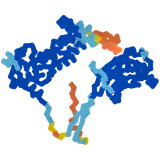 Speckle-type POZ protein-likeSPOPL · Q6IQ16 Speckle-type POZ protein-likeSPOPL · Q6IQ16 | A human adaptor that organizes ubiquitination signaling by coupling an N-terminal substrate-recognition module to a C-terminal cullin-docking module. | Dark |
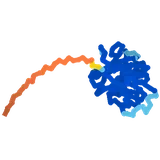 SPRY domain-containing protein 4SPRYD4 · Q8WW59 SPRY domain-containing protein 4SPRYD4 · Q8WW59 | A nuclear, SPRY-domain scaffold that organizes protein–protein assemblies to promote polyubiquitination. | Dark |
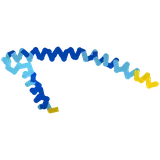 Serine palmitoyltransferase small subunit BSPTSSB · Q8NFR3 Serine palmitoyltransferase small subunit BSPTSSB · Q8NFR3 | A membrane-associated regulatory subunit that assembles and stabilizes the serine palmitoyltransferase complex at the endoplasmic reticulum, where it initiates sphingolipid formation by enabling the condensation of serine and palmitoyl-CoA. | Dark |
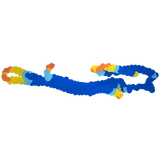 SLIT-ROBO Rho GTPase-activating protein 2BSRGAP2B · P0DMP2 SLIT-ROBO Rho GTPase-activating protein 2BSRGAP2B · P0DMP2 | A human scaffolding protein that assembles membrane-proximal signaling complexes through an extended BAR superfamily core to control cytoskeletal organization and membrane remodeling. | Dark |
 Serine/arginine repetitive matrix protein 3SRRM3 · A6NNA2 Serine/arginine repetitive matrix protein 3SRRM3 · A6NNA2 | A nuclear splicing scaffold that organizes pre-mRNA processing in human cells. | Dark |
 Serine-rich single-pass membrane protein 1SSMEM1 · Q8WWF3 Serine-rich single-pass membrane protein 1SSMEM1 · Q8WWF3 | A membrane-anchored adaptor that resides on endoplasmic reticulum and Golgi membranes and uses a cytosolic-facing tail to assemble trafficking and proteostasis complexes. | Dark |
 Protein SSX3SSX3 · Q99909 Protein SSX3SSX3 · Q99909 | A nuclear transcriptional repressor that uses an N-terminal repression module to assemble corepressor complexes and a C-terminal chromatin-engagement motif to stabilize silencing on target loci. | Dark |
 Protein SSX8SSX8 · Q7RTT4 Protein SSX8SSX8 · Q7RTT4 | A nuclear transcriptional repressor that uses an N-terminal KRAB repression cassette to assemble corepressor complexes and a C-terminal SSXRD motif to engage chromatin and select genomic targets. | Dark |
 Putative protein FAM10A4ST13P4 · Q8IZP2 Putative protein FAM10A4ST13P4 · Q8IZP2 | A cytoplasmic cochaperone scaffold that binds Hsp70 and uses a helical repeat platform to assemble folding hubs. | Dark |
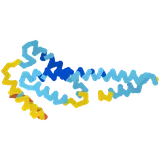 Putative STAG3-like protein 4STAG3L4 · Q8TBR4 Putative STAG3-like protein 4STAG3L4 · Q8TBR4 | A nuclear scaffold subunit of the cohesin complex that uses a conserved interaction core to assemble and stabilize ring-shaped chromatin-tethering assemblies. | Dark |
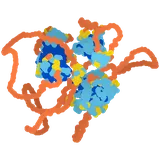 Serine/threonine-protein kinase 11-interacting proteinSTK11IP · Q8N1F8 Serine/threonine-protein kinase 11-interacting proteinSTK11IP · Q8N1F8 | A human scaffold that binds the LKB1 kinase complex and organizes it on membranes through a central leucine‑rich repeat core and multiple phosphoinositide‑binding modules. | Dark |
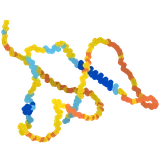 Stathmin domain-containing protein 1STMND1 · H3BQB6 Stathmin domain-containing protein 1STMND1 · H3BQB6 | A soluble regulator that concentrates at the centrosome and in the cytosol to control microtubule dynamics and relay cytoskeletal state to nuclear programs. | Dark |
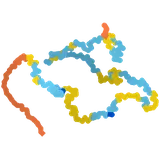 Protein STPG4STPG4 · Q8N801 Protein STPG4STPG4 · Q8N801 | A human nucleoplasm-enriched adaptor that uses tandem PG-rich repeats to form a flexible scaffold for multivalent protein binding. | Dark |
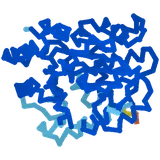 Sulfotransferase 6B1SULT6B1 · Q6IMI4 Sulfotransferase 6B1SULT6B1 · Q6IMI4 | A soluble cytosolic enzyme that transfers sulfate from the activated donor PAPS to a wide spectrum of endogenous and xenobiotic substrates. | Dark |
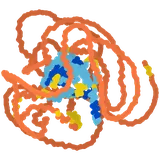 Transcription factor SPT20 homolog-like 1SUPT20HL1 · Q3ZLR7 Transcription factor SPT20 homolog-like 1SUPT20HL1 · Q3ZLR7 | A human nuclear scaffold that organizes transcription-coupled chromatin assemblies. | Dark |
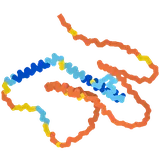 DNA repair protein SWI5 homologSWI5 · Q1ZZU3 DNA repair protein SWI5 homologSWI5 · Q1ZZU3 | A nuclear chromatin-associated assembly factor that organizes homologous recombination repair after DNA damage. | Dark |
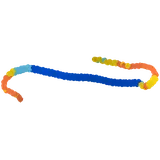 Synaptonemal complex central element protein 1-likeSYCE1L · A8MT33 Synaptonemal complex central element protein 1-likeSYCE1L · A8MT33 | A nuclear scaffold that organizes the central region of the synaptonemal complex during meiotic prophase. | Dark |
 Synaptogyrin-4SYNGR4 · O95473 Synaptogyrin-4SYNGR4 · O95473 | A neuronal vesicle-associated tetraspan that assembles and stabilizes synaptic vesicle membranes through a Marvel-type multi-pass core. | Dark |
 Putative trace amine-associated receptor 3TAAR3P · Q9P1P4 Putative trace amine-associated receptor 3TAAR3P · Q9P1P4 | A human seven-transmembrane receptor at the cell surface that senses trace amine cues and transduces them into intracellular signals via heterotrimeric G proteins. | Dark |
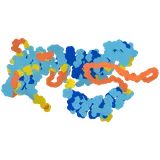 Transport and Golgi organization protein 6 homologTANGO6 · Q9C0B7 Transport and Golgi organization protein 6 homologTANGO6 · Q9C0B7 | A large human scaffold that organizes membrane trafficking and stress-responsive remodeling by using extended HEAT/armadillo solenoids to bind and remodel partner proteins. | Dark |
 TBC1 domain family member 3CTBC1D3C · Q6IPX1 TBC1 domain family member 3CTBC1D3C · Q6IPX1 | A human endosome-associated regulator that uses a TBC catalytic module to bind and inactivate Rab small GTPases, thereby timing vesicle traffic through early endosomes toward lysosomal delivery. | Dark |
 Transcription elongation factor A protein-like 6TCEAL6 · Q6IPX3 Transcription elongation factor A protein-like 6TCEAL6 · Q6IPX3 | A soluble regulatory scaffold that uses a TCEA-like core to assemble transcription and RNA-processing complexes, thereby tuning RNA polymerase II elongation and pre-mRNA maturation in human cells. | Dark |
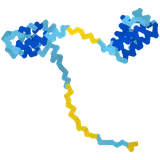 Transcription elongation factor A N-terminal and central domain-containing protein 2TCEANC2 · Q96MN5 Transcription elongation factor A N-terminal and central domain-containing protein 2TCEANC2 · Q96MN5 | A nuclear transcription-elongation regulator that binds RNA polymerase II through a bipartite scaffold and stabilizes elongation complexes without acting as a classical RNA cleavage–re-priming enzyme. | Dark |
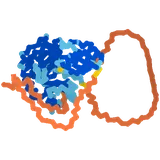 Tudor domain-containing protein 10TDRD10 · Q5VZ19 Tudor domain-containing protein 10TDRD10 · Q5VZ19 | A cytoplasmic RNA-binding factor that concentrates in germline ribonucleoprotein granules. | Dark |
 Terminal nucleotidyltransferase 5BTENT5B · Q96A09 Terminal nucleotidyltransferase 5BTENT5B · Q96A09 | A soluble human RNA-modifying enzyme that transfers nucleotidyl groups to mRNA 3′ ends and assembles with RNA-binding cofactors to enhance post-transcriptional control. | Dark |
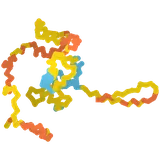 Testis, prostate and placenta-expressed proteinTEPP · Q6URK8 Testis, prostate and placenta-expressed proteinTEPP · Q6URK8 | A human cytoplasmic and nucleoplasmic scaffold that associates with microtubules and sperm flagellar architecture while coordinating RNA-modifying assemblies. | Dark |
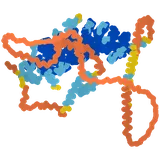 Telomere repeats-binding bouquet formation protein 1TERB1 · Q8NA31 Telomere repeats-binding bouquet formation protein 1TERB1 · Q8NA31 | A telomere-associated assembly factor that uses an N-terminal armadillo-repeat scaffold and a C-terminal chromatin-recognition module to build higher-order complexes at chromosome ends. | Dark |
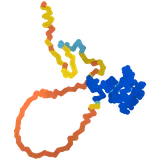 Telomere repeats-binding bouquet formation protein 2TERB2 · Q8NHR7 Telomere repeats-binding bouquet formation protein 2TERB2 · Q8NHR7 | A soluble nuclear scaffold that organizes higher-order chromosomal assemblies during meiotic and mitotic programs. | Dark |
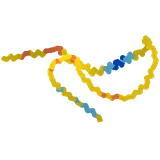 Testis-expressed protein 54TEX54 · A0A1B0GVG6 Testis-expressed protein 54TEX54 · A0A1B0GVG6 | A human cytosolic adaptor that organizes protein assemblies to coordinate innate immune signaling with cytoskeletal remodeling. | Dark |
 Homeobox protein TGIF2LYTGIF2LY · Q8IUE0 Homeobox protein TGIF2LYTGIF2LY · Q8IUE0 | A nuclear transcriptional regulator that uses a homeodomain to recognize specific DNA motifs and assemble repression complexes in the nucleoplasm. | Dark |
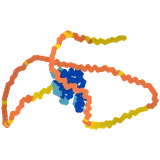 THAP domain-containing protein 10THAP10 · Q9P2Z0 THAP domain-containing protein 10THAP10 · Q9P2Z0 | A nuclear regulatory protein that uses an N-terminal THAP-type zinc finger to anchor onto chromatin and assemble repressive complexes in the nucleoplasm. | Dark |
 THAP domain-containing protein 8THAP8 · Q8NA92 THAP domain-containing protein 8THAP8 · Q8NA92 | A nuclear chromatin-associated regulator that uses an N-terminal THAP-type zinc finger to anchor onto chromatin and assemble repressive complexes. | Dark |
 Tigger transposable element-derived protein 5TIGD5 · Q53EQ6 Tigger transposable element-derived protein 5TIGD5 · Q53EQ6 | A nuclear chromatin-associated regulator that uses tandem helix–turn–helix and winged-helix modules to bind DNA and assemble higher-order nucleoprotein complexes. | Dark |
 Transducin-like enhancer protein 7TLE7 · A0A1W2PR48 Transducin-like enhancer protein 7TLE7 · A0A1W2PR48 | A human β-propeller scaffold that assembles transcriptional regulatory complexes. | Dark |
 TM2 domain-containing protein 2TM2D2 · Q9BX73 TM2 domain-containing protein 2TM2D2 · Q9BX73 | A human multi-pass membrane protein that assembles signaling complexes at the cell surface to modulate receptor-driven pathways. | Dark |
 Translation machinery-associated protein 16TMA16 · Q96EY4 Translation machinery-associated protein 16TMA16 · Q96EY4 | A nucleolar and nucleoplasmic assembly factor that binds ribosome-associated complexes to promote maturation of the large ribosomal subunit. | Dark |
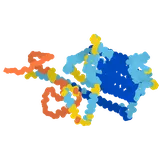 Transmembrane channel-like protein 4TMC4 · Q7Z404 Transmembrane channel-like protein 4TMC4 · Q7Z404 | A human multi-pass membrane protein that assembles a transmembrane channel-like scaffold to organize adhesion-related signaling. | Dark |
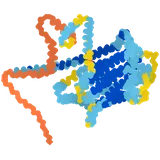 Transmembrane channel-like protein 7TMC7 · Q7Z402 Transmembrane channel-like protein 7TMC7 · Q7Z402 | A human multi-pass membrane protein that assembles a TMC-family transmembrane core to form an oligomeric platform in intracellular membranes. | Dark |
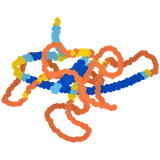 Transmembrane and coiled-coil domains protein 2TMCC2 · O75069 Transmembrane and coiled-coil domains protein 2TMCC2 · O75069 | A human endoplasmic reticulum membrane-associated scaffold that oligomerizes through extended coiled-coil regions to tether the ER to neighboring organelles. | Dark |
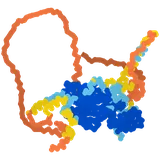 Transmembrane and coiled-coil domain-containing protein 4TMCO4 · Q5TGY1 Transmembrane and coiled-coil domain-containing protein 4TMCO4 · Q5TGY1 | A human trafficking adaptor that concentrates at the Golgi apparatus and organizes vesicle-mediated transport. | Dark |
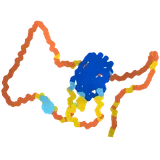 Protein TMED8TMED8 · Q6PL24 Protein TMED8TMED8 · Q6PL24 | A Golgi-associated scaffold that uses a central GOLD fold to organize protein assemblies controlling Golgi maintenance and phosphoinositide-dependent trafficking. | Dark |
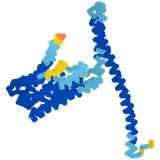 Transmembrane protein 120ATMEM120A · Q9BXJ8 Transmembrane protein 120ATMEM120A · Q9BXJ8 | A multi-pass membrane protein at the cell surface that assembles into higher-order complexes to modulate ion movement and transduce extracellular cues into intracellular signals. | Dark |
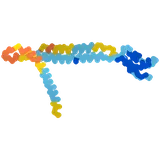 Transmembrane protein 9BTMEM9B · Q9NQ34 Transmembrane protein 9BTMEM9B · Q9NQ34 | A human multi-pass membrane scaffold that promotes assembly of signaling complexes controlling NF-kappa-B activation. | Dark |
 Mitochondrial import receptor subunit TOM40BTOMM40L · Q969M1 Mitochondrial import receptor subunit TOM40BTOMM40L · Q969M1 | A β-barrel channel of the mitochondrial outer membrane that forms the core pore of the outer membrane translocase. | Dark |
 Tubulin polyglutamylase complex subunit 2TPGS2 · Q68CL5 Tubulin polyglutamylase complex subunit 2TPGS2 · Q68CL5 | A soluble cytosolic scaffold that assembles and stabilizes the tubulin polyglutamylase complex. | Dark |
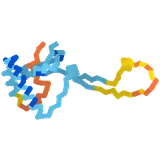 Putative translationally-controlled tumor protein-like protein TPT1P8TPT1P8 · Q9HAU6 Putative translationally-controlled tumor protein-like protein TPT1P8TPT1P8 · Q9HAU6 | A soluble human scaffold protein that concentrates stress-response and cytoskeletal regulatory complexes. | Dark |
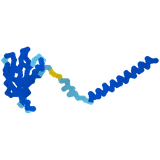 T cell receptor alpha constantTRAC · P01848 T cell receptor alpha constantTRAC · P01848 | A cell-surface antigen-recognition subunit of a lymphocyte receptor that uses an extracellular immunoglobulin-like constant domain to bind peptide antigens presented by major histocompatibility complexes. | Dark |
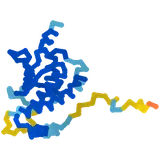 Trafficking protein particle complex subunit 5TRAPPC5 · Q8IUR0 Trafficking protein particle complex subunit 5TRAPPC5 · Q8IUR0 | A cytoplasmic scaffold subunit of the TRAPP I assembly that organizes vesicle tethering and sorting along the early secretory pathway. | Dark |
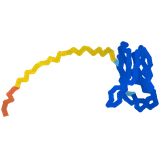 T cell receptor alpha variable 29/delta variable 5TRAV29DV5 · P04437 T cell receptor alpha variable 29/delta variable 5TRAV29DV5 · P04437 | A variable immunoglobulin-like recognition module of a human cell-surface antigen receptor that binds extracellular ligands and initiates signaling to drive lymphocyte activation. | Dark |
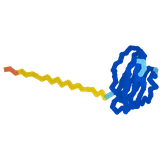 T cell receptor beta variable 12-4TRBV12-4 · A0A0B4J2E0 T cell receptor beta variable 12-4TRBV12-4 · A0A0B4J2E0 | A variable immunoglobulin-like binding module from a human T-cell receptor beta chain that forms a high-specificity recognition surface for peptide–MHC ligands at the cell surface. | Dark |
 T cell receptor delta joining 1TRDJ1 · A0A075B706 T cell receptor delta joining 1TRDJ1 · A0A075B706 | A soluble human signaling regulator that uses protein–protein interactions to dampen cAMP-driven kinase pathways. | Dark |
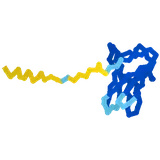 T cell receptor gamma variable 3TRGV3 · P03979 T cell receptor gamma variable 3TRGV3 · P03979 | An extracellular immunoglobulin-like recognition module that forms the gamma-chain component of a heterodimeric immune receptor complex. | Dark |
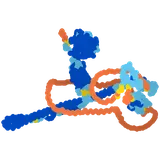 Tripartite motif-containing protein 67TRIM67 · Q6ZTA4 Tripartite motif-containing protein 67TRIM67 · Q6ZTA4 | A cytosolic E3 ubiquitin ligase that assembles a TRIM-like catalytic and recognition platform to regulate protein turnover and signaling. | Dark |
 Probable E3 ubiquitin-protein ligase TRIML1TRIML1 · Q8N9V2 Probable E3 ubiquitin-protein ligase TRIML1TRIML1 · Q8N9V2 | A cytosolic RING–SPRY scaffold that couples ubiquitin transfer to selective substrate recognition to coordinate antiviral defense and cytoskeletal control. | Dark |
 Triple QxxK/R motif-containing proteinTRIQK · Q629K1 Triple QxxK/R motif-containing proteinTRIQK · Q629K1 | A luminal ER adaptor that uses a repetitive QXXK/R scaffold to bind partners and assemble quality-control complexes at ribosome-rich translocation sites. | Dark |
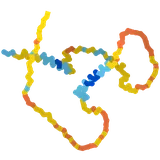 Telomerase RNA component interacting RNaseTRIR · Q9BQ61 Telomerase RNA component interacting RNaseTRIR · Q9BQ61 | A soluble nuclear ribonuclease that engages telomerase RNA and other structured nuclear RNAs, using exonucleolytic chemistry to shape and recycle ribosomal and noncoding RNAs within the nucleoplasm. | Dark |
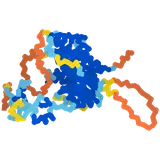 tRNA:m(4)X modification enzyme TRM13 homologTRMT13 · Q9NUP7 tRNA:m(4)X modification enzyme TRM13 homologTRMT13 · Q9NUP7 | A soluble human RNA-modifying enzyme that binds structured tRNA via tandem zinc-finger modules and uses a SAM-dependent catalytic core to install 2'-O-methyl groups at positions 34 and 4 of tRNA. | Dark |
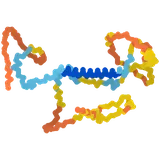 Testis-specific gene 13 proteinTSGA13 · Q96PP4 Testis-specific gene 13 proteinTSGA13 · Q96PP4 | A testis-restricted, soluble scaffold that operates during human sperm development by assembling binding-dependent complexes. | Dark |
 Tetraspanin-17TSPAN17 · Q96FV3 Tetraspanin-17TSPAN17 · Q96FV3 | A four-pass membrane organizer that assembles tetraspanin-enriched microdomains to cluster membrane enzymes and adhesion receptors. | Dark |
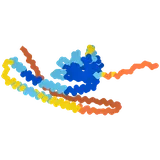 Testis-specific Y-encoded protein 3TSPY3 · P0CV98 Testis-specific Y-encoded protein 3TSPY3 · P0CV98 | A nuclear histone-chaperone scaffold that organizes nucleosome assembly and chromatin dynamics. | Dark |
 Thiosulfate:glutathione sulfurtransferaseTSTD1 · Q8NFU3 Thiosulfate:glutathione sulfurtransferaseTSTD1 · Q8NFU3 | A soluble human sulfurtransferase that uses a rhodanese-like catalytic core to shuttle sulfane sulfur between donors and glutathione via a persulfide intermediate. | Dark |
 Tetratricopeptide repeat protein 14TTC14 · Q96N46 Tetratricopeptide repeat protein 14TTC14 · Q96N46 | A nucleoplasmic scaffold that binds single-stranded RNA and organizes nuclear ribonucleoprotein assemblies. | Dark |
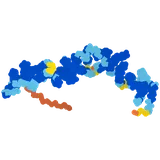 Tetratricopeptide repeat protein 34TTC34 · A8MYJ7 Tetratricopeptide repeat protein 34TTC34 · A8MYJ7 | A soluble human scaffold that uses a continuous array of helical repeats to bind multiple partners and assemble regulatory complexes. | Dark |
 Tubulin polyglutamylase TTLL13PTTLL13P · A6NNM8 Tubulin polyglutamylase TTLL13PTTLL13P · A6NNM8 | A soluble cytosolic enzyme that installs glutamate side chains onto tubulin tails, thereby writing a polyglutamylation mark that tunes microtubule stability and the recruitment of associated proteins. | Dark |
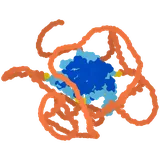 Tubulin polyglutamylase TTLL6TTLL6 · Q8N841 Tubulin polyglutamylase TTLL6TTLL6 · Q8N841 | A soluble cytosolic enzyme that modifies tubulin by adding glutamate side chains to its C-terminal tails, thereby tuning microtubule behavior in neurons and other cells. | Dark |
 TPA-induced transmembrane proteinTTMP · Q5BVD1 TPA-induced transmembrane proteinTTMP · Q5BVD1 | A human multi-pass membrane scaffold that assembles signaling complexes at the cell surface to control osteoblast behavior. | Dark |
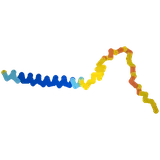 Putative transcript Y 10 proteinTTTY10 · Q9BZA0 Putative transcript Y 10 proteinTTTY10 · Q9BZA0 | A human nuclear regulator that operates in the nucleoplasm as a binding-driven scaffold to repress RNA polymerase II–dependent transcription. | Dark |
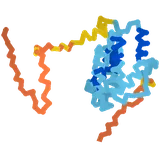 Putative tubulin-like protein alpha-4BTUBA4B · Q9H853 Putative tubulin-like protein alpha-4BTUBA4B · Q9H853 | A cytoplasmic cytoskeletal subunit that assembles with a partner tubulin to form the building block of microtubules. | Dark |
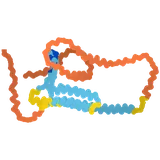 Golgi apparatus membrane protein TVP23 homolog CTVP23C · Q96ET8 Golgi apparatus membrane protein TVP23 homolog CTVP23C · Q96ET8 | A multi-pass membrane adaptor in human cells that resides in the Golgi apparatus and organizes vesicle traffic. | Dark |
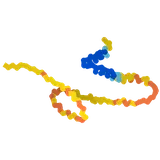 Putative gamma-taxilin 2TXLNGY · Q9BZA5 Putative gamma-taxilin 2TXLNGY · Q9BZA5 | A soluble human adaptor that uses a taxilin-family scaffold to organize regulatory complexes. | Dark |
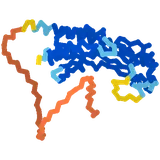 tRNA wybutosine-synthesizing protein 3 homologTYW3 · Q6IPR3 tRNA wybutosine-synthesizing protein 3 homologTYW3 · Q6IPR3 | A soluble cytosolic adaptor that uses a wybutosine-synthesizing-like core to mediate multivalent protein binding and assemble RNA-associated complexes that feed into epigenetic silencing pathways. | Dark |
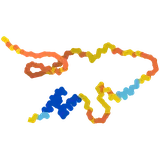 UBA-like domain-containing protein 2UBALD2 · Q8IYN6 UBA-like domain-containing protein 2UBALD2 · Q8IYN6 | A soluble human regulatory scaffold that uses a UBA-like binding module to assemble transient complexes controlling signaling and gene expression. | Dark |
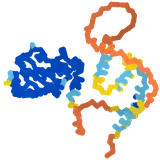 Ubiquitin-conjugating enzyme E2 UUBE2U · Q5VVX9 Ubiquitin-conjugating enzyme E2 UUBE2U · Q5VVX9 | A soluble cytoplasmic ubiquitin-conjugating enzyme that forms a thioester with ubiquitin and collaborates with activating and ligating partners to transfer ubiquitin onto target proteins. | Dark |
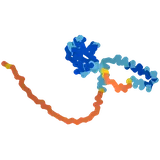 Ubiquitin-like protein 4BUBL4B · Q8N7F7 Ubiquitin-like protein 4BUBL4B · Q8N7F7 | A soluble adaptor that uses an N-terminal ubiquitin-like fold and a C-terminal TUGS module to assemble cytosolic ribonucleoprotein and targeting complexes that enhance delivery of mitochondrial precursor proteins. | Dark |
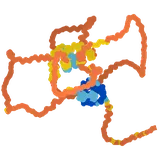 Ubiquilin-like proteinUBQLNL · Q8IYU4 Ubiquilin-like proteinUBQLNL · Q8IYU4 | A soluble scaffold that uses an N-terminal ubiquitin-like module to dock onto the proteasome and a larger ubiquilin scaffold to capture client proteins, thereby coordinating proteostasis in the cytosol and nucleoplasm. | Dark |
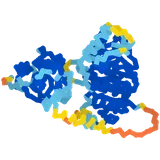 Ubiquitin-conjugating enzyme E2 variant 3UEVLD · Q8IX04 Ubiquitin-conjugating enzyme E2 variant 3UEVLD · Q8IX04 | A cytoplasmic, bifunctional enzyme–scaffold that combines an N-terminal ubiquitin E2-variant platform with a C-terminal lactate dehydrogenase-like core. | Dark |
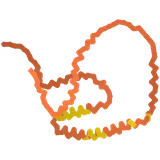 Uncharacterized protein UMODL1-AS1UMODL1-AS1 · Q8N2C9 Uncharacterized protein UMODL1-AS1UMODL1-AS1 · Q8N2C9 | A germ cell–enriched adaptor that uses multivalent protein binding to assemble regulatory complexes controlling gene expression during gametogenesis. | Dark |
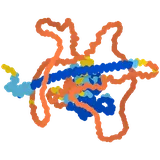 Putative E3 ubiquitin-protein ligase UNKLUNKL · Q9H9P5 Putative E3 ubiquitin-protein ligase UNKLUNKL · Q9H9P5 | A cytoplasmic scaffold that uses multiple CCCH zinc fingers to assemble ribonucleoprotein complexes and repress cytoplasmic translation, thereby shaping neuronal morphogenesis. | Dark |
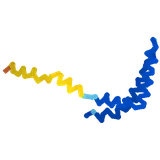 Cytochrome b-c1 complex subunit 6-like, mitochondrialUQCRHL · A0A096LP55 Cytochrome b-c1 complex subunit 6-like, mitochondrialUQCRHL · A0A096LP55 | A soluble, matrix-facing accessory subunit of mitochondrial complex III that forms the hinge scaffold of the cytochrome b–c1 assembly. | Dark |
 Ubiquitin carboxyl-terminal hydrolase 17-like protein 18USP17L18 · D6R9N7 Ubiquitin carboxyl-terminal hydrolase 17-like protein 18USP17L18 · D6R9N7 | A soluble human deubiquitinase that uses a papain-like catalytic core to hydrolyze ubiquitin from protein substrates, thereby editing ubiquitin signals that govern proteostasis and cell-fate pathways. | Dark |
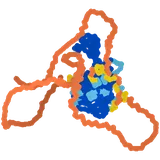 Inactive ubiquitin carboxyl-terminal hydrolase 17-like protein 4USP17L4 · A6NCW7 Inactive ubiquitin carboxyl-terminal hydrolase 17-like protein 4USP17L4 · A6NCW7 | A human cysteine-dependent deubiquitinating enzyme that removes ubiquitin from target proteins to sculpt signaling and chromatin-regulatory networks. | Dark |
 Variable charge X-linked protein 2VCX2 · Q9H322 Variable charge X-linked protein 2VCX2 · Q9H322 | A small, variably charged adaptor that concentrates in the nucleus and specifically the nucleolus, where it uses multivalent protein binding to organize nucleolar assemblies involved in ribosome biogenesis. | Dark |
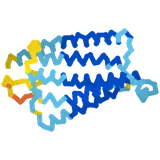 Putative vomeronasal receptor-like protein 4VN1R17P · Q8TDU5 Putative vomeronasal receptor-like protein 4VN1R17P · Q8TDU5 | A human cell-surface chemoreceptor that embeds a seven-helix transmembrane core to detect small extracellular cues and initiate heterotrimeric G protein signaling. | Dark |
 Vacuolar protein sorting-associated protein 37DVPS37D · Q86XT2 Vacuolar protein sorting-associated protein 37DVPS37D · Q86XT2 | A cytosolic ESCRT scaffold that assembles and stabilizes ESCRT-I to drive endosomal membrane remodeling. | Dark |
 V-set and immunoglobulin domain-containing protein 10-like 2VSIG10L2 · P0DP72 V-set and immunoglobulin domain-containing protein 10-like 2VSIG10L2 · P0DP72 | A cell-surface adhesion and signaling receptor that presents a tandem array of immunoglobulin-like modules capped by a fibronectin type III domain to mediate high-avidity heterophilic binding. | Dark |
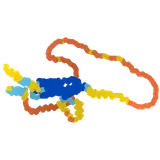 V-set and transmembrane domain-containing protein 2BVSTM2B · A6NLU5 V-set and transmembrane domain-containing protein 2BVSTM2B · A6NLU5 | A neuronal cell-surface adhesion/scaffold protein that presents an extracellular immunoglobulin V-set module on a single-pass type I membrane anchor to mediate multivalent protein binding. | Dark |
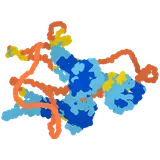 von Willebrand factor A domain-containing protein 3AVWA3A · A6NCI4 von Willebrand factor A domain-containing protein 3AVWA3A · A6NCI4 | A soluble, multivalent scaffold that uses three von Willebrand A-like modules to assemble and stabilize macromolecular complexes controlling cell-cycle transitions and genome maintenance. | Dark |
 BrorinVWC2 · Q2TAL6 BrorinVWC2 · Q2TAL6 | A secreted extracellular organizer that uses tandem von Willebrand factor C modules to bind matrix and signaling partners, thereby dampening BMP pathway activity while reinforcing cell–substrate adhesion and biasing neural differentiation programs. | Dark |
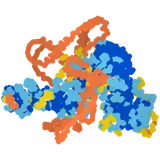 WD repeat-containing protein 7WDR7 · Q9Y4E6 WD repeat-containing protein 7WDR7 · Q9Y4E6 | A large human nuclear scaffold built from multiple WD-repeat beta-propellers and an intervening alpha-solenoid that assembles multivalent protein complexes in the nucleoplasm. | Dark |
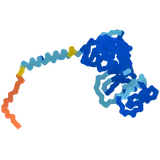 WAP four-disulfide core domain protein 8WFDC8 · Q8IUA0 WAP four-disulfide core domain protein 8WFDC8 · Q8IUA0 | A secreted, disulfide-rich extracellular inhibitor that uses a WAP module followed by a Kunitz core and additional WAP repeats to bind and neutralize serine proteases at the cell surface and within matrix-rich niches. | Dark |
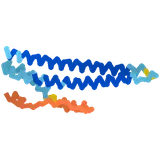 Putative WASP homolog-associated protein with actin, membranes and microtubules-like protein 1WHAMMP3 · Q1A5X7 Putative WASP homolog-associated protein with actin, membranes and microtubules-like protein 1WHAMMP3 · Q1A5X7 | A soluble human assembly factor that organizes large cytosolic complexes to regulate actin nucleation and membrane remodeling. | Dark |
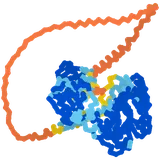 WSC domain-containing protein 2WSCD2 · Q2TBF2 WSC domain-containing protein 2WSCD2 · Q2TBF2 | A Golgi-associated sulfotransferase that binds sialylated glycans via tandem carbohydrate-recognition modules and transfers sulfate groups onto terminal sialic acid residues of glycolipids and glycoproteins. | Dark |
 Glycoprotein XgXG · P55808 Glycoprotein XgXG · P55808 | A GPI-anchored cell-surface protein that presents an extracellular ectodomain optimized for multivalent binding and clustering at the plasma membrane. | Dark |
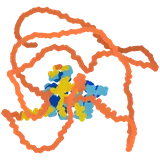 XK-related protein 5XKR5 · Q6UX68 XK-related protein 5XKR5 · Q6UX68 | A human multi-pass membrane scramblase that assembles at the cell surface to catalyze rapid, bidirectional translocation of phospholipids between membrane leaflets. | Dark |
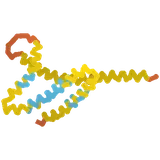 Testis-specific XK-related protein, Y-linkedXKRY · O14609 Testis-specific XK-related protein, Y-linkedXKRY · O14609 | A human multi-pass membrane adaptor that assembles protein complexes at internal and cell-surface membranes to regulate trafficking and adhesion pathways tied to fertilization. | Dark |
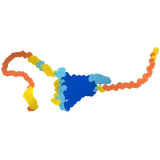 Protein YIPF2YIPF2 · Q9BWQ6 Protein YIPF2YIPF2 · Q9BWQ6 | A multi-pass membrane scaffold at the Golgi that organizes vesicle trafficking between the endoplasmic reticulum and Golgi. | Dark |
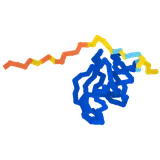 Protein yippee-like 4YPEL4 · Q96NS1 Protein yippee-like 4YPEL4 · Q96NS1 | A human adaptor protein that uses a single Yippee fold to dimerize and bind partners, assembling regulatory complexes that operate both in the nucleoplasm and at the midbody. | Dark |
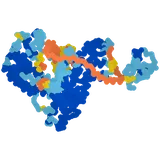 Zinc finger BED domain-containing protein 5ZBED5 · Q49AG3 Zinc finger BED domain-containing protein 5ZBED5 · Q49AG3 | A nucleoplasmic chromatin-tethered scaffold that promotes proliferative programs. | Dark |
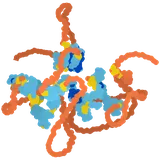 Zinc finger and BTB domain-containing protein 41ZBTB41 · Q5SVQ8 Zinc finger and BTB domain-containing protein 41ZBTB41 · Q5SVQ8 | A nuclear transcriptional repressor that assembles via an N-terminal oligomerization platform and uses a long array of zinc fingers to anchor repression complexes to chromatin. | Dark |
 Zinc finger and BTB domain-containing protein 9ZBTB9 · Q96C00 Zinc finger and BTB domain-containing protein 9ZBTB9 · Q96C00 | A nuclear transcriptional repressor that assembles as a homodimer via an N-terminal oligomerization module and uses tandem C2H2 zinc fingers to anchor repression complexes at specific genomic sites. | Dark |
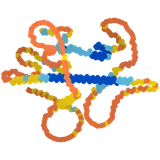 Zinc finger C2HC domain-containing protein 1CZC2HC1C · Q53FD0 Zinc finger C2HC domain-containing protein 1CZC2HC1C · Q53FD0 | A cytoplasmic scaffold that assembles ribonucleoprotein complexes to stabilize transcripts through their 3′ untranslated regions. | Dark |
 Zinc finger CCHC domain-containing protein 24ZCCHC24 · Q8N2G6 Zinc finger CCHC domain-containing protein 24ZCCHC24 · Q8N2G6 | A cytoplasm-enriched RNA-binding protein that uses tandem zinc-finger modules to recognize and assemble target transcripts into higher-order ribonucleoprotein complexes. | Dark |
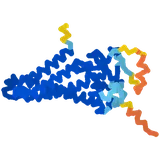 Probable palmitoyltransferase ZDHHC12ZDHHC12 · Q96GR4 Probable palmitoyltransferase ZDHHC12ZDHHC12 · Q96GR4 | A human multi-pass membrane acyltransferase that installs long-chain fatty acids onto cysteine residues of target proteins to regulate their membrane association and trafficking. | Dark |
 Zinc finger protein 2 homologZFP2 · Q6ZN57 Zinc finger protein 2 homologZFP2 · Q6ZN57 | A nucleoplasmic transcriptional regulator that uses a tandem array of zinc-finger modules to anchor on chromatin and assemble repressive complexes. | Dark |
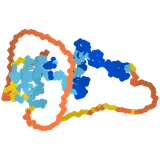 Zinc finger protein 92 homologZFP92 · A6NM28 Zinc finger protein 92 homologZFP92 · A6NM28 | A nucleoplasmic transcriptional regulator that uses an N-terminal repression module to assemble co-repressor complexes and a C-terminal array of zinc fingers to anchor these assemblies at specific genomic sites. | Dark |
 Zinc finger MYND domain-containing protein 19ZMYND19 · Q96E35 Zinc finger MYND domain-containing protein 19ZMYND19 · Q96E35 | A cytoplasmic, synapse-enriched RNA–protein assembly factor that couples an N-terminal nuclease-like module to a C-terminal MYND interaction hub. | Dark |
 Zinc finger protein 345ZNF345 · Q14585 Zinc finger protein 345ZNF345 · Q14585 | A nucleoplasmic transcriptional regulator that uses a long tandem array of zinc-finger modules to anchor at specific genomic sites and assemble regulatory complexes. | Dark |
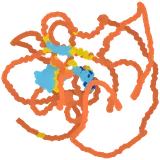 Zinc finger protein 438ZNF438 · Q7Z4V0 Zinc finger protein 438ZNF438 · Q7Z4V0 | A human nuclear transcriptional regulator that uses a tandem array of C2H2 zinc fingers to bind DNA and assemble multiprotein complexes that predominantly repress gene expression. | Dark |
 Zinc finger and SCAN domain-containing protein 22ZSCAN22 · P10073 Zinc finger and SCAN domain-containing protein 22ZSCAN22 · P10073 | A nuclear transcriptional regulator that uses an N-terminal oligomerization module to assemble higher-order regulatory complexes and a C-terminal array of zinc-finger motifs to anchor the assemblies to specific genomic sites. | Dark |
 Zinc finger and SCAN domain-containing protein 25ZSCAN25 · Q6NSZ9 Zinc finger and SCAN domain-containing protein 25ZSCAN25 · Q6NSZ9 | A nuclear transcriptional regulator that assembles oligomeric complexes via an N‑terminal oligomerization module, targets specific genomic sites through a C‑terminal array of zinc fingers, and recruits a repression cassette to silence nearby RNA polymerase II promoters and enhancers. | Dark |
 Uncharacterized protein ZSWIM9ZSWIM9 · Q86XI8 Uncharacterized protein ZSWIM9ZSWIM9 · Q86XI8 | A modular human scaffold that organizes protein assemblies controlling blood progenitor differentiation. | Dark |
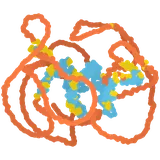 Zinc finger X-linked protein ZXDBZXDB · P98169 Zinc finger X-linked protein ZXDBZXDB · P98169 | A human nucleoplasmic transcriptional regulator that uses a tandem array of zinc-finger modules to anchor onto regulatory DNA and assemble coactivator complexes that enhance transcription. | Dark |
 Beta-2 adrenergic receptorADRB2 · P07550 Beta-2 adrenergic receptorADRB2 · P07550 | A seven-transmembrane adrenergic receptor that senses catecholamines at the cell surface and activates G protein signaling to elevate cAMP, stimulate PKA and MAPK pathways, and modulate downstream targets including potassium channels and synaptic receptor systems. | Known control |
 Carbonic anhydrase 2CA2 · P00918 Carbonic anhydrase 2CA2 · P00918 | A soluble zinc-dependent enzyme that accelerates the reversible hydration of carbon dioxide, thereby stabilizing intracellular and pericellular pH and supplying bicarbonate for coupled transport and signaling. | Known control |
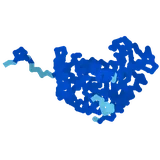 L-lactate dehydrogenase A chainLDHA · P00338 L-lactate dehydrogenase A chainLDHA · P00338 | A soluble human oxidoreductase that assembles into homomeric complexes to catalyze the reversible interconversion of pyruvate and L-lactate using NAD+/NADH. | Known control |
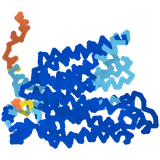 Solute carrier family 2, facilitated glucose transporter member 1 (GLUT1)SLC2A1 · P11166 Solute carrier family 2, facilitated glucose transporter member 1 (GLUT1)SLC2A1 · P11166 | A multi-pass membrane uniporter that provides constitutive, high-affinity uptake of glucose and related hexoses, and also conducts L-ascorbate and select long-chain fatty acids. | Known control |
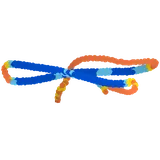 VimentinVIM · P08670 VimentinVIM · P08670 | A cytoplasmic intermediate filament subunit that assembles into a filamentous cytoskeletal network, providing mechanical support and a multivalent scaffold that organizes other cytoskeletal and membrane-associated assemblies. | Known control |
